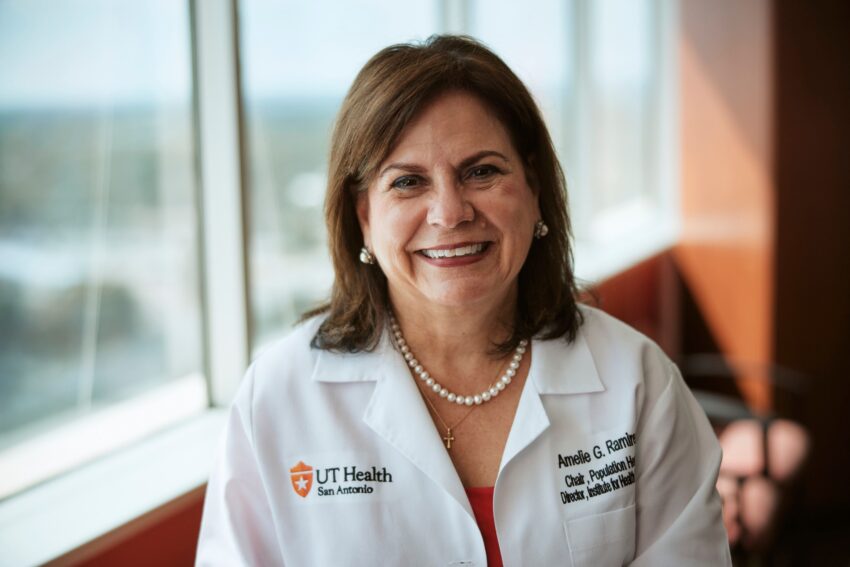
Dr. Amelie Ramirez, leader of Salud America! at UT Health San Antonio, has won the 2023 Association of American Cancer Institutes (AACI) Cancer Health Award. The award recognizes exceptional leadership in promoting health improvement and promoting health and fairness for people of all backgrounds at a cancer center. Past winners are Dr. Robert A. Winn of the VCU Massey Cancer Center and Dr. Electra D. Paskett of Ohio State University. Ramirez, nominated by the award by former Mays Cancer Center Director Dr. Ruben Mesa, will be recognized at AACI's annual meeting Oct. 2, 2023. "I am honored to receive the AACI Cancer Health Award. It recognizes the hard work we do at the Mays Cancer Center at UT Health San Antonio to promote health, study new approaches to reduce health issues, ...
Researchers at UT Health San Antonio are launching a five-year, $15.5-million study to investigate why the region’s older Mexican Americans experience a high rate of dementia. The project, the San Antonio Mind and Heart Study, is led by UT Health San Antonio’s Glenn Biggs Institute for Alzheimer’s and Neurodegenerative Diseases with funding from the National Institutes of Health/National Institute on Aging. Let’s dive deeper Latinos, dementia, and the goals of this study.
A Continuation of Important Data
The new dementia study is an is an extension of the San Antonio Heart Study, conducted at UT Health San Antonio between 1979 and 2006 led Dr. Helen P. Hazuda. Researchers, led by Dr. Claudia L. Satizabal, associate professor of population health ...
Research suggests that men, regardless of race/ethnicity, are generally less likely to go to the doctor than women. But some men who value masculinity, such as Latinos with the “machismo” mindset, may be even less likely to seek routine medical care compared to their peers. Let’s explore more reasons why Latino and all men are less likely to go to the doctor, the consequences of delaying healthcare, and how to help men get the care they need.
Exploring the Machismo Mindset of Latino Men
Latinos as a whole face many systemic barriers to healthcare, including a lack of access to affordable health insurance, discrimination and physician implicit bias, lack of access to culturally competent care, and immigration status fears. But there could be an additional barrier to ...
The conditions in which we are born, grow, live, work, and age – known as non-medical drivers of health – can greatly help or harm our health. More health organizations and healthcare facilities are recognizing the impact non-medical drivers of health have on overall health, especially in marginalized and medically overlooked areas, such as in some Latino communities. The American Heart Association is one of these organizations. That is why they created the EmPOWERED to Serve Business Accelerator™, a program that supports local communities, small businesses, social entrepreneurs, and innovators in addressing health differences through training, mentorship, and funding opportunities. Let’s explore the relationship between non-medical drivers of health and heart health, ...
Data can drive action for healthy change. But what if we don’t have enough data? Or the right data? Or fair data? Unfortunately, even with more health reports and more health dashboards than ever before, we still face inconsistent and incomplete data. We are lacking sufficient data – especially data disaggregated by background – on non-medical drivers of health, firearm violence, traffic crashes, and adverse childhood experiences. Insufficient data happens for many reasons. Limited funding, limited staff, uncertain methods, logistical challenges, entrenched practices, inadequate analysis, and inadequate or non-uniform reporting after data collection are occurring at the local, state, and federal levels. Let’s explore the most critical missing data and how health ...
A young Erik Cardenas sat quietly in his chair, gently swinging his legs back and forth. He clasped his hands together and observed the clinic waiting room. He could hear some patients chattering with family members in Spanish. Others looked like they could doze off any minute. “Cardenas?” called out a nurse holding a clipboard. Erik sprung from his chair and followed his parents and the nurse into the doctor’s office. He was glad the waiting game was over. “As Mexican immigrants living in Houston, my parents didn't have the best access to healthcare,” a grown Cardenas recalled. “I have a lot of memories of waiting hours at community safety net clinics, and after a multiple hour wait, you were lucky to see the doctor for five minutes.” Cardenas also recalls ...
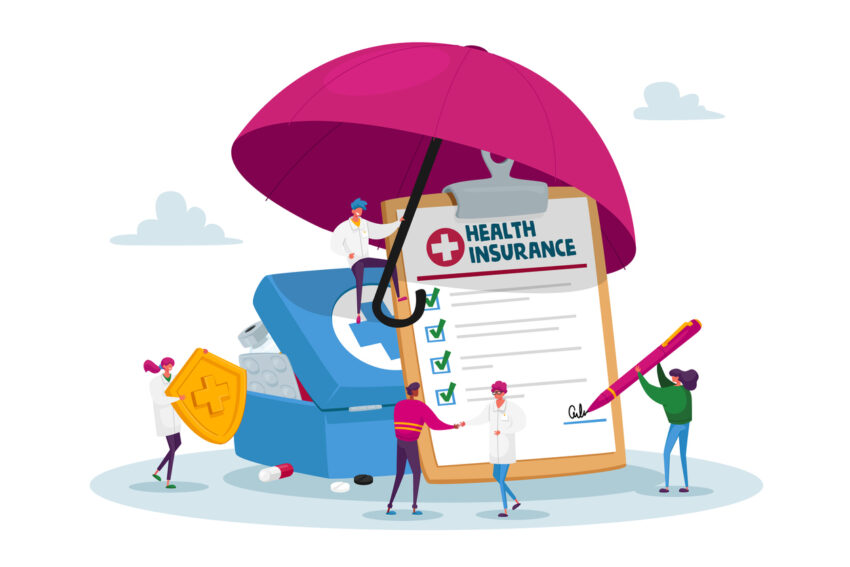
Latinos are uninsured more than two times the rate of their white peers. Given that Latinos are projected to grow to 29% of the population by 2050, this lack of healthcare coverage, including Medicaid, will continue to endanger the health of many more individuals, families, and the healthcare system. We’re raising awareness of the Latino healthcare crisis, its impact on Latino communities, and how you can help Latinos gain health insurance coverage.
How Many Latinos Lack Health Insurance?
Despite the benefits of health insurance, people from overlooked populations, low-income families, and other vulnerable groups unfortunately lack health insurance coverage in the US. Latinos are especially uninsured. A 2022 Census Bureau report found that Latinos had the highest uninsured ...
In the last few years of the COVID-19 pandemic, many of us have come to appreciate the critical importance of public health. In honor of National Public Health Week 2023 (Monday April 3 through Sunday April 9), we’re highlighting an emerging public health concern that impacts health outcomes worldwide: the commercial drivers of health (CDoH). Let’s examine why CDoH is gaining more attention among public health professionals, and how we can address its negative health impacts.
What are the Commercial Drivers of Health?
In the past decade, public health practitioners have noted the growing influence of companies on federal laws and policies. As a result, companies have gained more power in shaping our social, physical, and background environments through business actions that ...
The American Heart Association (AHA) is working to boost health improvement through a variety of online health lessons, called EmPOWERED to Serve. EmPOWERED to Serve includes over a dozen science-based toolkits and lessons covering health education and community support. Toolkits are free and open to the public and can be reached on the EmPOWERED to Serve Health Lessons website. “The EmPOWERED to Serve health lessons offer a way to engage and motivate communities to create a [positive] health [environment],” according to the AHA website. Let’s dive into why these health lessons are a useful and how they can be beneficial for all!
Health Differences Among Communities
Where you live can have a big impact on your health. In fact, our health is influenced by a variety of ...