Volunteering for Thanksgiving, Christmas, and New Year’s helps other people. It gives the volunteer a nice emotional boost, too. So why not volunteer your "voice" or "actions"? We at Salud America! invite you to take or start these 11 actions to promote health equity for Latino and all families this holiday season!
1. Start a School Food Pantry!
About 1 in 6 children are food insecure. They don’t know where their next meal is coming from. Your school can help these kids! Try the Salud America! “School Food Pantry Action Pack.” This is a free guide to help school personnel talk to decision-makers, work through logistics, and start a School Food Pantry to help hungry students and reduce local food insecurity. A School Food Pantry accepts, stores, and redistributes ...
How does COVID-19 affect the brain? Researchers at the Biggs Institute for Alzheimer’s & Neurodegenerative Diseases at UT Health San Antonio are looking for the answer and need your help. Volunteer for the 7T MRI Study of How COVID-19 Affects the Brain! Study volunteers will get an advanced state-of-the-art MRI scan to compare brain imaging of those recovered from COVID-19 to those who have never tested positive for the infection. “This study is to identify the long-term neurological and psychiatric effects of a COVID-19 infection,” according to the Biggs Institute study team, including Drs. Mitzi Gonzales, Gabriel de Erausquin, Sudha Seshadri, Monica Goss, and Mohamed Habes. To volunteer for the 7T MRI Study, contact Vibhuti Patel (210-450-7186), Erin ...
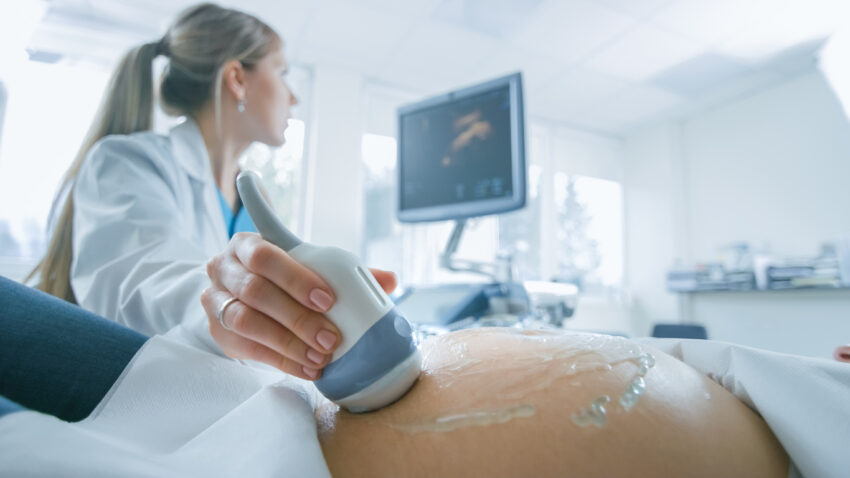
Maternity care deserts make up 36% of all US counties, according a 2022 March of Dimes report. These maternity care deserts contribute to the US having the highest maternal mortality rate among developed countries, as they make it significantly harder for women to get the care they need. Let’s explore how maternity care deserts affect women’s health, especially for Latinas, who already face inequities that limit healthcare access.
Defining Access to Maternity Care
The March of Dimes report defines a maternity care desert as any county without a hospital or birth center offering obstetric (OB) care and without any OB providers, such as obstetrician/gynecologists and certified nurse midwives/certified midwives.
Report’s Key Findings on Maternity Care Deserts
As mentioned ...
TV personality Oprah Winfrey has selected Dr. Amelie Ramirez of UT Health San Antonio as a "Cycle Breaker" for her groundbreaking work to build health. Cycle Breakers is a video series from the Smithsonian Channel that spotlights leaders who are solving health issues. Each Cycle Breaker is chosen by Oprah to augment her documentary that chronicles how some people are suffering from substandard healthcare. Ramirez's episode, released Oct. 3, 2022, features her life's work to break the cycles of difficulties and non-medical drivers of health that impact people. "Cycles are tough to break. Amelie Ramirez is the driving force behind an innovative health program that’s delivering real information & changing perspectives within the healthcare industry," according to the ...
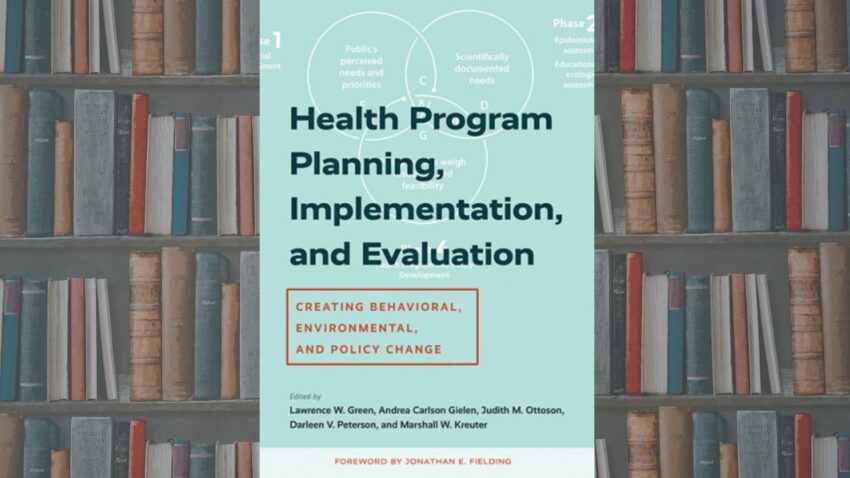
Cancer health disparities. COVID-19. Climate change. These challenges require public health leaders to create programs and policy solutions that address a complex web of factors that influence health status, from biology to social determinants and systemic inequities. In a new book, Health Program Planning, Implementation, and Evaluation, public health education specialist Dr. Lawrence W. Green and his team of editors and chapter authors combine their expertise to offer a high-level guide to public health promotion and programming. The book has a chapter, "Applications in Community Settings," written by Dr. Amelie G. Ramirez and Dr. Patricia Chalela of UT Health San Antonio. "Program and policy solutions to population health challenges require systematic planning, ...
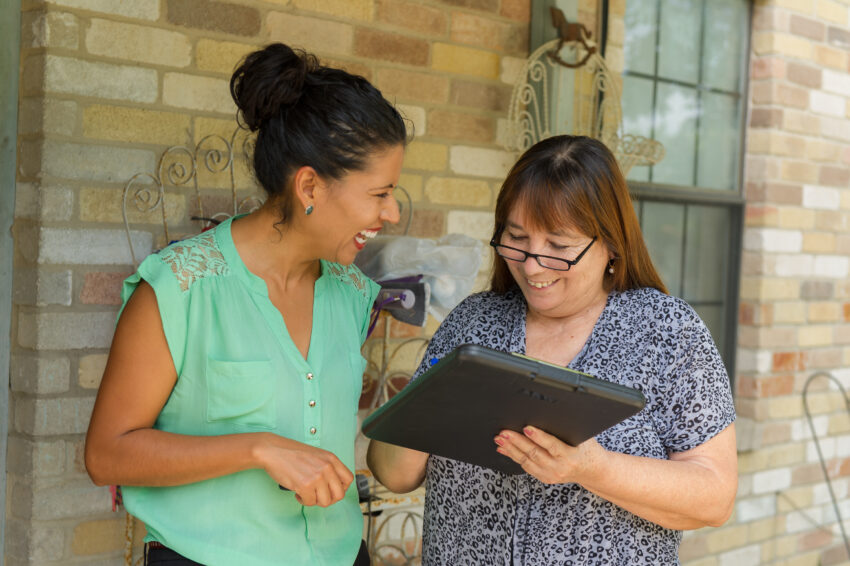
With the emergence of COVID-19, which continues to disproportionately impact Latinos, the world saw first-hand why public health is so important. To help Americans recover from the COVID-19 pandemic, the Biden Administration passed the American Rescue Plan in 2021. Since then, funds have been allocated to improve the health and wellbeing of Americans, including more than $226M to grow the community and public health workforce. Announced on Sept. 30, 2022, this large sum will specifically help train community health workers (CHWs) who connect people to healthcare, build trust within communities, and facilitate communication between patients and healthcare providers, according to a US Department of Health and Human Services (HHS) press release. "Patients depend on community and ...
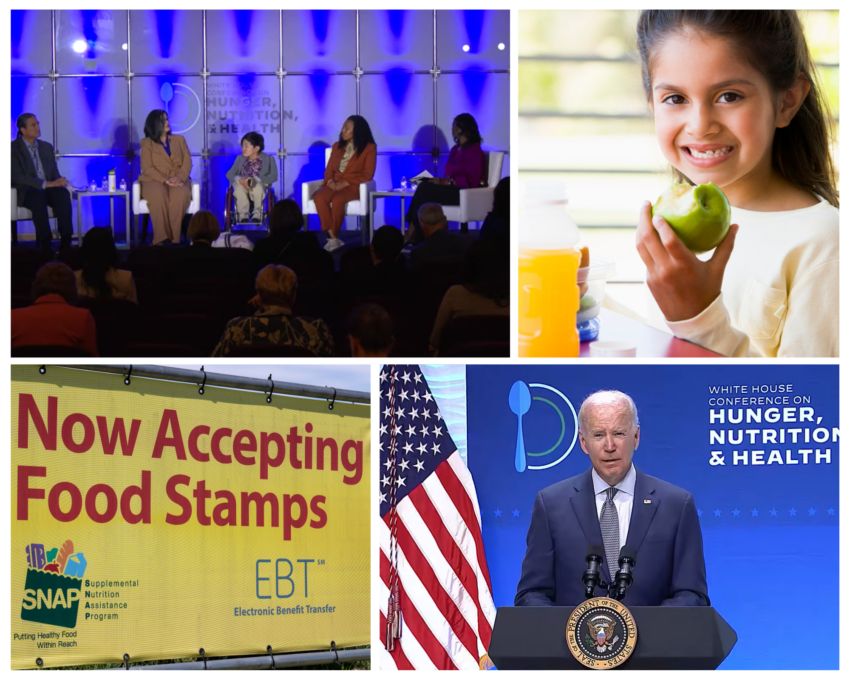
The Biden-Harris Administration announced its goal to eliminate hunger in America, improve diet and physical activity, and reduce diet-related disease by 2030 during the White House Conference on Hunger, Nutrition, and Health on Sept. 28, 2022 – the first such conference in over 50 years. The goal is based on five pillars of strategic action: Improve food access and affordability.
Integrate nutrition and health.
Empower all consumers to make and have access to healthy choices.
Support physical activity for all.
Enhance nutrition and food security research. President Joe Biden also shared three foundational principles for the goal. “Help more Americans access the food that will keep their families nourished and healthy, lot of food deserts out there. Second, ...
By Deputy Under Secretary Stacy Dean, U.S. Department of Agriculture, and Dr. Amelie Ramirez, DrPH, MPH, Director, Salud America! at UT Health San Antonio In recognition of Hispanic Heritage Month, Salud America! at UT Health San Antonio is excited to partner with the U.S. Department of Agriculture (USDA) to discuss the importance of the Special Supplemental Nutrition Program for Women, Infants, and Children (WIC) for the Hispanic/Latino Community. As we celebrate Hispanic Heritage Month, we recognize the important contributions the Hispanic/Latino community has made across the country. We also acknowledge the vital food and nutrition programs that impact the community every day at school, at home, and in the community, including WIC. More than 6.2 million women, infants, and ...
Wonder how much the environment is impacting health in your city? Use the CDC’s newest tool – the Environmental Justice Index (EJI) – to get a single environmental justice score for your community. The EJI measures the cumulative impacts of environmental burden through the lens of human health and health equity. It uses data from the CDC, U.S. Census Bureau, the U.S. Environmental Protection Agency, and the U.S. Mine Safety and Health Administration. CDC officials hope public health officials use the EJI score to identify and map areas most at risk for the health impacts of environmental burden. “Social factors such as poverty, race, and ethnicity, along with pre-existing health conditions may increase these [environmental] impacts,” according to the CDC. “This ...