Abstract
Many Latino families suffer a big lack of access to support for economic and educational success, and quality healthcare. This makes it harder for Latino kids to achieve academically, socially, and physically. Fortunately, there is reason for hope. Research shows that providing whole-family programs and policies that benefit parents and children can create supportive environments for Latinos. Leaders also can promote availability of and access to early care and education programs. They can enhance access to healthcare and services, and programs and policies to reduce time in poverty. They can turn schools into resource hubs to support Latino children and parents. Read the News Release (PDF)
Read the Issue Brief (PDF)
Explore "Family Support" success stories and ...
This is part of our Building Support for Latino Families: A Research Review »
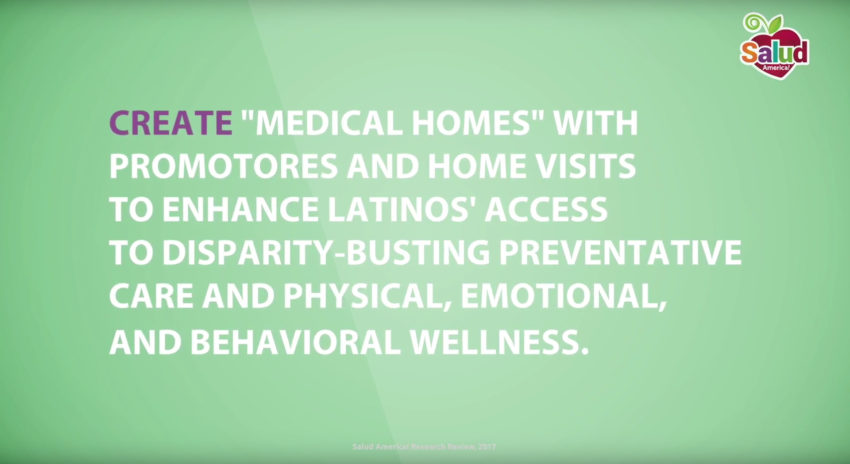
The Benefits of Medical Homes
What can be done to make medical offices more accessible and comfortable for low-income Latino individuals? Recent research has introduced the concept of patient-centered “medical homes” as a model of high-quality primary care that can eliminate disparities.8 Defined by key structural practice features, the medical home provides “enhanced access for routine primary care, improved delivery of preventive services, high-quality chronic disease management, and reduced emergency department and hospital utilization.”120 While still in the early stages of broad application and assessment, the theory behind the medical home model is appealing for application in ...
This is part of our Building Support for Latino Families: A Research Review »
Language as a Predictor of Use of Health Services
Cultural beliefs regarding mental illness are not the only barriers to use of health services. Language is an important predictor of use of mental health services, and the effectiveness of treatment for Latino individuals.19 In the particularly sensitive fields of psychology and psychiatry, a lack of bilingual and bicultural providers severely affects service uptake and outcomes. The problem of language in mental health care has two sides: first, use of interpreters or non-fluent providers can result in literal misunderstandings and loss of nuanced understanding of emotions and reactions; second, lack of genuine understanding of the patient’s ...
This is part of our Building Support for Latino Families: A Research Review »
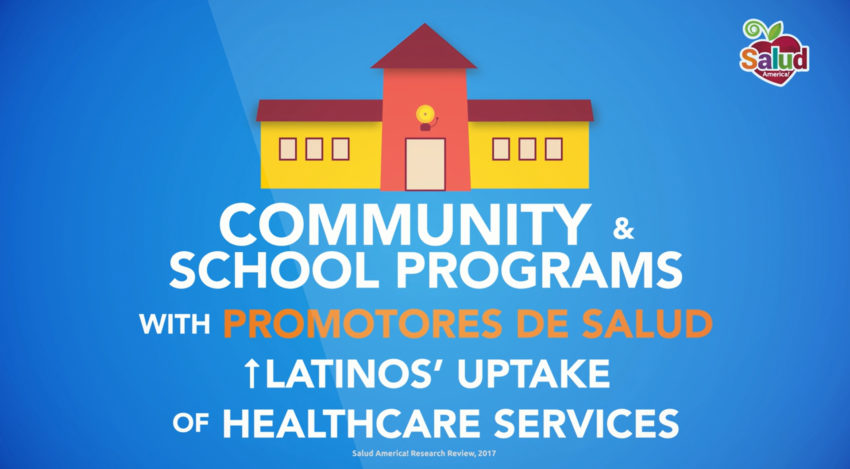
The Concept of Schools as Health Centers
Development of school-based health centers (SBHCs) that provide comprehensive care for students, and sometimes their families, has provided a solution for another important barrier to preventive and whole-self health care: access.21,116,127 Maintaining regular well visits and acute care without missing school or work is a challenge in low-income communities, making health care impossible for some students and families.127 The American Academy of Pediatrics has stated that a “medical home” is the ideal form of health care delivery for children and adolescents, and SBHCs strive to meet the AAP definition of a medical home: a system of care that is ...
This is part of our Building Support for Latino Families: A Research Review »
Addressing Latino Subpopulations
This research review has emphasized several policies and programs that could benefit Latino families as a whole. However, it is important to point out that future research will need to: Determine how programs need to be catered to fit the different Latino subpopulations that they serve across the United States;
Carefully assess community needs and the initiation of collaborations with community leaders, stakeholders, and activists for development of contextually appropriate policies that will be successful in the target population; and
Continue reviewing and assessing the inclusion of cultural considerations that will allow final adaptation of programs into a ...
This is part of our Building Support for Latino Families: A Research Review »
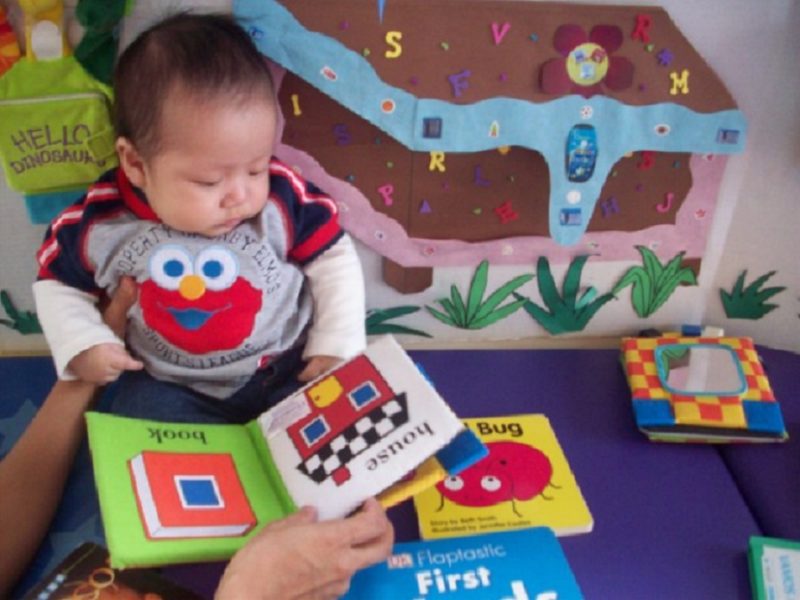
The Growth of Head Start
Given the evidence to support the benefit of organized early childhood education, development of high-quality ECE centers that also promote engagement of Latino parents holds great promise for the future of Latino children. Many programs from the 1960s and on provide evidence for the effectiveness of incorporating parent-targeted elements within early childcare programs, and these family-based approaches form the basis for the two-generation model discussed later in this review. The first explicit family-based program was Head Start, which in 1965 declared the goal of providing low-income preschool children a comprehensive program to meet their emotional, social, health, ...
This is part of our Building Support for Latino Families: A Research Review »
Conclusions More than one-third of Latino families live in poverty and two-thirds are low-income, and face limited access to high-quality education, community resources, and health care.
Latino children excel in cognitive and social development measures when they participate in high-quality center-based early childhood education and public pre-K programs.
Single-site ECE and infant care centers partnered with family resource centers offer the highest-impact outcomes for low-income Latino children and parents.
Parent resources in two-generation programs must focus on services that aid parents in finding high quality jobs with family-supporting wages. Efforts to minimize the toxic stress associated ...
This is part of our Building Support for Latino Families: A Research Review »
Introduction
Latinos are expected to comprise 32% of the U.S. population by 2050.1 As such, the strength and health of this country’s future workforce depends upon the investments made in Latino communities today. Currently, one-third of U.S. Latino families live in poverty and two-thirds are low-income, with limited access to high-quality education, community resources, and health care.2,3 Recent research has shown that social programs targeting adults as well as children result in the most effective long-term improvements in children’s academic success, health, and future economic stability.4 Thus whole-family support services that address the specific social, medical, and economic needs of ...
Many families aren't as active as they would like to be because they lack safe places to walk, bike and play. In fact, the U.S. is failing five of nine factors that reflect walking and walkable communities. Latinos in particular face barriers to walk, which negatively impacts physical and mental health, as well as economic prosperity. Are you interested in helping to make walking more commonplace for families in your community?
Micro Grants;
America Walks is hosting a round of micro grants for up to $1500 to fund or start smaller-scale, low-cost projects and programs. The goal is to increase the prevalence of walking, expand the diversity of people and organizations working to advance walkability, and help to make walking safer, easier, and more fun for all community ...