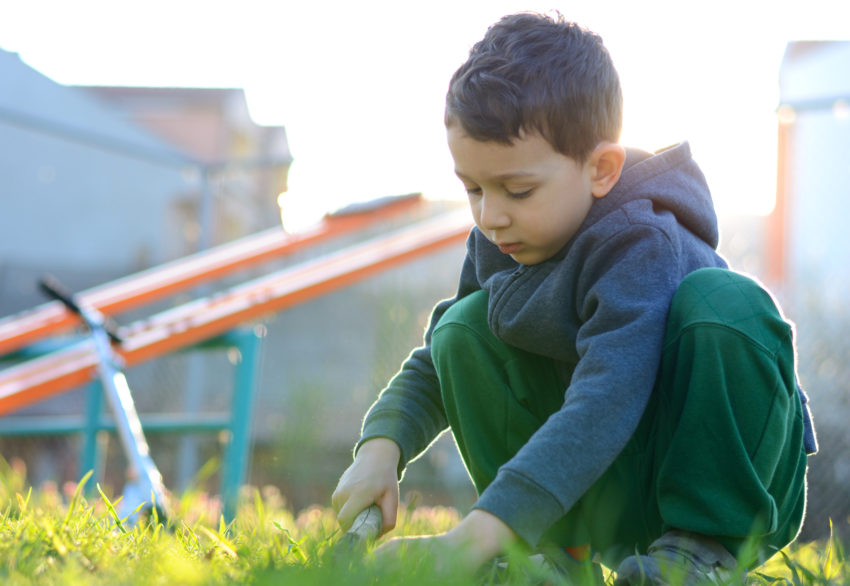
More kids in Philadelphia experience four or more childhood traumas (21.5%) than kids across the nation (14.3%). Multiple traumas like abuse, parental death, racism, fear of deportation, and others—known as adverse childhood experiences (ACEs)—can significantly impact a child's brain development, academic achievement, and physical and mental health into adulthood. Latino kids are at high risk of multiple traumas, and acting out. That's why we are excited to see three philanthropic groups team up in Philadelphia (14.4% Latino) to create a new guide to help funders and groups focus on bringing trauma-informed care for local kids. Trauma-informed care shifts the outlook from "What's wrong with you?" to "What happened to you and how can we help?" "Understanding the ...
A controversial new law could force schools in Kentucky to start sex education in fourth grade, according to Lexington Herald Reader. What would this mean for Latinos? Teen pregnancy? Mental health?
A Big Proposal for Earlier Sex Education Kentucky (3.5% Latino) has the seventh-highest teen birth rate in the United States. Tom Burch, a state representative, introduced House Bill 80 to lower those rates by arming students with more knowledge about their body, according to Lexington Herald Reader. Sex education is not mentioned in some homes because it can be hard to talk about, or embarrassing for parents and kids. Schools thus are sometimes the main path to sex education. Most schools are required to teach sex education. But it's usually to older students starting in ...
In the midst of the national opioid crisis are children. These children are dealing with traumatic events and often placed in foster care or with relative caregivers. Traumatic events hinder early childhood development and negatively impact school performance, lifelong physical and mental health, and professional success. Sadly, many Latino children do not get the services they need to heal and overcome the harmful effects of trauma. High rates of opioid and illegal substance abuse in Texas in 2015 sparked a small trauma-informed committee in San Antonio (67% Latino) to plan a trauma-informed conference to build a network of trauma-informed care in South Texas. They believe it is critical for counselors, teachers, caregivers, mental health professionals, and medical personal, ...
An initiative by the First Lady of Wisconsin to prevent and reduce childhood trauma has grown to become a dynamic collaboration, putting Wisconsin in the lead to be the first trauma-informed state. Trauma during childhood negatively affects development and physical and mental health into adolescence and adulthood. Traumatic events include: physical and emotional neglect; physical, emotional and sexual abuse; parental divorce, separation, incarceration, and substance abuse; and poverty. These are also called adverse childhood experiences (ACEs) and were first studied in the 1990s. The more ACEs a child experiences, the higher their risk of chronic disease, mental illness, substance abuse, violence, teen pregnancy, incarceration, and dropping out of high school. Since the ...
Many U.S. Latino families lack of access to quality education, making it harder for Latino kids to achieve academically, socially, and physically. Fortunately, schools can make a big change to support Latino kids and families. By creating integrated student support initiatives, schools can better serve both their students and their communities, according to a new report, Making the Grade: A Progress Report and Next Steps for Integrated Student Supports from the nonprofit Child Trends.
What are Integrated Student Supports?
Integrated student support initiatives add specific services—academic support, housing assistance, food supplies, medical care, mental health services, etc.—in schools to help kids and families ensure their overall health and academic success. This effort ...
Almost 4 in 5 Latino kids suffer at least 1 adverse childhood experience (ACE) such as poverty, neglect or abuse. 1 in 5 Latino youth suffer from depressive symptoms. This coupled with a lack of parental involvement in a child’s education and poor health can make things extraordinarily difficult for Latino kids to graduate from high school and succeed in life. The good news is communities can take action by pooling resources and working with others to support Latino families from before birth through adulthood. Join us this Tuesday, Jan. 9, during our weekly #SaludTues chat, as we chat about ways to support education and build communities that thrive. WHAT: #SaludTues Tweetchat: How to Build Support for Latino Families in 2018!
TIME/DATE: 1-2 p.m. ET Tuesday, Jan. 9, ...
Some areas of San Antonio (68% Latino) are much harder to live in than others. Latinos in these areas face more hardship, health problems, and die sooner. In fact, everyone living in these areas faces more hardship, health problems, and dies sooner. Lily Casura and other grad students in Social Work at the College of Public Policy at UT San Antonio (UTSA) mapped ZIP-code level data and launched a project to explore life lived in four difficult-to-live ZIP Codes in San Antonio. Their goal is to deepen conversations about equity and investment to improve quality of life. January 2019 UPDATE: Casura continues to gift San Antonio with interactive maps, to include results of the 2018 Community Needs Assessment.
Why ZIP Codes?
Everyone can visualize the physical environment of ...
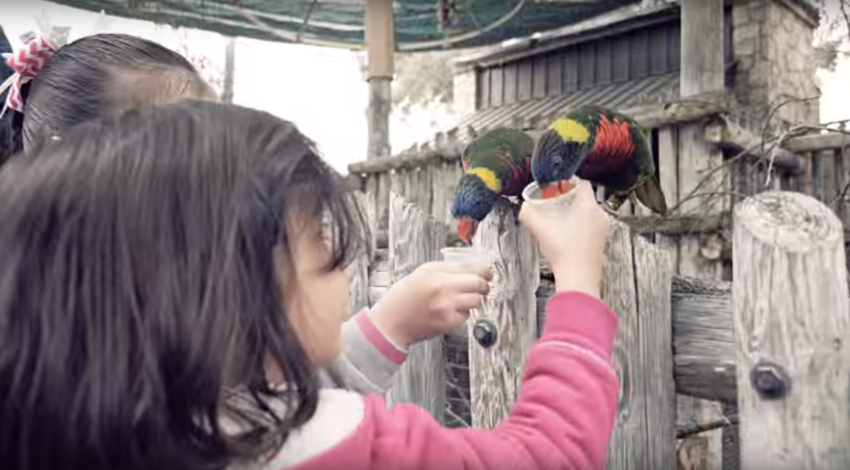
Imagine you're 4 years old. How would you feel going to preschool with crocodiles, elephants, and butterflies? What about learning letters while on nature walks? That childhood fantasy is reality for kids at the Will Smith Zoo School in San Antonio (68% Latino). The Zoo School, which opened in 2004 and became licensed in 2014 at the San Antonio Zoo, will expand its capacity from about 50 to more than 200 students in 2018 and become the largest nature-based preschool in the nation, SA Current reports. Zoo officials believe that learning can be as much of a serious hands-on experience as it is messy fun. "Children will spend time in nature exploring and discovering the wonders of nature," according to the Zoo School Parent Handbook. "Basic preschool concepts will be ...
We at Salud America! are dedicated to helping people drive healthy community change for Latino and all kids. That's why we’re excited to announce our efforts have won two Digital Health Awards from the Health Information Resource Center. The Center is a national clearinghouse for professionals who work in consumer health fields that recognizes the world’s best digital health resources: Fall 2017 Digital Health Awards, Gold, Salud America! YouTube Channel
Fall 2017 Digital Health Awards, Bronze, Salud America! Website “We’re humbled by the recognition of our communication work from groups like the Health Information Resource Center,” said Dr. Amelie Ramirez, director of Salud America! at the Institute for Health Promotion Research at UT Health San Antonio. “Our ...