Kids need places to play to be healthy. Physical activity is proven to help control weight, reduce risk of disease, strengthen muscles, and improve mental health. But Latino families are more likely than white families to live in neighborhoods with no recreational facilities, or unsafe ones. This is according to recent research cited by Salud America!, a national Latino childhood obesity prevention network at UT Health San Antonio and supported by the Robert Wood Johnson Foundation. That’s why we at SaludToday are spotlighting heroes who are creating play opportunities for Latino families!
Irma Rivera: First Park in the 92701 Irma Rivera saw a child nearly hit by a car while playing in an empty parking lot in park-poor Santa Ana, Calif (78% Latino). She vowed to do fix ...
When we are talking about academic performance, there is no right or wrong way to "workout." Any physical activity to get you moving and to get your blood pumping is beneficial and can boost your mood and help you reset and focus. Confederation Park Community School in Saskatoon Canada opens their gym all day and allows students to leave class at any time to burn off some energy. The goal is to empower kids to explore different kinds of physical activity when they feel like they can't concentrate in class. They can walk or run, do weights, play on gymnastics rings, flip big tires over, throw weighted balls, do yoga, dance, and many more activities. "Brain breaks" are one effective method to get kids moving in the classroom, but, as parents and teachers know, kids come to ...
Did you know fewer than 5% percent of Latinos participate in federal clinical trials? Researchers thus have less chance to develop new cancer treatments for this population, which suffers a heavy burden of certain cancers, obesity, and mental health issues. Let’s use #SaludTues on Tuesday, April 4, 2017, to tweet in English and Spanish about the latest strategies to get more Latino into clinical trials for National Minority Health Month in April 2017 and National Public Health Week April 3-9, 2017: WHAT: #SaludTues Bilingual Tweetchat: “Clinical Trials and Latinos”
TIME/DATE: 1-2 p.m. ET (Noon-1 p.m. CT), Tuesday, April 4, 2017
WHERE: On Twitter with hashtag #SaludTues
HOST: @SaludToday
CO-HOSTS: FDA Office of Minority Health (@FDAOMH), FDA En Español ...
Everyone needs proper sleep, especially Latinos. Lack of sleep contributes to heart attacks, diabetes, obesity and other serious health issues that disproportionately affect Latinos, CDC reports. For World Sleep Day on March 16, 2018, let's explore why sleep is important for your health, how much Latinos sleep (or don't sleep), and how you can improve your sleeping habits. World Sleep Day is directed by World Sleep Society, World Association of Sleep Medicine, and World Sleep Federation.
How Much Sleep Do We Need?
The National Institutes of Health (NIH) suggests that children need at least 10 hours of sleep daily, teens need 9-10 hours, and adults need 7-8 hours.
Why Is Getting Enough Sleep Such a Big Deal?
People who get insufficient sleep are also more likely to suffer from ...
Did you know this week is National Eating Disorders Awareness week? An increasing amount of Latino and other minority populations deal with "disordered eating"—restrained, compulsive or binge eating and an associated loss of control—in different ways depending on their culture. Let’s use #SaludTues on Feb. 28, 2017, to tweet about #EatingDisorders, their impact on Latinos, and info, resources, and tips how to promote healthy eating patterns for all! WHAT: #SaludTues Tweetchat: “Let’s Talk #EatingDisorders”
DATE/TIME: 1-2 p.m. ET (Noon-1 p.m. CT), Tuesday, Feb. 28, 2017
WHERE: On Twitter with hashtag #SaludTues
HOST: @SaludAmerica
CO-HOSTS: @EDCoalition We’ll open the floor to your stories and experiences as we explore: What are some signs of ...
Why do social injustices occur? Noemi Fernandez, who is interested in tackling the reasons for social justice issues, desires to improve health and empower the Latino community. Fernandez is a first-generation Mexican-American bilingual student. She grew up in a predominantly low-income Latino community. With the guidance and support of her older sister and parents who taught her pride in their Latino culture, she gained experience in social work and started working on mental health issues, particularly sexual trauma, among minority groups. She earned her MSW, too. Fernandez also applied for the Éxito! Latino Cancer Research Leadership Training program, which recruits 25 master’s-level students and professionals for a five-day Summer Institute to promote doctoral degrees ...
Almost half of all the adults in the United States have at least one chronic medical condition. These conditions include many which disproportionately plague Latinos, such as diabetes and lung disease. Since the passage of the Affordable Care Act (ACA), health coverage for chronically ill patients has increased by nearly 5%. While this has shown to be a significant gain, more work needs to be done. A study, published in the Annals of Internal Medicine studied adults between the ages of 18 and 64, the largest pool taking part in the Health Insurance Marketplace. “We wanted to see how many people were uninsured and clearly needed health insurance,” said Dr. Hugo Torres, of the Cambridge Health Alliance in Cambridge, MA in an interview with USA Today. “We know the prevalence of ...
Since the passing of the ACA, Latinos have benefitted from the benefitted greatly, reducing their rate of uninsured by nearly 8%. This year’s Open Enrollment period for the Health Insurance Marketplace has proven this trend to again be correct. Hundreds of thousands of Latinos have again taken part and gotten coverage. “Nationwide demand for health coverage is higher than ever, as Americans prove again that Marketplace coverage is vital to them and their families,” said Department of Health and Human Services (HHS) Secretary Sylvia M. Burwell in a news release. “For Americans who have not yet signed up, it’s not too late.” In order to reduce health disparities, it is critical to address inequities in programs, practices, and policies. Join our site, connect with ...
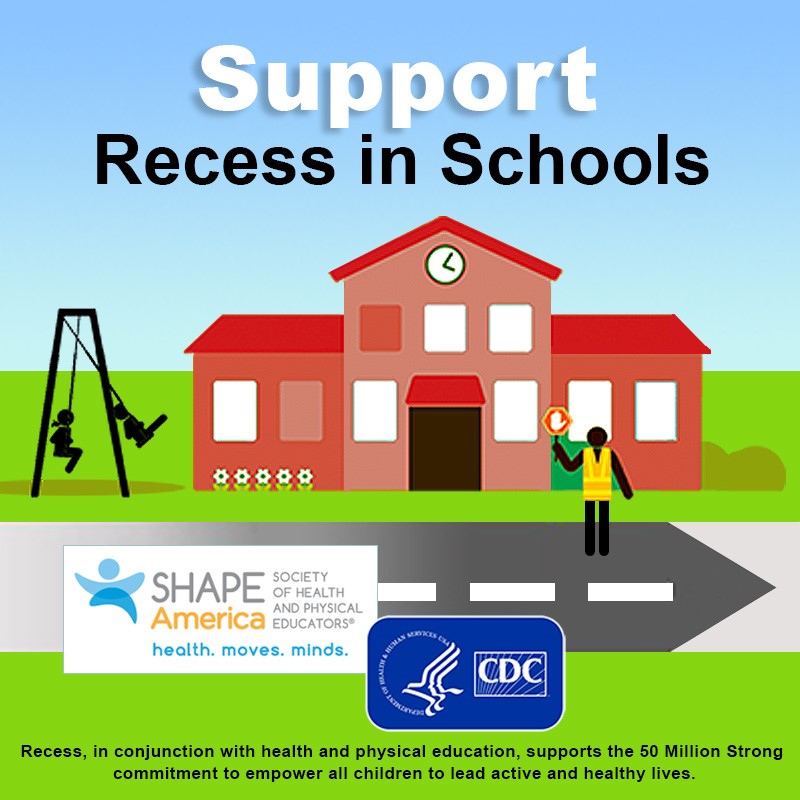
Recess can help kids get their 60 minutes of recommended daily physical activity to reduce their risk of developing lifelong chronic diseases, like heart disease, and diabetes, and to improve their academic performance and mental health. Unfortunately, Latino kids have fewer opportunities before, after, and during school for physical activity than white kids. The Centers for Disease Control and Prevention (CDC) and SHAPE America have developed a guide that provide schools with 19 evidence-based strategies for recess, as well as a planning guide and template to help develop a written recess plan that integrates these strategies. Download these free resources to start a healthy change in your school and then spread the word! Recess is a critical part of the school ...