 by
by 
Share On Social!
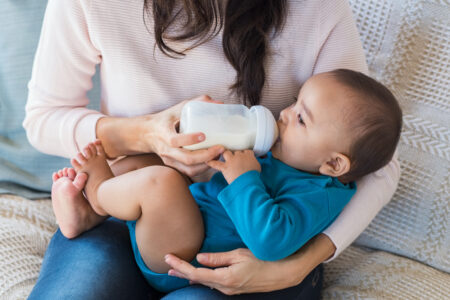
Breastfeeding has many health benefits for both mothers and babies.
For mothers, breastfeeding can help speed up the recovery process after birth, reduce long-term health risks, including breast and ovarian cancers, and help with postpartum weight loss due to the extra calories being burned.
For infants, breastfeeding contains optimal nutrition for immune protection from illnesses helps with brain development, and reduces risks of chronic health conditions like obesity.
Unfortunately, without access to Spanish-language lactation resources, too many Latinas give up breastfeeding too soon.
That’s where the Mama Sana Program comes into play.
The program offers mothers Spanish-language support to help them navigate the difficult journey that is breastfeeding.
Let’s dive into the program and how it benefits Latina and all mothers.
Why Is the Mama Sana Program Needed?
Receiving lactation support early can make or break a mother’s breastfeeding journey.
A lactation consultant can ensure that the mother receives fundamental information such as how long to feed, when to feed, and how to latch a baby properly. This can ensure she continues breastfeeding for as long as possible.
However, visits with a lactation consultant aren’t as widely available to Spanish-speaking mothers, according to a Public Health Post news article.
At one hospital, it was discovered that only 20% of Spanish-speaking mothers were receiving this valuable service.
This is what sparked the creation of the Mama Sana Program, which is designed to help Spanish-speaking Latinas during and after their hospital stay.
What Does the Mama Sana Program Do?
The Mama Sana Program includes counseling to address the many facets of lactation.
Topics include discussing the benefits of providing breast milk over a long period of time and best practices to avoid practices that might interfere with breastfeeding or activities that may lead to an earlier introduction of formula.
Not having a Spanish-speaking lactation consultant or one who isn’t equipped to handle the needs of a mother with a Latino background can affect a mother negatively.
“If counselors don’t know about mothers’ … beliefs or don’t speak their language, they may not be able to address specific beliefs that can lead to breastfeeding for shorter periods and less time where babies are receiving only breast milk. When lactation counseling isn’t able to meet mothers’ needs, we lose the chance to promote this healthy behavior for moms and babies,” the article states.
How Does the Mama Sana Program Work?
Participating mothers get access to a certified lactation counselor who speaks Spanish.

That counselor visits them daily while they are in the hospital. Once the mother and baby are home, they would have access to a phone number to call if they needed further assistance, which many women require after giving birth.
After launching the program, the program team tested the success rate by examining the number of moms that were still breastfeeding when they left the hospital and thereafter.
They also compared that to the breastfeeding habits of women before the launch of the program and measured it against the number of women who were receiving lactation counseling in Spanish.
What they found was that the program increased the percentage of mothers who breastfed in the hospital and for 6 weeks after returning home.
What’s more, the existence of the program didn’t lead to mothers delaying or avoiding formula use.
In fact, many chose to supplement with formula.
Participants also received lactation counseling in Spanish.
“Mama Sana showed that simple changes, like using counselors who speak the same language and focus on [background] norms of breastfeeding, can improve early breastfeeding outcomes,” the news report asserted.
Improve Health in Your Community
How is the state of health in your community?
Find out by downloading a Salud America! Health Report Card for your town!
Enter your county name and get auto-generated local data with interactive maps and comparative gauges on several health indicators. This can help you visualize and explore local issues in education, housing, transportation, food, health, and more.
See how your county stacks up compared to the rest of your state and nation.
Then email the Report Card to local leaders to raise awareness, include the data in a presentation or grant proposal, or share it on social media to drive healthy change in your community!
Explore More:
Maternal & Child HealthBy The Numbers
142
Percent
Expected rise in Latino cancer cases in coming years