by
by 
Share On Social!
Volunteering for Thanksgiving, Christmas, and New Year’s helps other people. It gives the volunteer a nice emotional boost, too.
So why not volunteer your “digital voice” or “actions”?
We at Salud America! invite you to take or start these 13 actions to promote health equity for Latino and all families this holiday season!
1. Speak Up to Limit Sugar in Dietary Guidelines!
A few years ago, scientists advised federal leaders to adjust the Dietary Guidelines for Americans to lower added sugar intake from 10% to 6% of daily calories and reduce men’s daily alcohol intake from two to one drink a day.
That advice was not taken.
 Now those scientists – the Dietary Guidelines Advisory Committee – are asking for public comment as they again prepare to recommend changes to the dietary guidelines.
This is an opportunity to speak up for nutrition!
Submit a model comment created by Salud America! to urge lower added sugar and alcohol intake in the 2025-2030 Dietary Guidelines for Americans!
The comment period opened Jan. 19, 2023. Comments will close in late 2024.
2. Pledge to Take Infection Control Training!
 When you practice infection control consistently and confidently, it can help stop the spread of disease in healthcare settings and save lives.
This is why you and all frontline healthcare providers can publicly pledge to take training through the Centers for Disease Control & Prevention’s Project Firstline program.
Project Firstline is a training and education collaborative that provides all healthcare workers, no matter their role or educational background, with access to the infection control information they need to protect themselves, their patients, and their coworkers from infectious disease threats.
Project Firstline offers training and educational resources on various infection control topics, including risk recognition and infection control basics related to COVID-19.
3. Test Your Memory with the Brain Health Registry!
Want to play memory and thinking tests and help millions of families with dementia?
The Brain Health Registry can help you do that.
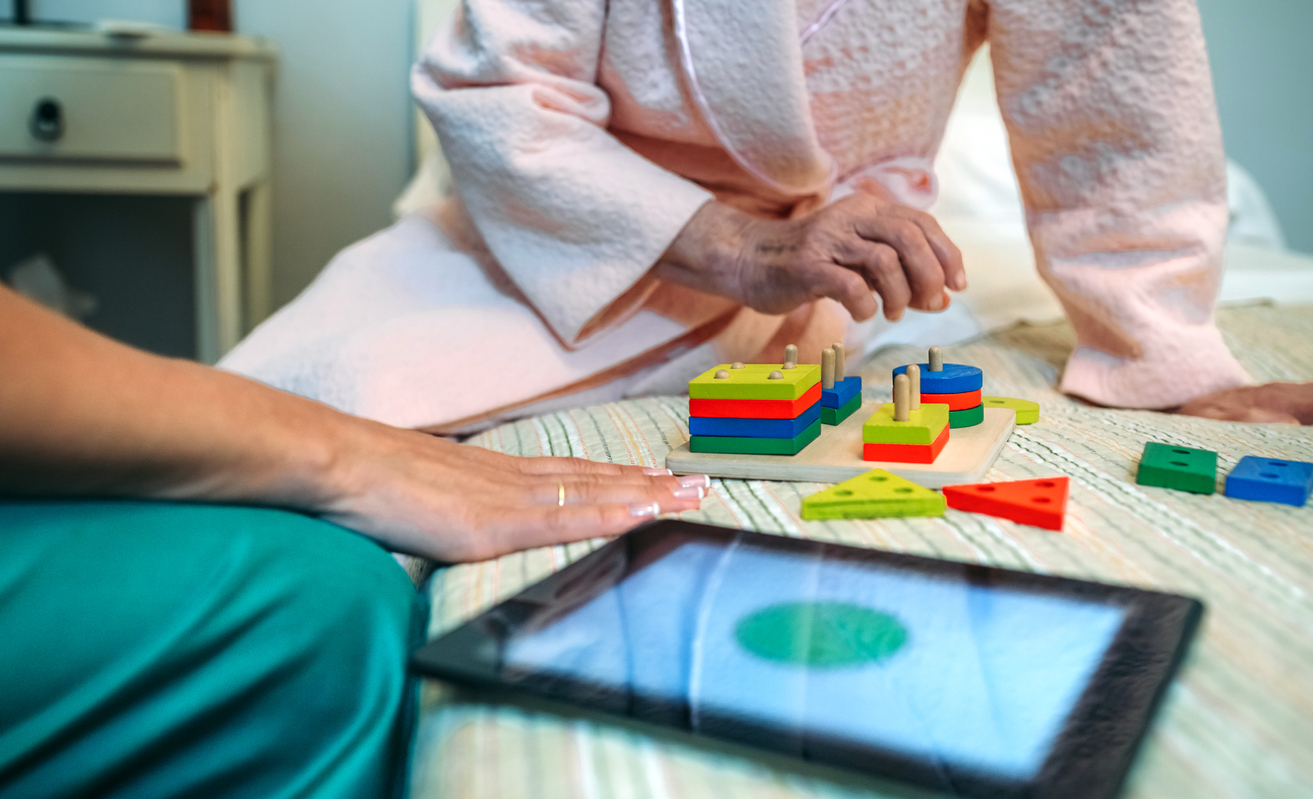 Researchers at the University of California San Francisco (UCSF) developed a registry for adults interested in conducting brain tests that can help the future creation of treatments for Alzheimer’s, dementia, Parkinson’s, and other brain disorders.
Now, they’re partnering with the Glenn Biggs Institute for Alzheimer’s and Neurodegenerative Diseases at UT Health San Antonio to expand brain health research in the Texas region of the United States, through a partnership called STOP-AD.
Learn about the STOP-AD Brain Health Registry, how Alzheimer’s is affecting Latinos, and how clinical trials can help us tackle Alzheimer’s and other dementias.
JOIN THE BRAIN HEALTH REGISTRY!
4. Download a ‘Health Report Card’ for Your City with Local Data!
In May 2023, we updated our Health Report Card to cover your county’s child opportunity score, environmental justice score, location affordability, and transit access.
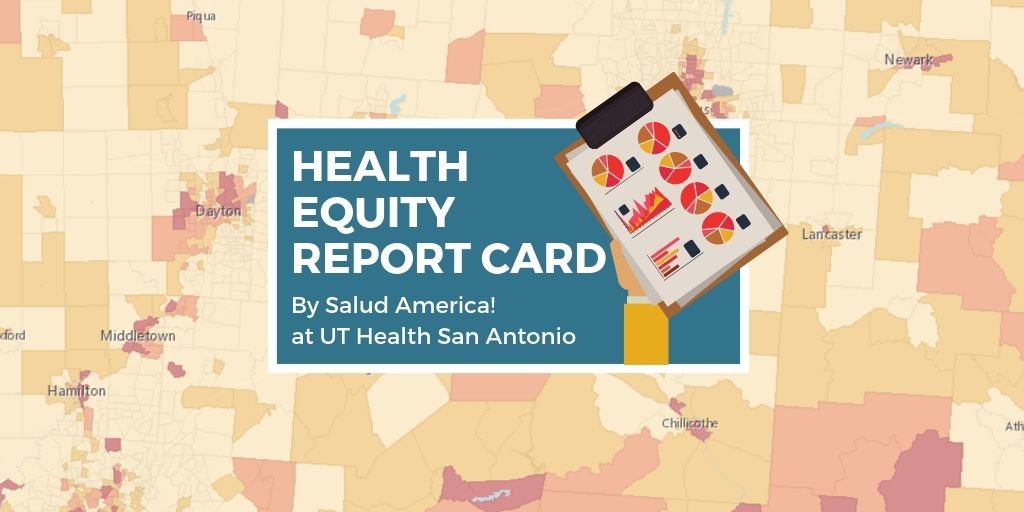 The Health Report Card, first launched in 2017, auto-generates Latino-driven and local data with interactive maps and comparative gauges. This can help you visualize and explore differences in housing, transit, poverty, health care, food, and education.
You will see how your county stacks up in these health issues compared to your state and the nation.
Then you can share the Report Card with your local leaders to speak up for healthy change!
Get your Health Equity Report Card!
5. Find Out If You Have Involuntary Perceptions and What to Do Next!
Many people think they harbor no negative perceptions toward other people, or they believe they know their perceptions and don’t act on them.
But everyone has involuntary perceptions.
Involuntary perceptions are potential harmful beliefs that affect our understanding and decisions about others beyond our conscious control, but fortunately can be “rewired” toward more compassion for others.
Download the free Salud America! Action Pack “Find Out If You Have Involuntary Perceptions and What to Do Next” to see if you have involuntary perceptions. You will also learn from others who have overcome their own involuntary perceptions, and encourage others to learn about involuntary perceptions.
6. Start a School Food Pantry!
About 1 in 6 children are food insecure. They don’t know where their next meal is coming from.
Your school can help these kids!
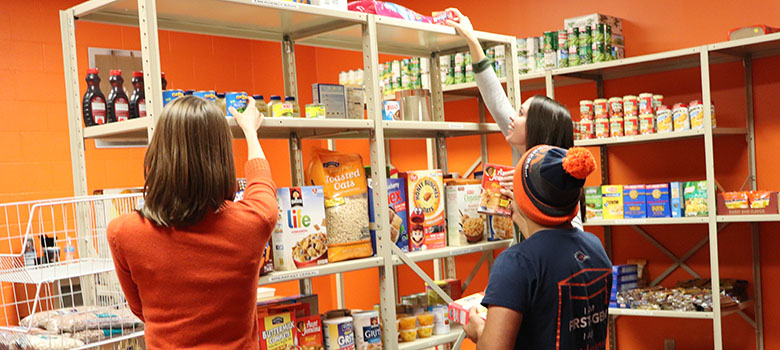 Try the Salud America! “School Food Pantry Action Pack.” This is a free guide to help school personnel talk to decision-makers, work through logistics, and start a School Food Pantry to help hungry students and reduce local food insecurity.
A School Food Pantry accepts, stores, and redistributes donated and leftover food to students.
The Action Pack was created by Dr. Amelie G. Ramirez, director of Salud America! at UT Health San Antonio.
Dr. Ramirez had input from Jenny Arredondo, nutrition director at San Antonio ISD. Arredondo started school food pantries on 10 campuses in 2017-18, based on a Texas law change led by Diego Bernal.
7. Check Out Our Webinars: ‘Let’s Improve Health in South Texas and Beyond!’
We want all people to be as healthy as possible.
How can we reach this ideal, especially as many people struggle with access to clinical trials, income, health care, food, housing, and other issues?
You’re invited to a webinar series, “Let’s Improve Health in South Texas and Beyond,” a collaboration of the Salud America! program, the Institute for Health Promotion Research at UT Health San Antonio, the Mays Cancer Center at UT Health San Antonio, and Genentech.
“These webinars will help healthcare professionals and the public understand and take action for health in South Texas and beyond,” said Dr. Amelie Ramirez, leader of Salud America! and the IHPR at UT Health San Antonio.
8. Volunteer for a Clinical Trial for Your Familia!
Cancer and Alzheimer’s hurt many of our abuelos, moms, dads, and others we love.
Clinical trials help us fight for our familia.
Clinical trials are studies that help researchers learn more to help slow, manage, and treat Alzheimer’s and cancer for current and future family members. But without Latino volunteers for clinical trials, the benefits may miss this group.
Visit our clinical trials page to find a clinical trial, read about hero volunteers, and more!
Search the Mays Cancer Center at UT Health San Antonio’s Find a Clinical Trial database to learn more about available clinical trials and eligibility requirements.
Seek a cancer trial anywhere in the nation here.
“Latinos in clinical trials are not only helping themselves, but they’re also building a future with better treatments that can help their families in the future,” said Dr. Amelie Ramirez, director of the Institute for Health Promotion Research and Salud America! at UT Health San Antonio.
9. Start ‘Handle With Care’ So Police Alert Schools if Kids Are Exposed to Adverse Childhood Experiences (Even If School is Closed or Virtual)!
60% of U.S. children have been exposed to violence, crime, or other adverse childhood experiences (ACEs).
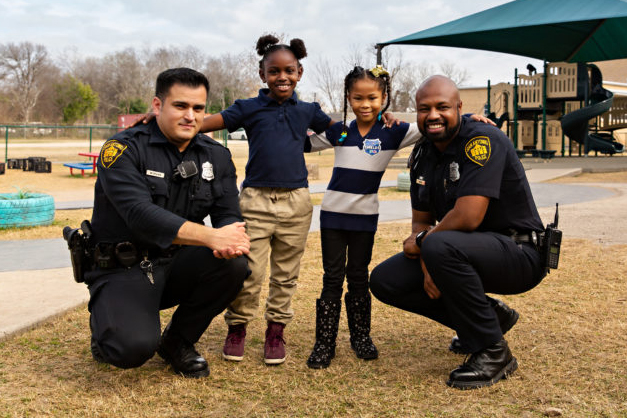 These kids still have to go to class, virtually or in person. They carry a burden that can interfere with their behavior and grades. And schools don’t know there’s an issue at home.
Enter “Handle With Care.”
Download the free Salud America! “Handle With Care Action Pack” to start a Handle With Care program. In the program, police notify schools when they encounter children at a tough scene, so schools can provide support right away, even if operating virtually.
The Action Pack contains materials and technical assistance to start a conversation and plans for implementing a Handle With Care program. Over 65 U.S. cities have started such a program.
The Action Pack was created by Dr. Amelie G. Ramirez, director of the Salud America! program, with help from Andrea Darr, director of the West Virginia Center for Children’s Justice, which started the first Handle With Care program in 2013.
10. Quit Smoking!
Ready to quit smoking, but need help?
Enroll in Quitxt, a free English or Spanish text-message service that turns your phone into a personal “quit smoking” coach from UT Health San Antonio.
To join Quitxt, text “iquit” (for English) or “lodejo” (for Spanish) to 844-332-2058.
“We’re excited to share Quitxt to provide real-time help with motivation to quit, setting a quit date, handling stress, and much more, all on your phone,” said Dr. Amelie G. Ramirez, director of the Salud America! program at UT Health San Antonio, and also Quitxt, sponsored by the Cancer Prevention and Research Institute of Texas.
“Quitting now can reduce your risk of chronic diseases, cancer, and a severe case of COVID-19. It can also improve air quality around you.”
11. Share Stories of Latinos Who Changed Their Hearts and Got the COVID-19 Vaccine!
To help move Latinos from vaccine hesitancy to vaccine confidence, Salud America! is uplifting the stories of real Latinos who overcame incorrect information, got the vaccine, reconnected with family, and are helping end the pandemic.
Share these “change of heart” heroes in English or Spanish!
- Rosa Herrera read on Facebook that the vaccine would inject her with a microchip. She learned that was a myth. See exactly what changed her heart and pushed her to get the vaccine! (en español)
- Jesus Larralde was nervous about the vaccine’s possible side effects. His wife got the vaccine and was fine. See exactly what changed his heart and pushed him to get the vaccine! (en español)
- Helen Cordova thought the vaccine was rushed. But she did her research and learned the vaccine’s safety, and volunteered to be the first person in California to get the vaccine! See exactly what changed her heart! (en español)
Find COVID-19 vaccine locations near you in English or Spanish!
12. Help Your City Adopt Smoke-Free Multifamily Housing!
People who live in multifamily housing share air with their neighbors ─ including secondhand smoke.
 Secondhand smoke contains over 70 cancer-causing chemicals, has killed over 2.5 million people, and can travel through doorways, halls, windows, ventilation systems, electrical outlets, and gaps around fixtures.
Download the free Salud America! Action Pack “Help Your City Adopt Smoke-Free Multifamily Housing” to help your city explore a smoke-free multifamily housing policy for common areas and individual units.
Experts say this can protect the health of tenants and staff of apartments, as well as save property owners money in unit maintenance, fire prevention, insurance, and reduced legal liability.
You can use model emails, graphics, and policies to explore a local smoke-free multifamily housing policy in your town.
13. Subscribe to the Only Latino Health Equity Podcast!
The “Salud Talks” podcast, from the team at Salud America! at UT Health San Antonio, is now live!
For each episode, listeners will hear from health experts—from grassroots movements to national organizations—on topics ranging from climate change, adverse childhood experiences, mental health, and more.
Salud Talks episodes are released periodically.
Each episode is available wherever fine podcasts are downloaded, including Apple Podcasts, Spotify, and SoundCloud.
Thank You!
Our Salud America! team, led by Dr. Amelie G. Ramirez of the Institute for Health Promotion Research at UT Health San Antonio, is thankful for the opportunity to drive messages of health improvement across the nation.
Thank you for visiting our website. Thank you for your strong interest in health improvement.
Happy Thanksgiving, Merry Christmas, and Happy New Year!
Explore More:
Increasing Civic EngagementBy The Numbers
50
percent
of big U.S cities have a local board of health