by
by 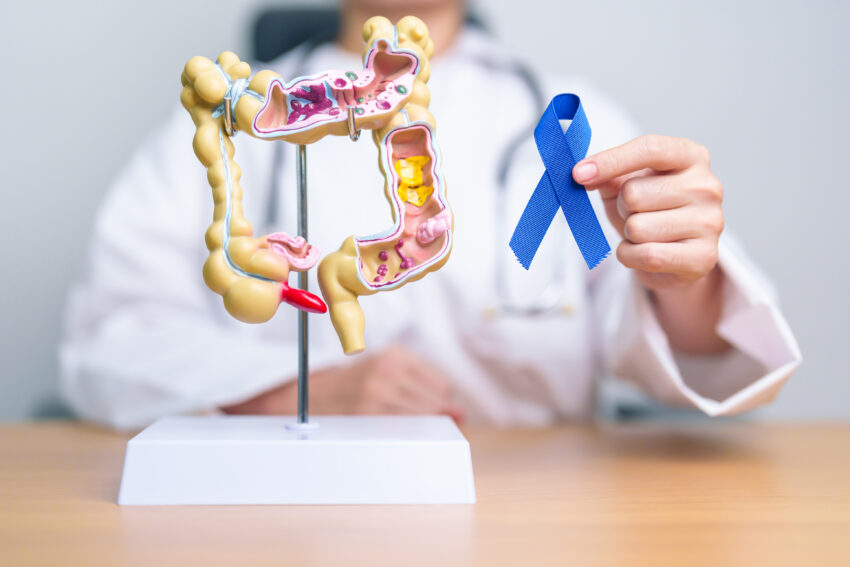
Share On Social!
March is Colorectal Cancer Awareness Month.
There are roughly 147,000 new colorectal cancer cases in the US each year as of 2022, according to data from the Centers for Disease Control and Prevention (CDC).
What’s more, colorectal cancer was linked to 53,779 deaths in the US in 2023.
These statistics make colorectal cancer the fourth-most common type of cancer and the fourth-largest cause of cancer-related deaths across all age groups, according to the CDC.
Many of these cases and deaths are in individuals from overlooked populations, including Latinos, which were brought on by non-medical drivers of health, such as lack of access to quality cancer care and limitedaccess to screening.
In honor of Colorectal Cancer Awareness Month, we are diving into the 8 things you should know about colorectal cancer, including prevention.
1. Colorectal Cancer Affects the Colon or Rectum
Colorectal cancer occurs when there is a presence of cancer cells in the colon or rectum, according to the CDC.
These cells often start off as growths, known as polyps, which form in these areas.
As time passes on, these may eventually turn into cancer.
If caught early, these polyps can be removed before cancer develops.
2. There Are Sometimes Few or No Colorectal Cancer Symptoms
Symptoms of colorectal cancer include changes in bowel habits, bleeding, abdominal discomfort, unexplained weight loss, and fatigue.
In some cases, there are no symptoms at all, especially in early-onset colorectal cancer cases.
This is why it’s so important to get screened early for colorectal cancer.
3. Colorectal Cancer is Often Misdiagnosed
Due to the nature of these symptoms, colorectal cancer is often misdiagnosed, or symptoms are dismissed entirely, especially if the patient doesn’t meet some of the known risk factors.
This is exactly what happened to Marielle Santos McLeod.
The early-onset colorectal cancer survivor experienced a delayed colorectal cancer diagnosis because she didn’t meet any of the criteria for having cancer.
Despite her persistent symptoms at 36 years old, medical professionals thought it impossible for her to have the disease and refused to screen her.
She ended up with a stage III colon cancer diagnosis.
“I was not heard, and I was not listened to. Even with the knowledge that I had, I, too, fell through the cracks, and I was very easily dismissed because I was young,” she told Salud America!
4. Colorectal Cancer Cases are Rising in Young Adults
Just as in Marielle’s case, colorectal cancer is appearing in younger patients.
According to the Cancer Research Institute, the number of colorectal cancer cases in adults 20-39 have gone up by 2% each year since the mid-1990s.
The rising number of cases in young adults only seeks to compound the importance of getting screened.
5. There are Many Ways to Get Screened for Colorectal Cancer
Health experts are recommending screening for the disease starting at age 45 for those with an average risk.
For many years, colon cancer was typically screened for by undergoing a colonoscopy.
But advancements in science have made testing more accessible and less invasive.
Several medical companies have created home testing kits, making the disease as easy to screen for as COVID-19 and pregnancy.
While the tests aren’t 100% accurate and a positive test can be an indicator of other gastrointestinal disorders, such as hemorrhoids and irritable bowel syndrome, their existence is an important step in standardizing screening practices and saving lives.
From there, patients can bring a positive test to a physician and get a colonoscopy to confirm the diagnosis.
6. Colorectal Cancer Survival Rates Are on the Rise
Due to medical advances and increased screening options, colorectal cancer is being caught at earlier stages, which increases the survival rate.
However, colorectal cancer was recently named the top killer of any cancer type among people younger than age 50, according to American Cancer Society researchers.
This is due to a lack of recommended screening in younger populations and symptoms that are often ignored or misdiagnosed.
As a result, younger people are being diagnosed at a later stage, increasing the risk of mortality from the disease.
7. Several Risk Factors Are Associated with Colorectal Cancer
There are several factors that affect your risk of developing colorectal cancer.
Like many cancers, your age can play an important role in your diagnosis because, as you age, your immune system declines.
For colorectal cancer, people between ages 45-50 may be at a higher risk, according to the CDC.
Those with a history of inflammatory bowel disease like Crohn’s disease or ulcerative colitis may also be at risk of developing colorectal cancer.
Colorectal cancer may also be influenced by a family history of the disease or genetics such as familial adenomatous polyposis (FAP) or hereditary non-polyposis colorectal cancer (Lynch syndrome).
Lastly, your risk for cancer, including colorectal cancer, can increase significantly due to certain lifestyle choices.
Diet, obesity, physical inactivity, smoking, and drinking can all affect your risk for adverse health effects like cancer.
8. Volunteer for a Clinical Trial
There is still so much to learn about colorectal cancer, and it begins and ends with research.
One of the best ways to contribute to bettering colorectal cancer outcomes is by volunteering for a clinical trial.
Clinical trials are studies with volunteers that test ways to find, prevent, and treat cancer and other diseases. They may also help improve the quality of life for volunteers affected by cancer or reduce the side effects of treatment.
Look to Salud America!’s clinical trial page to find a research opportunity or learn from role models who have participated in a trial.
“Volunteers who participate in clinical trials have the potential to help themselves, and contribute to the development of new treatments for people in the future,” said Dr. Amelie Ramirez, director of Salud America! and the Institute of Health Promote Research at UT Health San Antonio.
Those looking for opportunities based in San Antonio can search the Mays Cancer Center at UT Health San Antonio’s Find a Clinical Trial database to learn more about available clinical trials and eligibility requirements.
On a national level, visit clinicaltrials.gov to find a clinical trial near you.
Explore More:
Latino CancerBy The Numbers
25
years
of life expectancy between some U.S. cities.