by
by 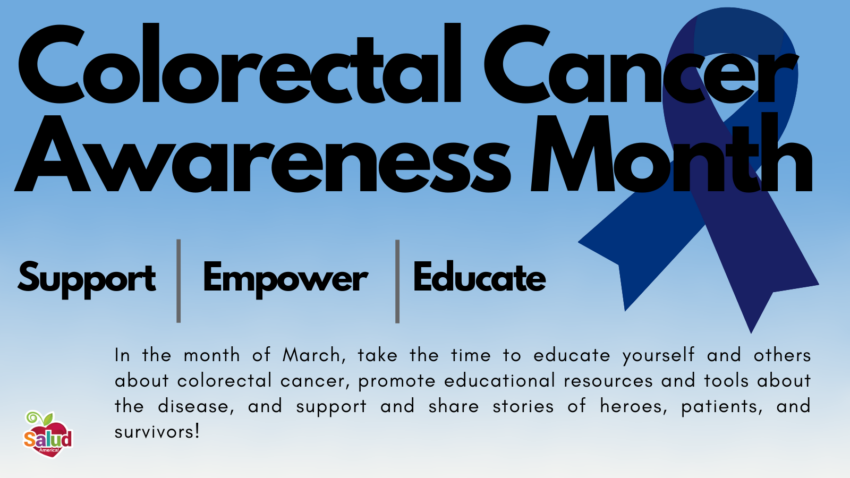
Share On Social!
As the leading cause of cancer-related deaths in the US, colorectal cancer is affecting more Americans now than ever before.
While scientists are working to find out why these rates are increasing, the numbers continue to grow, especially in people younger than 50.
Here are 9 bilingual resources for colorectal cancer patients, survivors, caregivers, and their families.
1. Colorectal Cancer Support Services
Cancer is a very costly disease in more ways than one.
Not only does it create a physical and emotional burden, but also a financial one.
Several organizations are working to ease the financial burden of colorectal cancer treatment, including the Colorectal Cancer Alliance.
Colorectal Cancer Alliance connects patients and caregivers to financial assistance programs and patient navigation support.
They are also engaged in providing patient support groups and research assistance opportunities while educating people on treatment options.
Explore a wide variety of resources on their website in English and Spanish.
2. Colorectal Cancer Online Support Groups
Going through a cancer diagnosis can be an extremely isolating experience. This is especially true for colorectal cancer, which comes with its own unique set of challenges.
One of the ways to break isolation is to find a community of people going through something similar.
That’s exactly what Colontown does.
This online community is supporting colorectal cancer patients by giving them a space to share and connect with people.
And because no one’s cancer experience is the same, the organization has multiple subgroups or “neighborhoods,” such as cancer clinical trials and young-onset colorectal cancer patients.
To connect with other colorectal cancer patients, check out the Colontown website in English and Spanish.
3. Colorectal Cancer Educational Resources
Several nonprofits have devoted themselves to sharing life-saving resources about colorectal cancer.
One such nonprofit is Colon Cancer Coalition.
The organization has created resources for symptoms, screening, and colonoscopy preparation.
Other resources include how to gauge your risk for colorectal cancer with genetics and family history.
Colon Cancer Coalition also has a guide to help navigate conversations about colorectal cancer with your provider.
These resources are available in multiple languages, including Spanish.
Check out more Colon Cancer Coalition resources.
4. At-Home Screening Test Kits for Colorectal Cancer
For many years, colon cancer was typically screened for by undergoing a colonoscopy.
But advancements in science have made testing more accessible and less invasive.
Several medical companies have created home testing kits, making the disease as easy to screen for as COVID-19 and pregnancy.
While the tests aren’t 100% accurate and a positive test can be an indicator of other gastrointestinal disorders, such as hemorrhoids and irritable bowel syndrome, their existence is an important step in standardizing screening practices and saving lives.
From there, patients can bring a positive test to a physician and get a colonoscopy to confirm the diagnosis.
Currently, they make fecal immunochemical tests (also known as FIT), which detects blood in the stool. Brands such as Labcorp ColoFIT™ and Second Generation FIT® offer these options.
Stool DNA tests (FIT-DNA) like Cologuard® detect blood and altered DNA.
There are also options for guaiac-based fecal occult blood testing, or gFOBT.
These tests range in effectiveness, and most kits are covered by insurance and generally inexpensive.
5. Cancer Peer Support Group for Children
With the incidence of colorectal cancer rising in young adults, the need for support for their young children grows.
Pickles Group is stepping up to give kids whose parents have been diagnosed with cancer a safe space to express themselves in a healthy manner with other kids going through similar experiences.
They do this through an online peer-to-peer support group model.
The group is also bridging the gap of communication by sharing helpful resources for parents to talk to their kids about cancer.
Find out more about Pickles Group or enroll your child today by visiting their website (en español).
6. Raising Colorectal Cancer Awareness
There are so many opportunities to raise awareness about the disease.
Nonprofits like Fight Colorectal Cancer are supporting patients and caregivers with programs that promote education, screening and early detection, and sound the alarm on the need for more research.
Their support services include a tool that helps patients find the best care team to fit their needs, caregiver support, specific support for certain demographics, and support groups.
They also help by sharing information about clinical trials and financial assistance programs.
However, one of their top priorities is raising awareness about the disease.
The organization does this by petitioning policy and decision makers to invest in research that drives real-life change.
Explore even more resources and opportunities to raise awareness of the organization’s website.
7. Uplift Patient Voices
There’s a lot that goes into a cancer journey; what you do during and after your diagnosis counts!
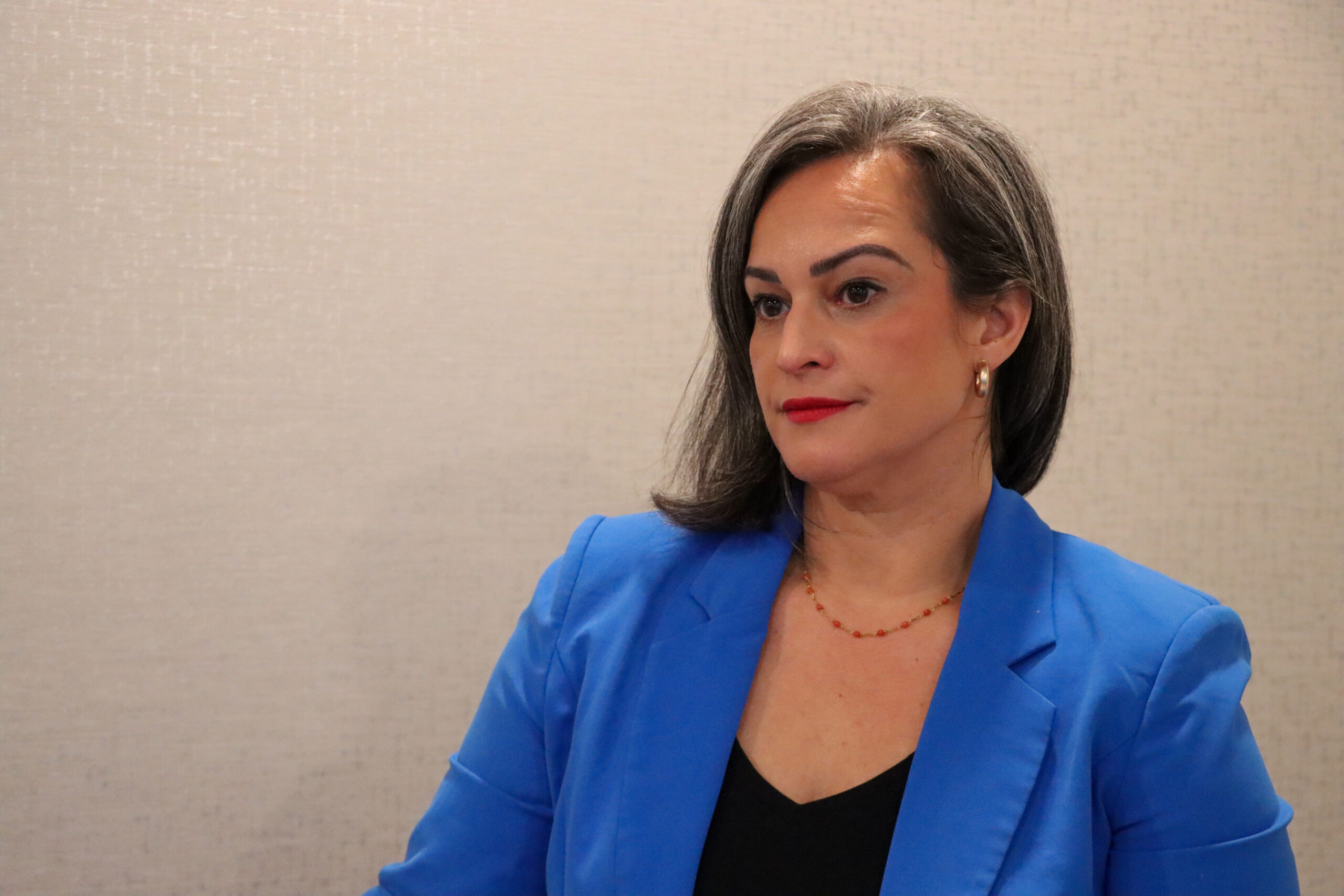
From addressing the non-medical drivers of health that prevent patients from getting the care they need, contributing to worse health outcomes, to hurdles in language, there is a wide array of issues to cover.
That’s why some survivors are lending their voices to support patients.
Early-onset colorectal cancer survivor Marielle Santos McLeod is one such survivor.
Like so many young colorectal survivors, Marielle’s symptoms went ignored until the cancer reached a more advanced stage, decreasing her chance of survival.
Rather than accepting “no” for an answer, she vowed to never allow others to go through what she went through.
Now she is sharing her story on a national level with cancer care stakeholders like Exact Sciences and Pfizer and sending a message that everyone’s story matters.
“I wanted to be in a world where my statistics mattered,” she said of her decision to become a cancer patient leader.
8. Participate in Research and Clinical Trials
Researchers are hard at work trying to find the reason for the sudden spike in colorectal cancer cases in younger patients but need your help to do it.
One of the best ways to aid the effort is to volunteer for a clinical trial.
Clinical trials help researchers find ways to prevent and treat cancer and other diseases. They may also help improve the quality of life for volunteers affected by cancer or reduce the side effects of treatment.
Visit Salud America!’s clinical trial page to find a research opportunity or learn from role models who have participated in a trial.
“Volunteers who participate in clinical trials have the potential to help themselves, and contribute to the development of new treatments for people in the future,” said Dr. Amelie Ramirez, director of Salud America! and the Institute of Health Promote Research at UT Health San Antonio.
Those looking for opportunities based in San Antonio can search the Mays Cancer Center at UT Health San Antonio’s Find a Clinical Trial database to learn more about available clinical trials and eligibility requirements.
On a national level, visit clinicaltrials.gov to find a clinical trial near you.
9. Share Your Survivorship Story with Avanzando Caminos
While clinical trials are aiding researchers in finding ways to treat and prevent colorectal cancer, there are also a growing number of opportunities for colorectal cancer survivors to help researchers find interventions that help long-term healing and stop cancer from coming back.

The Avanzando Caminos Hispanic/Latino Cancer Survivorship Cohort Study is examining the post-cancer life in individuals who have experienced prostate, colorectal, lung, stomach, liver, endometrial, breast, cervical, kidney cancers, bladder, melanoma, ovarian, thyroid, and lymphoma cancers.
Hispanic/Latino survivors who are 18 or older, speak English or Spanish, live in South Texas, and have completed primary cancer treatment for one of the eligible cancer types within the last 10 years are encouraged to apply and share their stories to help make a difference in the lives of future survivors.
The study takes place over a series of visits over a 5-year period. Study visits can be conducted in person or virtually.
Those who participate are also eligible to receive up to $50 per study visit.
To volunteer for Avanzando Caminos or ask questions, contact Dr. Ramirez’s team at the Institute for Health Promotion Research at UT Health San Antonio at 210-562-6514 or caminos@uthscsa.edu.
Alternatively, visit the Avanzando Caminos website in English or Spanish to fill out a quick eligibility survey and a member of the study team will be in touch!
SHARE YOUR STORY WITH AVANZANDO CAMINOS!
Explore More:
Latino CancerBy The Numbers
142
Percent
Expected rise in Latino cancer cases in coming years