About the Author

Author Picture

Stacy Cantu-Pawlik

Stacy Cantu completed both her BS & MPH at Texas A&M University (gig ‘em!), and is passionate about all things public health. She curates content on Healthy Food and Healthy Minds.


Connect with Stacy:
Twitter Link

Articles by Stacy Cantu-Pawlik

Latino Health Fails in One Town, But Prospers 68 Miles Away. Why?


clinic at night in New Mexico

Grant County, New Mexico (50% Latino). Luna County, New Mexico (65% Latino). Two counties. Both rural, largely Latino, with high poverty. Only 68 miles apart. Yet health is failing in one county, and prospering in the other. Why is this? What can we do? Health Ratings: Luna vs. Grant U.S News & World Report's new Healthiest Communities rankings use a 100-point scale to assess well-being in 3,000 U.S. counties. Metrics include economic, educational, and health outcome Grant County scored 62 of 100. Luna County scored 31 of 100. Grant ranks in the top-third of counties. They rank 20th among other rural communities with up-and-coming economies. Luna ranks in the bottom-third of counties. In health outcomes, Grant is doing better than Luna in many aspects: ...

Read More

Research: Kids, Elderly, and People with Disabilities Will Suffer if SNAP Gets Cut


SNAP participants

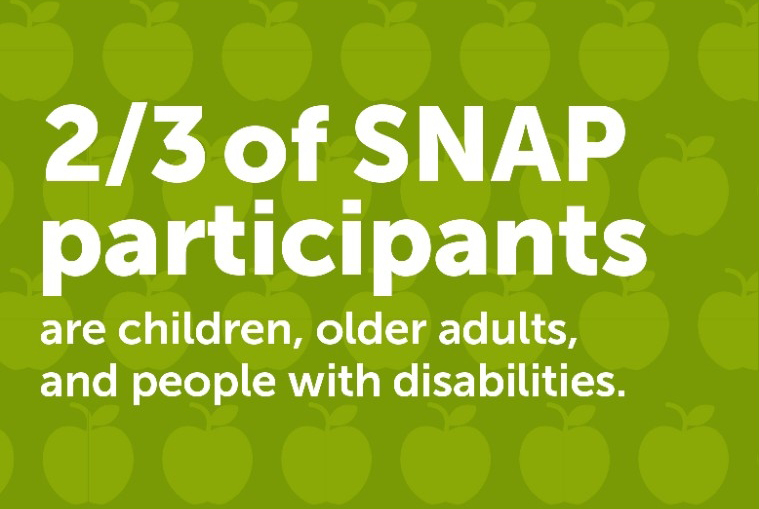
40 million low-income people across the U.S. are in danger of losing a critical lifeline as federal funding for SNAP, commonly known as the food stamp program, hangs in the balance. But just who are these families? What would losing benefits mean? Two new research reports provide an answer. SNAP & Families SNAP provides temporary support to help people and families afford food. It is the nation’s largest nutrition assistance program, with $70 billion in funding in fiscal-year 2017. Latinos comprise more than 20% of SNAP participants. But 1 in 11 households who receive SNAP benefits would no longer be eligible under a revised House Farm Bill, according to data from Mathematica Policy Research cited by the recent State of Obesity report from Trust for America's Health ...

Read More

#SaludTues Tweetchat 10/2: Recognizing Health Fraud


miracle cure health fraud pill bottles

Did you know that Latinos and African-Americans report fraud less than the rest of the population? Sadly, many Latinos and other minorities don't know that reporting fraud helps stop it. Join our tweetchat to learn more about protecting yourself and loved ones from health fraud. Let’s use #SaludTues on Tuesday, October 2, 2018, to tweet in English and Spanish about the latest strategies to help Latinos and all people avoid health fraud and get access to truly beneficial health care! WHAT: #SaludTues Bilingual Tweetchat: "Recognizing Health Fraud" TIME/DATE: 1 P.M. ET, Tuesday, October 2, 2018 WHERE: On Twitter using hashtag #SaludTues HOST: @SaludAmerica CO-HOSTS: FDA Office of Minority Health (@FDAOMH), FDA en Espanol (@FDAenEspanol), FDA Office of Regulatory ...

Read More

Are Household Cleaners Making Kids Overweight?


disinfectant

Latino kids are already at a big disadvantage to achieve a healthy weight. They lack opportunities to engage in physical activity and they often live in a food swamp and/or a food desert. Now, household cleaners may also contribute to the obesity crisis. Multi-surface disinfectants and other household cleaners can be making children overweight, according to a new study published in the Canadian Medical Association Journal. The study suggested that these cleaners alter gut bacteria, specifically Lachnospiraceae. Lachnospiraceae is a family of gut bacteria and are a normal component of our gut microbiota. This family develops during infancy when we gain a greater number of bacterial species, in which, each species decreases or increases over time. About The Study The study used ...

Read More

New Texas Institute Aims to Boost Latino Health, Enrollment in Clinical Trials


Latinos often mistrust of doctors and scientists. In turn, they don't seek preventive healthcare or join helpful clinical trials. In fact, even though Latinos make up 17.8% of the national population and are the largest ethnic minority, Latinos comprised of less than 7.6% of clinical trial participants. The Global Institute for Hispanic Health aims to change all that. Global Institute for Hispanic Health The Texas A&M University System and Driscoll Children’s Hospital launched the Global Institute for Hispanic Health in 2016. It's based at Driscoll Children’s Hospital in Corpus Christi. It has other campuses in Brownsville, Harlingen, McAllen, Laredo, and Victoria. The Global Institute brings researchers, clinicians, and communities together to improve Latinos' ...

Read More

Improving The Health of Rural Latinos in California


Guadalupe cornejo patient navigation promotora community health worker

We already know that where we live plays a significant role in our health. Latinos and others living in rural areas struggle to access healthcare. They are more likely to die from heart disease, cancer, respiratory disease, stroke, and unintentional injuries than their urban counterparts. A grassroots effort aims to change that. ¡Vivir Mi Vida!, a pilot program at the University of Southern California (USC), is improving the health of rural, middle-age Latinos. ¡Vivir Mi Vida! ¡Vivir Mi Vida! is a 16-week lifestyle intervention translated as “Live My Life!” It aims to optimize health outcomes in Latino patients. Researchers worked with community partners to develop ¡Vivir Mi Vida! five years ago at USC’s Mrs. T.H. Chan Division of Occupational Science and ...

Read More

Does Your Zip Code Affect How Long You Live? The Short Answer: Yes!


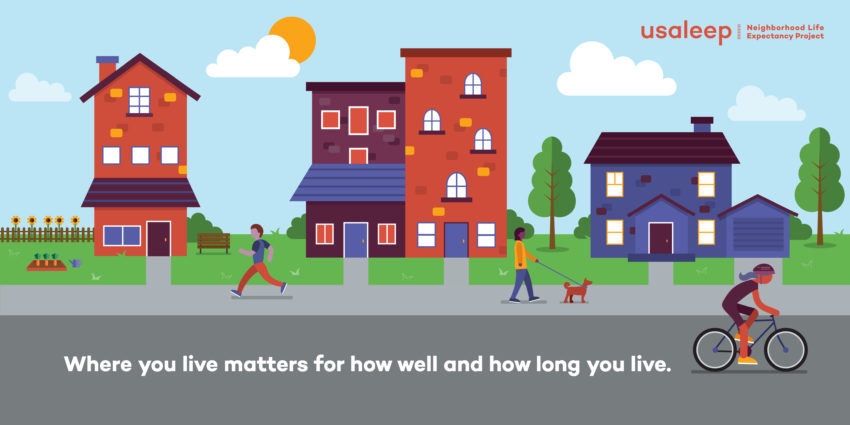
These days, ZIP code isn’t only for your mail. ZIP Code is a bigger predictor of our life expectancy than our genetic code. For the first time in our country’s history, the U.S. is raising a generation of children who may live sicker and shorter lives than their parents, according to the Robert Wood Johnson Foundation. But there’s good news. For the first time ever, a census-tract-level data on life expectancy at birth has been released to help stimulate change. The expectancy estimates—released by The United States Small-Area Life Expectancy Estimates Project (USALEEP), a joint effort of the National Association for Public Health Statistics and Information Systems, the Centers for Disease Control and Prevention’s National Center for Health Statistics, and the ...

Read More

How Rural America Became a Hospital Desert


rural health cohesive culture

Where we live plays a significant role in our healthcare. But many Americans don't have easy access to the healthcare they need. In the United States, 5% of rural hospitals have shut down since 2010 with maternal and obstetric care taking the hardest hit. About 16% of the mainland United States are 30 miles or more away from the nearest hospital, CNN reports. These areas with no access to a hospital are called "hospital deserts." Many regions that are hospital deserts also have higher rates of poverty and income gaps, leaving many residents with no options for emergency or regular healthcare. "There's a lot of people out in the rural community who feel like they've been forgotten," Jessica Thompson, a registered nurse who lives in a hospital desert in Tonopah, Nev., told ...

Read More

#SaludTues Tweetchat 9/4: Childhood Cancer Awareness Month


kid cancer

September is Childhood Cancer Awareness Month! Why is it important to acknowledge Childhood Cancer Awareness month? It is important to acknowledge Childhood Cancer Awareness Month because 15,780 children under the age of 21 are diagnosed with cancer every year, according to the American Cancer Childhood Organization. 25% of those children will not survive the disease. Why is it important to acknowledge Childhood Cancers Amongst Latinos? We already know that cancer is the leading cause of death among Latinos in the United States. Furthermore, a new study recently found that Latino and black children are more likely to die of numerous childhood cancers than their white counterparts. But wait, there’s more bad news. Latinos are also more likely to receive a cancer diagnoses ...

Read More