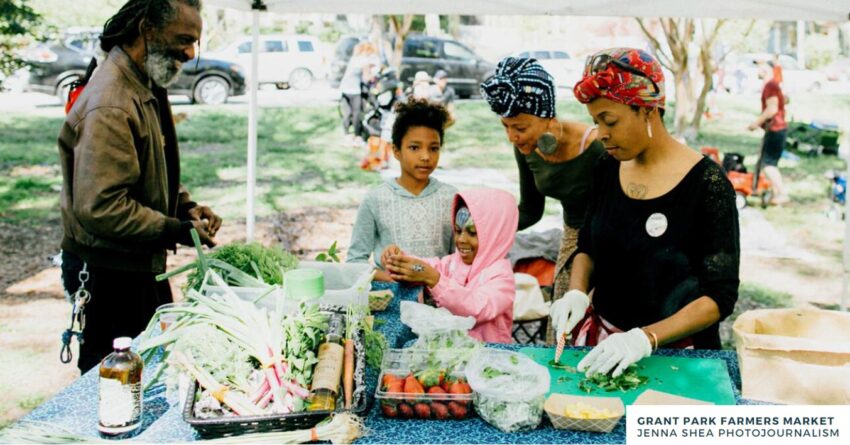
Does your town have a farmers market? Farmers markets are a path to healthy food access. They are especially important amid the push for nutrition security and racial/ethnic justice. Fortunately, the Farmers Market Coalition is stepping up to support farmers markets. They’re supporting markers, creating an anti-racist toolkit, and sharing how markets increase equitable access to healthy, fresh produce and social connections, and engage farmers in the local economy. "As hubs for connection and community resilience, farmers markets have particularly risen to the occasion this year by providing a necessary sense of unity and stability during a time of great uncertainty," according to the coalition. "Farmers markets don’t just happen. The hard work of farmers market operators ...
The U.S. Latino population has risen to 62,647,044, representing 18.9% of the nation’s population, according to new Census Bureau estimates. The number of Latinos in the U.S. grew by 767,907 from 2020 to 2021, an increase of 1.2%, according to the newest data. Here is everything you need to know.
What Defines “Hispanic Origin” on the Census?
Individuals filling out the Census can choose between two ethnicities, “Hispanic or Latino” or “Not Hispanic or Latino” What defines being “Hispanic or Latino” when filling out the Census? According to the Census website, the U.S. Office of Management and Budget (OMB) defines "Hispanic or Latino" as a person of Cuban, Mexican, Puerto Rican, South or Central American, or other Spanish culture or origin regardless of ...
Amid the baby formula shortage, American women are now facing a tampon shortage. The shortage has resulted in a 10% price increase in the last year, with some retailers price gouging as high as $114 for one box of 18 tampons. The shortage stems from the economic challenges of the COVID-19 pandemic, including a shortage of raw materials and labor. As some women frustratingly scour multiple stores to buy menstrual hygiene products, others fall deeper into period poverty.
The High Cost of Menstruating
While menstruating women nationwide are affected by this shortage, low-income women, such as Latinas, are hit particularly hard as they already face disproportionate health inequities, including a lack of access to healthy food, affordable housing, and childcare. Nearly 22 ...
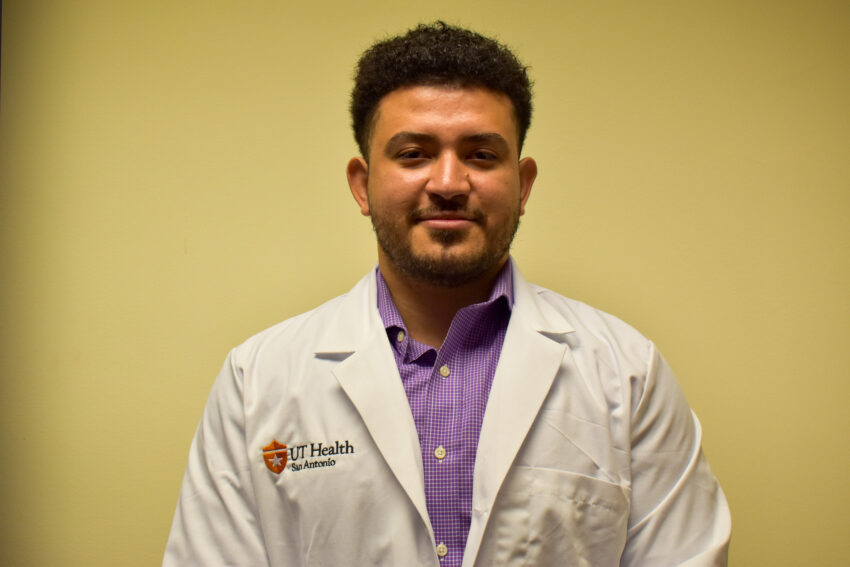
Shiny cars screeching down the road. Grocery stores filled with bright lights and food-stuffed aisles. TV screens flickering colorfully. Cesar Ramirez stepped – mesmerized – into American life for the first time as a child. Born in rural Honduras, Ramirez only knew poverty. He lived in a one-bedroom shack with his mother and no water, electricity, or healthcare. His father, in the U.S. to work, sent money home. “We just had enough to survive, that was enough for us,” Ramirez said. Ramirez, with the support of his parents and resiliency from childhood, is now a medical student at Sam Houston State University, pursuing his dream to be a doctor who cares for patients and improving healthcare systems. He is also an intern at the Institute for Health Promotion Research ...
Latinos are driving the U.S. economy thanks to a rise in population, workforce participation, entrepreneurship, and economic contributions. But progress is hampered by COVID-19, discrimination, and wage disparities. “There’s no doubt Latinos are slowly being more fully integrated into the US economy. Yet there’s also no doubt there’s a long way to go, especially for first-generation Latino immigrant,” according to Lucy Perez, Bernardo Sichel, Michael Chui, and Ana Paula Calvo of McKinsey & Company, a global management consulting firm. Let’s explore how Latinos are influencing the economy now and in the future.
Latino Population Growth
Latinos account for over 18.5% of the total U.S. population. As the Latino population has continued to grow rapidly, it has ...
“The good news is, we can’t kill you trying to save you. You showed up fit to fight.” Still in shock of recent events, Loriana Hernandez-Aldama tried to process the words of world-renowned oncologist Dr. Mark Levis. In such a short period of time in January 2014, her life had completely changed. Just a few days earlier, Loriana, a married mother and TV news anchor with a successful career in Austin and Dallas, Texas, was excitedly working with her fertility doctor to have another baby. But a precautionary blood test before a traditional embryo transfer revealed a disheartening diagnosis of AML Leukemia, an aggressive blood cancer. At the advice of her doctor and healthcare connections, she kissed her then 2-year-old son, Gabriel, goodbye, and boarded a plane to Johns ...
Oncologists who identify as Latino remain highly underrepresented in the workforce, according to a new report from the American Society of Clinical Oncology (ASCO). Although the percentage of Latino hematologists/oncologists has risen slightly over the past decade, from 4.1% in 2008 to 4.7% in 2018, Latino participation decreases at nearly every step in the path to becoming an oncologist, according to ASCO. “As a result, [Latino] patients are deprived the benefits of a representative workforce, such as improved access, enhanced culturally and linguistically competent care, and minimization of health disparities,” wrote Dr. Gladys Rodriguez of the START Center for Cancer Care in San Antonio, and her colleagues, in a recent study in JCO Oncology Practice. Why is this a ...
We’re seeking a communications specialist to join our communication team at Salud America!, our national Latino health equity organization based at the Institute for Health Promotion Research (IHPR) at UT Health San Antonio. The position will write, edit, and communicate health content and messages. This includes digital content curation for the Salud America! project, as well as assisting in the production of numerous IHPR internal and external communication vehicles, such as newsletters, email blasts, presentations, websites, social media, press releases and more. Apply Now!
Details for the Communications Specialist Position
A bachelor’s degree and two years of related experience is required. Also preferred experience includes: Knowledge and/or strong interest in ...
In late 2020, public health and racial justice advocates started meeting monthly to understand and support the movement to declare racism a public health crisis. They shared resources, hosted webinars, and led workshops to spur action against racism. Now, these advocates have formally become the Collaborative for Anti-Racism and Equity (CARE), a group of partner organizations including Salud America! at UT Health San Antonio CARE has launched a website to streamline access to tools and information, help people make connections, and inform solutions to advance health and racial equity. “The website is a place where those working in health equity, racial equity, and anti-racism can get access to some important resources to inform their work, if they are just getting started in ...