For Claudia Perez-Favela, cancer has always been the elephant in the room. Claudia has seen her Latino family members endure cancer and even perish from the disease over the years. Yet they never openly shared their experiences. “In my family, cancer is like the flu,” she said. Because cancer is such a taboo subject in her family, when Claudia got cervical cancer from the HPV virus, she couldn’t turn to her family for support. “They are gonna say ... I got cancer because I did something wrong ... we don’t talk about cancer,” she said. Instead of staying silent, Claudia shook off the stigma behind her diagnosis and started to share her story and challenge the harmful falsehoods behind HPV so women like her can stay informed against ...
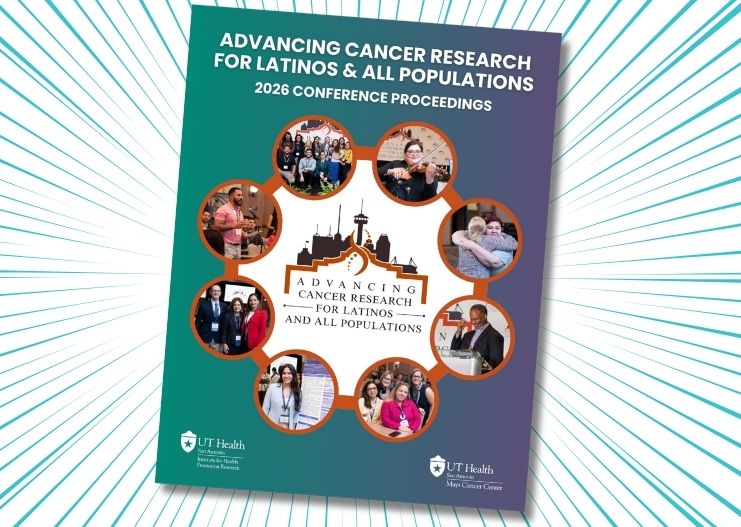
With cancer still a top health threat, UT Health San Antonio leaders and national cancer experts have published an online book with innovative recommendations to reduce cancer among Latinos and all people. The book, “Advancing Cancer Research for Latinos and All Populations: 2026 Conference Proceedings,” highlights results of the same-named conference that brought 350 researchers, advocates, and survivors to San Antonio in February 2026. A follow-up conference is planned for Feb. 23-25, 2028, in San Antonio. Included in the book are promising research findings on Latino cancer and strategies for new research covering the entire cancer continuum. This includes advances in genetics, prevention, screening, detection, treatment, survivorship, and policy, said Dr. Amelie ...
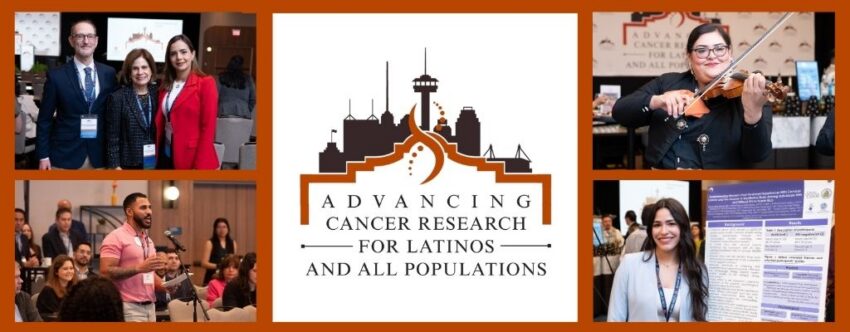
Cancer is a threat to the health of Latinos and all people. That’s why Dr. Amelie Ramirez, director of Salud America! and the Institute for Health Promotion Research at UT Health San Antonio, partnered with the Mays Cancer Center to create the Advancing Cancer Research for Latinos and All Populations (ACRLP) biennial conference series. On Feb. 18-20, 2026, the newest ACRLP conference welcomed over 350 prominent researchers, physicians, healthcare professionals, patient advocates, and students from across the globe to address cancer among Latinos and all people in San Antonio, Texas. Conference sponsors included: Genentech, Bristol Myers Squibb, Gilead, Revolution Medicine, Natera, AstraZeneca (platinum); Blood Cancer United, Menarini Stemline, Eli Lilly (gold); National ...
Before stepping into the cancer advocacy and support space, the only thing José Adorno knew about cancer was that it killed people and he hated it.
It started when on a vacation.
He had met some family friends, and their daughter had given birth to a baby girl.
“Her sister had given birth to this little baby ... and she had cancer when [her baby] was not even two years old,” he recalled. “She passed away a few months after her diagnosis. [The] mom couldn't even carry [her baby] at times because she was in so much pain, so that's the picture of cancer that I had in my head ... just how ugly it can get.”
José’s perception of cancer changed when he was unexpectedly offered a position to help Spanish-speaking cancer patients find resources they needed to keep up with ...
To celebrate Hispanic Heritage Month and National Breast Cancer Awareness Month, we are pulling back the curtain on the highs and lows of navigating the breast cancer experience with a special Instagram Live event. Dr. Amelie Ramirez, the director of UT Health San Antonio’s Institute for Health Promotion Research and leader of Salud America!, is leading a discussion between Susan G. Komen patient navigator Marcela Orozco and Deborah Blake-Ontiveros, a two-time breast cancer survivor and Latina patient advocate. In partnership with Susan G. Komen, “Navigating the Trials & Triumphs of Breast Cancer,” covers topics such as the importance of patient navigation, clinical trials, advocacy, and finding bilingual resources. Watch on Instagram on the Salud ...
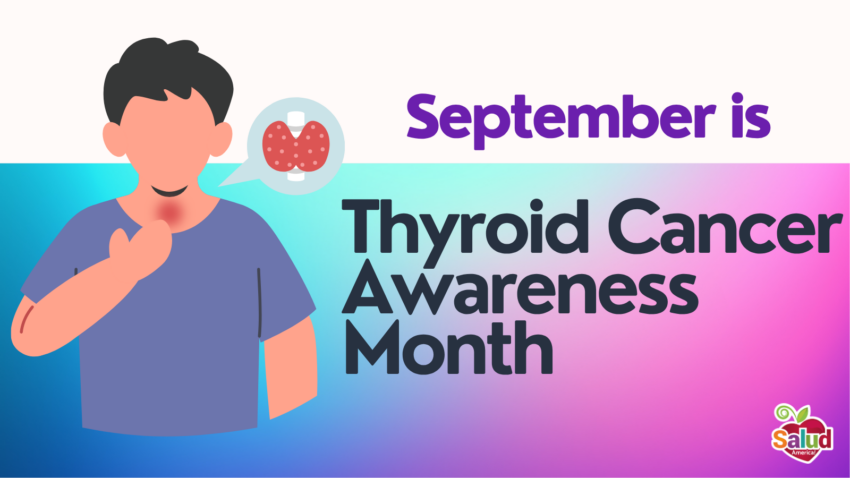
Thyroid cancer is one of the most common cancers in the U.S. with about 45,000 new diagnoses projected for 2026, according to the American Cancer Society (ACS). It’s also one of the more treatable cancers. Despite that, women, especially Latinas, face a higher burden of thyroid cancer. September is National Thyroid Cancer Awareness Month, so we are bringing attention to nine things you should know about thyroid cancer.
1. Thyroid Cancer Develops in the Thyroid Gland
Thyroid cancer forms in the thyroid gland, according to the Cleveland Clinic. The thyroid gland, located at the base of the neck, is responsible for making hormones that regulate energy use in the body, including body temperature, blood pressure, and heart rate. One ...
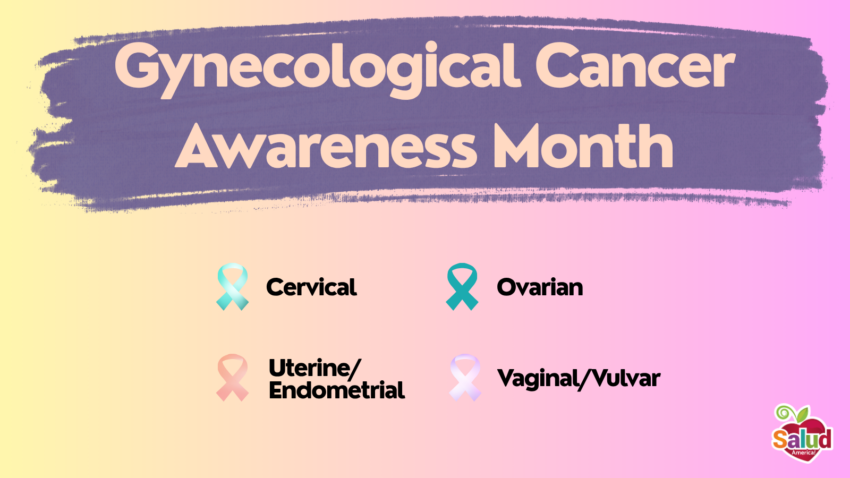
The human reproductive system is an intricate network of structures, tubes, and organs that are responsible for giving life. But sometimes, it can also be a source of pain, discomfort, and disease. This includes gynecological and reproductive cancers, such as cervical cancer. Due to background-based stigmas, incorrect information, lack of access to reproductive care, and few women doctors, these cancer diagnoses can be difficult to accept and even harder to catch. For National Gynecological Cancer Awareness Month, we are breaking down the top eight things to know about reproductive cancers.
1. There Are 5 Major Gynecological and Reproductive Cancers
Gynecological cancers consist of 5 major cancer types. Cervical cancer. This is ...
Hispanic Heritage Month is here! This annual U.S. observance, from Sept. 15 to Oct. 15, celebrates the histories and contributions of Americans whose ancestors came from Spain, Mexico, the Caribbean and Central and South America. We at Salud America! invite you to celebrate Hispanic Heritage Month in these 31 awesome ways.
1. Learn How Hispanic Heritage Month Began
U.S. Congressmen Edward R. Roybal of Los Angeles and Henry B. Gonzales were among those who introduced legislation on the topic in 1968. President Lyndon Johnson implemented the observance as Hispanic Heritage Week that year. Did you know which U.S. President turned it from Hispanic Heritage Week to Hispanic Heritage Month? Learn more here.
2. Find Out Why Hispanic Heritage Month Starts on Sept. 15
Sept. ...
About 1 in 8 men will be diagnosed with prostate cancer in their lifetime, according to the American Cancer Society (ACS). September is National Prostate Cancer Awareness Month! To recognize this observance, we are bringing attention to prostate cancer, reducing the stigma behind it, and talking about ways to prevent it. Here are the seven things you should know about prostate cancer.
1. Overlooked Communities Have a Higher Burden of Prostate Cancer While prostate cancer affects all populations, men from overlooked communities, such as Black and Latino men, suffer a disproportionate number of prostate cases. The incidence of prostate cancer is highest, at 200.1 per 100,0000 men, in the Black community, according to the National Cancer ...