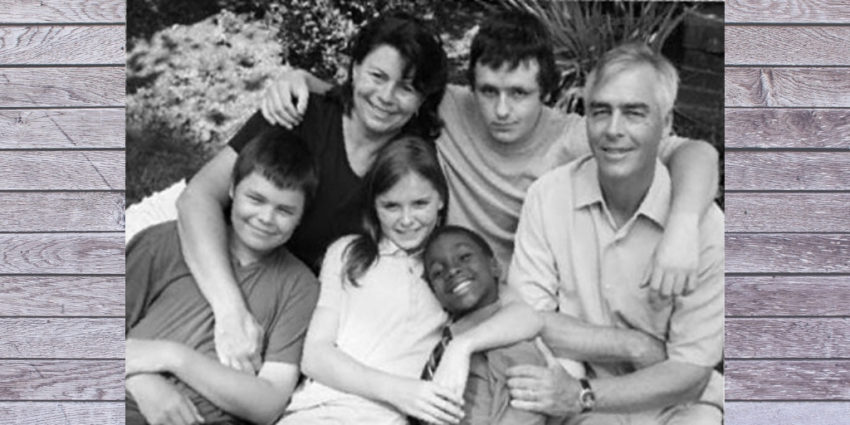
As a white woman living in Boston who grew up all around the world, privileged and well-educated, Alison Corcoran was a stranger to injustice and health inequity. “I’ve never been denied anything,” Corcoran told Salud America!. That all changed 11 years ago when she became a foster parent to her African American son.
Experiencing Health Inequity and Bias First-Hand
When Corcoran’s son joined the family, he was only in the first grade. During the family transition meetings, his social worker had told her: “Make sure you take him to the dentist soon – I don’t think he has ever gone.” So Corcoran took him to the family dentist for a cleaning and exam. During the appointment, it was no surprise that her son had multiple cavities. Then, it came time to visit ...
As U.S. Latinos face a staggering 142% projected rise in cancer cases by 2030, UT Health San Antonio leaders gathered international cancer experts to publish a new book with innovative research and recommendations to reduce Latino cancer. The book, Advancing the Science of Cancer in Latinos in Springer Open Books, showcases results of the same-named conference that brought 300 researchers to San Antonio in 2018. A follow-up conference, set for Feb. 26-28, 2020, in San Antonio, is open for registration. Included in the new book are promising research findings on Latino cancer and strategies for new research covering the entire cancer continuum, from advances in risk assessment, prevention, screening, detection, diagnosis, treatment, survivorship, and policy. “Our book, ...
We’re hiring! Apply now as a Grants & Contracts Specialist with our Institute for Health Promotion Research (IHPR) at UT Health San Antonio—the team behind the Salud America! program. The position is responsible for: Reviewing the IHPR's activities of standard and complex grants and contracts
Providing expert financial oversight to IHPR investigators with grant funding
Assisting with proposal budget preparations and submissions
Mentoring junior members of the IHPR research management team A bachelor's degree and five years of work experience is required. The IHPR, founded in 2006 under the leadership of world-renowned health promotion researcher Dr. Amelie G. Ramirez, is part of the Department of Population Health Sciences in the School of Medicine at UT ...
A majority-Latino community is among the five winners of the 2019 Robert Wood Johnson Foundation (RWJF) Culture of Health Prize! Gonzales, Calif. (94% Latino), was chosen from nearly 200 applicants. Two other cities with large Latino populations—Lake County, Colo. (36% Latino) and Broward County, Fla. (30% Latino)—also won the health prize. Greenville County, S.C., and Sitka, Alaska, also received the prize. These communities made strong efforts to build a culture of health, where everyone has a fair and just opportunity to be as healthy as possible. They brought neighborhood, school, and business partners together to improve health for all residents. Winning communities get a $25,000 prize. "The 2019 RWJF Culture of Health Prize winners recognize that health is about ...
Youth suicides have spiked over the last decade, and substance misuse is exacting a heavy toll on teens, according to a new report. The report from Trust for America’s Health and Well Being Trust, Addressing a Crisis: Cross-Sector Strategies to Prevent Adolescent Substance Use and Suicide, indicates that trends are worse for racial/ethnic, gender, and other minority youth. The report also highlights emerging approaches to help put youth on healthy pathways into adulthood. "Adolescence is a challenging time when the impact of poverty, discrimination, bullying and isolation can be intense," said John Auerbach, head of Trust for America’s Health, in a statement. "Fortunately, there are policies and programs that can reduce some of these circumstances and the risks associated ...
You may be one of the 42.9 million people who got the flu last season. Perhaps you were among the over 645,000 people hospitalized due to the flu. Or maybe you even knew one of the 61,200 people who died from flu-related causes, according to CDC estimates. Today, health experts are bracing for the next flu season. Flu activity in the U.S. begins around October and runs through May, so now is the time to get your flu shot! “We know it isn’t perfect, but we need to emphasize the importance of partial protection,” says Dr. William Schaffner, director of the National Foundation for Infectious Diseases. “If you get the shot and you still get the flu, you are less likely to get pneumonia, less likely to be hospitalized and less likely to die.”
This is especially ...
Sadly, many rural residents struggle with lung problems. COPD, or Chronic Obstructive Pulmonary Disease, includes lung diseases like emphysema, chronic bronchitis, and non-reversible asthma. This condition is characterized by increasing breathlessness. But there are ways to help rural communities prevent and manage COPD, and help people breathe easier. That's why the Rural Health Information Hub (RHI Hub) created a new toolkit to compile evidence-based models and resources to help rural leaders implement COPD programs in their communities. "Each rural health program designed to treat COPD is unique, and there is no one-size-fits-all implementation strategy," according to RHI Hub's toolkit. "Successful programs identify existing resources and best practices and tailor them to ...
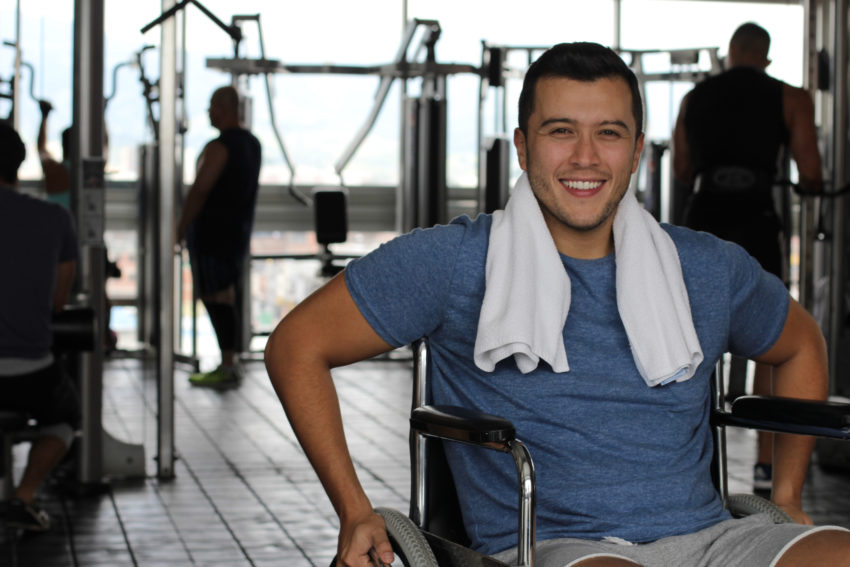
At least 1 in 6 Latinos in the U.S. live with a disability. Nearly 40% of these individuals are classified as obese, according to the CDC. October is National Disability Employment Awareness Month. This is a good time to reflect on policies and solutions to help communities come together to support disabled individuals through inclusive programs and strategies. We must work to make workplaces, homes, stores, streets and public spaces accessible to everyone. Let's tweet with #SaludTues on Oct. 29, 2019, to share ways to work towards inclusion for disabled individuals and all! We'll also celebrate the accomplishments of disabled individuals and discuss employment opportunities. WHAT: #SaludTues Tweetchat: "National Disability Employment Awareness Month"
TIME/DATE: 1-2 p.m. ...
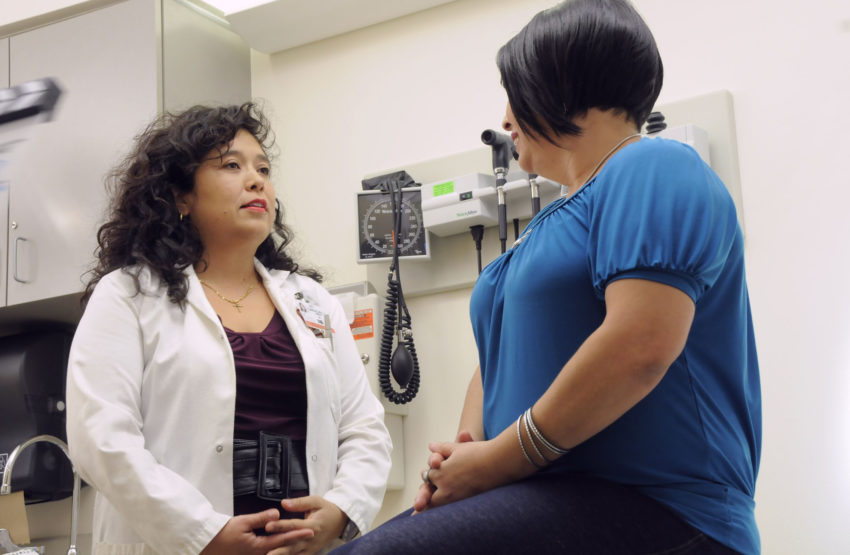
In Nashville (10.4% Latino), Latinos are one of the city’s largest minority groups. Yet, they are more than four times as likely to not have health insurance than their white or black neighbors, according to a survey by city officials and NashvilleHealth, a local nonprofit. “Doctor visits and health insurance are simply out of reach for many Latino families, who struggle with poverty, transportation and language barriers,” officials from two local Latino organizations told The Tennessean. This is even worse for immigrants who do not have proper documentation and do not qualify for TennCare, the state Medicaid. More on the Survey
The Nashville Community Health + Well-being survey revealed that one-third of Latinos don’t have insurance and more than half do not have a ...