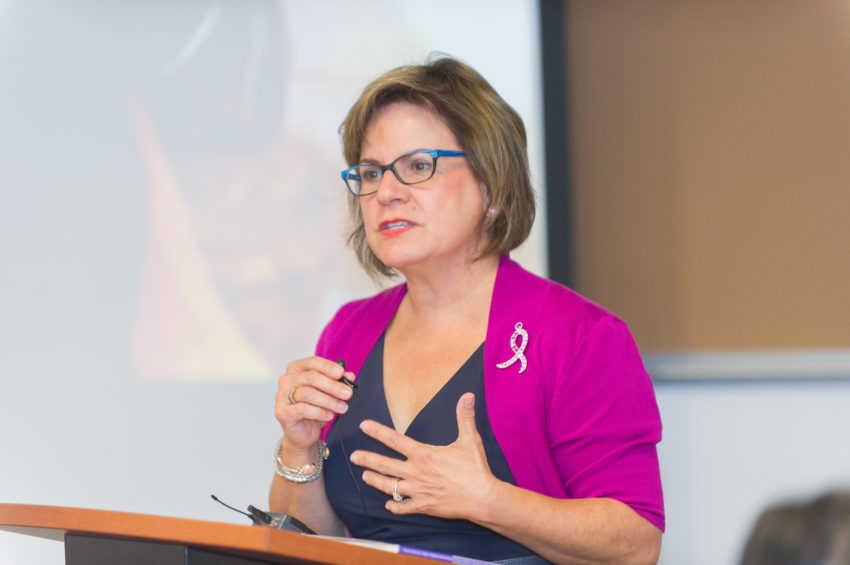
Who is your hero? Well, Salud Talks’ is Dr. Amelie G. Ramirez, the director of Salud America! and it's home, the Institute for Health Promotion Research in the Department of Population Health Sciences at UT Health San Antonio. Despite being one of the busiest people in this field, Dr. Ramirez joins us for a discussion on public health, the Latino community, and why both topics influence everyone. Check out this discussion on the #SaludTalks Podcast, Episode Seven, "Public Health's Wonder Woman"! WHAT: A #SaludTalks discussion on public health and the Latino community
GUESTS: Dr. Amelie G. Ramirez, director of Salud America! and it's home, the Institute for Health Promotion Research at UT Health San Antonio
WHERE: Available wherever fine podcasts are downloaded, ...
Texas Latinos and other communities of color are among the hardest hit by medical debt, according to a new report. The report, from the Center for Public Policy Priorities, shows that 1 in 4 Texans (23%) has medical debt. In communities of color, that rises to nearly 1 in 3 Texans (29%). These rates are higher than in other states and the nation. "When people can’t pay their medical bills, costs turn into mounting medical debt," according to the report. "[This medical debt] compromises patients’ health and financial security, harms their credit scores, and can even limit a patient’s housing, job, and health opportunities."
Alarming Medical Debt among Texans of Color
The median medical debt in collections owed in Texas is $850. Texans of color owe slightly more at $875. ...
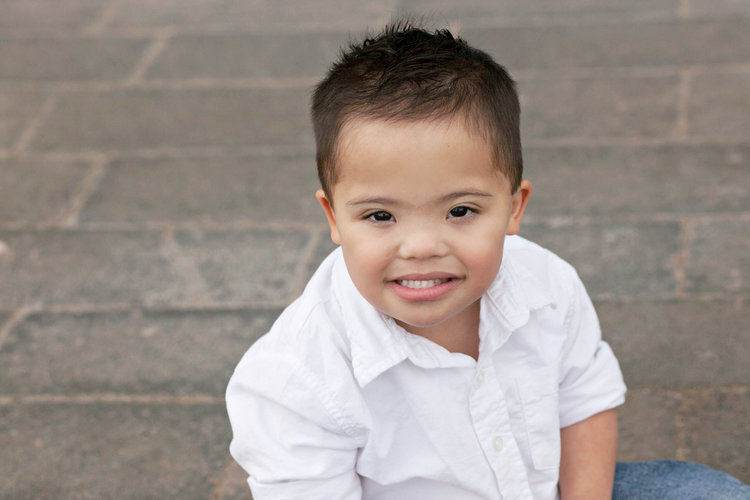
Down syndrome affects all race and ethnicity groups, with 1 in 700 U.S. babies born with Down syndrome every year and 1 in 1,200 children and adults currently living with this condition, according to federal data. But did you know that Latinos have an unusually higher risk for Down syndrome? For instance, in Texas, Latinos had the highest number of Down Syndrome births when compared to other race/ethnicity groups. October is Down Syndrome Awareness month. This is a good time to discuss Down syndrome knowledge, disparities, and support for Latino families.
What Is the Risk of Down Syndrome for Latinos?
Down syndrome is a genetic disorder where a person has three copies of chromosome 21 instead of two. However, the exact cause is unknown. "In a process called non-disjunction, ...
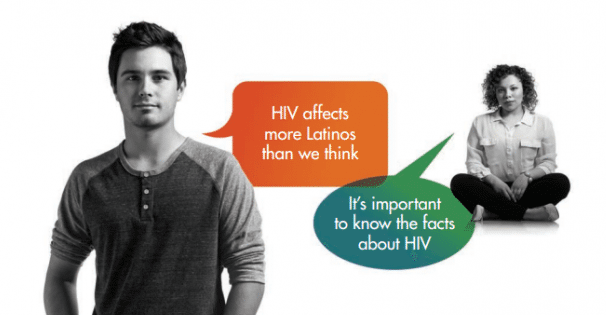
1 in 6 Latinos living with HIV/AIDS don't even know they have it. With 10,292 Latinos newly diagnosed with HIV in the U.S. in 2016, this population group needs access to culturally competent care and prevention education. To celebrate Natinoal Latinx AIDS awareness day (Oct. 15) and Hispanic Heritage Month (Sept. 15-Oct. 15), let’s use #SaludTues on Oct. 15, 2019, to tweet about Latinos and HIV/AIDS WHAT: #SaludTues Tweetchat: Latinos and AIDS: Problems + Solution
DATE/TIME: Noon CT (1 p.m. ET) Tuesday, Oct. 15, 2019
WHERE: On Twitter with hashtag #SaludTues
HOST: @SaludAmerica
CO-HOSTS: The National Latino AIDS Awareness Day @NLAAD, PublicHealthMaps @PublicHealthMap, Communicate for Health Justice @_CFHJ, Eudes Foundation USA @FEudesUSA, US Department of Health ...
Your health depends on the social conditions where you live—like stable housing, safe transportation, and health food. But the health care system often overlooks these social conditions in favor of medical interventions. To improve the nation's health, health care leaders should integrate social care into health care delivery. “Integrating social care into health care delivery holds the potential to achieve better health outcomes for the nation and address major challenges facing the U.S. health care system,” according to a new report from the National Academies of Sciences, Engineering and Medicine (NASEM). Policymakers, health system leaders, and other stakeholders can achieve this integration through 10 key actions.
5 Goals to Integrate Social Needs into Health ...
By Marisa Bejar
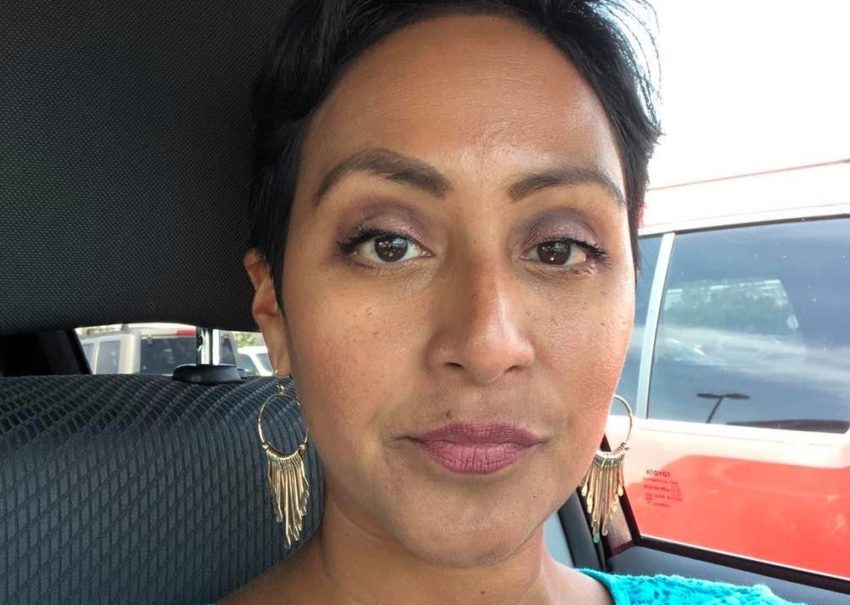
Native of Texas, Cancer Survivor My name is Marisa Bejar. I’m a military wife from Texas stationed in Maryland. My boys are 10 and 8. I'm a 7-year survivor of breast cancer, as of Sept. 20, 2019.
'Too Young to Get Breast Cancer'
I found a lump in my left breast in July 8, 2012. I went to the doctor and she told me it’s probably a clogged milk duct. "You’re too young to get breast cancer," the doctor told me as she put in a referral for a mammogram. July 16 was the day I had my mammogram. I was in a room full of different-aged ladies. I got called back for my mammogram and then called back for different angles. I knew something was up because my girls were never popular. I was a size A. I had a mammogram and an ultrasound that day. I love the ...
One in five children struggles with obesity in America today. Worse, this trend impacts over 25% of Latino kids, which is more than their white and black peers, according to Trust for America’s Health’s newest State of Obesity report. In an effort to combat those numbers, the National Collaborative on Childhood Obesity Research (NCCOR) recently released its Measures Registry, Measure Registry User Guides, and Measures Registry Learning Modules platform. “NCCOR’s goal in introducing these Learning Modules is to provide a useful resource for those in the field,” the group states in a recent press release. “The Modules highlight key concepts…making it easier to understand measurement issues in the four major domains of the Measures Registry: individual diet, food ...
Breast cancer is the No. 1 cancer killer of Latinas in the U.S. Fortunately, Latinas can take steps to reduce their own risk for breast cancer, and community and healthcare leaders can promote prevention, screening, and early detection. To celebrate Breast Cancer Awareness Month (October) and Hispanic Heritage Month (Sept. 15-Oct. 15), let’s use #SaludTues on Oct. 1, 2019, to tweet about the latest progress in Latina breast cancer research, the importance of breast cancer screening, and tips for prevention and survivorship! WHAT: #SaludTues Tweetchat: How to Address Breast Cancer among Latinas
DATE/TIME: Noon CST (1 p.m. ET) Tuesday, Oct. 1, 2019
WHERE: On Twitter with hashtag #SaludTues
HOST: @SaludAmerica
CO-HOSTS: National Hispanic Medical Association ...
The proportion of Americans with no health insurance coverage increased for the first time in a decade, even as poverty is declining, according to new census data. In 2018, 27.5 million Americans did not have health insurance, an increase of 1.9 million people from the 2017. The rate of Americans lacking coverage rose from 7.9 to 8.5 percent of the population. The percentage of uninsured children increased by 0.6 percentage points between 2017 and 2018, to 5.5%. Minorities shouldered higher disparities. Latino kids saw the sharpest rise in uninsured rates compared to other races, from 7.7% uninsured to 8.7%. This, even as the poverty rate fell last year to its lowest level since 2001. The decline in poverty and increase in uninsured people seems to "reverse the trend ...