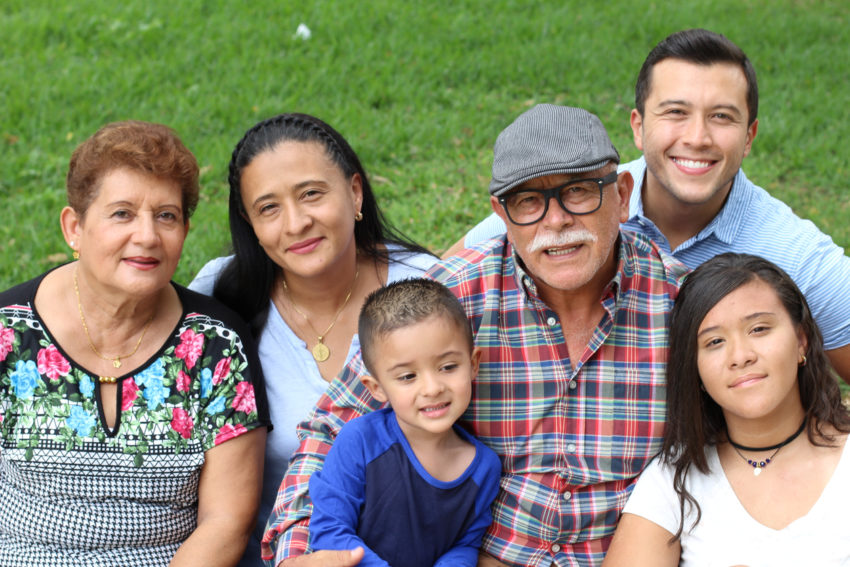
The rate of uninsured childbearing-age women in Texas (39.4% Latino) is more than double the national average. Over 25% of women ages 18 to 44 are not covered, according to a new study from the Georgetown University Center for Children and Families. The national average? 12.3%. This disparity reflects the state's Medicaid expansion policy choices, Joan Alker, the center’s executive director, told KUT News. "Low-wage workers don’t have offers of affordable health insurance in a state like Texas, perhaps more so than other states," Alker said.
Insurance Access and Overall Health
Researchers set out to discover whether or not state Medicaid expansions through the Affordable Care Act would impact the rate of insured women. Their results illustrate a clear message: Where ...
Cancer, mortality rates continue to decline for men, women, and children, according to an annual report released by the National Institutes of Health. Great news, right? Not so fast. In a special section of the report, researchers found that cancer development and mortality rates increased between 2011 and 2015 for women ages 20 to 49 — whereas men, who historically have higher rates than women, did not experience such gains. The data also shows continuing disparities among Latinos and other racial/ethnic populations. “We are encouraged by the fact that this year’s report continues to show declining cancer mortality for men, women, and children, as well as other indicators of progress,” said Betsy A. Kohler, executive director of North American Association of ...
Just two years after launching, the City Health Dashboard is adding new features to dig deeper into neighborhood- and city-specific data to guide local solutions to local health issues. Most data on urban areas focuses on the county, state, or national levels. The City Health Dashboard , however, pulls together local data from multiple sources to provide cities with a one-stop, regularly refreshed data center to help identify local gaps in opportunity and support decision-making to address factors that shape health. Now the Dashboard is adding new features and showcasing them at a webinar on June 5.
What’s New?
In June, the City Health Dashboard is giving cities additional data and new innovative features. The new data allow local leaders to dig deeper into neighborhood- ...
Warning: This may send you running for sunscreen. The rate of melanoma—the most dangerous form of skin cancer—has risen 20% among Latinos in the past 20 years. Latino adults and kids also are more likely than their white peers to be diagnosed at an advanced stage of skin cancer. But, sadly, many Latinos don't run for sunscreen. “The belief that Hispanic people don’t have to worry about skin cancer has existed among Latinos for generations,” said Dr. Maritza Perez, a dermatologist at the Icahn School of Medicine at Mount Sinai in New York. “They hear it from their parents and grandparents, and then they pass this belief on to their children.” Why is skin cancer rising in this darker-skinned group? What can we do about it?
What Is Melanoma?
Melanomas are ...
Most Americans living in rural communities say they are content with most aspects of their lives; however, two significant concerns stand out: Financial insecurity and the high medical costs. Two surveys, conducted through a partnership between NPR, Robert Wood Johnson Foundation, and the Harvard T.H. Chan School of Public Health, found that 40% of that demographic struggle with healthcare, housing, and food expenses.
Healthcare Access, or Lack There Of
The surveys also found that 26% of rural Americans said they had not received desperately needed medical attention due to their limited budget. However, nine in 10 respondents did report having health insurance. An increase that is attributed to the implementation Affordable Care Act and Medicaid expansion. A decade ago, this was ...
Gastric cancer, which forms in the lining of the stomach, is more likely to afflict Latinos than whites, and in Texas is diagnosed at younger ages and less curable stages. Dorothy Long Parma wants to find out why. Long Parma, a researcher at the Institute for Health Promotion Research at UT Health San Antonio, the team behind Salud America!, recently received a three-year, $360,000 "Peer Reviewed Cancer Research Program Career Development Award" from the U.S. Department of Defense to study the risk factors for gastric cancer in Latinos. The study will look closely at H. pylori bacterial infection, which increases risk of gastric cancer, and is common among Latinos, according to a prior study led by Long Parma. Long Parma also will examine other factors like behaviors, ...
Summer is here. Unfortunately, so is skin cancer risk. Too much unprotected exposure to the sun can give you more than a sun burn. Rates of melanoma—the most dangerous form of skin cancer—have skyrocketed in recent years. This rise is happening even among Latinos and other dark-skinned populations. Let’s use #SaludTues on Tuesday, May 28, 2019, to share strategies to improve the prevention of skin cancer among Latinos and all people: WHAT: #SaludTues Tweetchat: “How to Prevent Skin Cancer in Communities of Color”
TIME/DATE: 1-2 p.m. ET (Noon-1 p.m. CT), Tuesday, May 28, 2019
WHERE: On Twitter with hashtag #SaludTues
HOST: @SaludAmerica
CO-HOSTS: CDC’s Division of Cancer Prevention and Control (@CDC_Cancer); the American Academy of Dermatology ...
Dr. Amelie G. Ramirez, director of Salud America! and the the Institute for Health Promotion Research at UT Health San Antonio, has been named chair of the Department of Population Health Sciences (formerly Epidemiology and Biostatistics), announced Dr. Robert Hromas, dean of the Long School of Medicine. The appointment is effective June 1. Dr. Hromas also announced the department will be renamed the Department of Population Health Sciences. The new department will continue to provide services in all biological and medical analytical areas. It will also focus on efforts to use analytical tools to enhance the health of the unique populations in San Antonio and South Texas. Dr. Ramirez will continue to serve as director of the Institute for Health Promotion Research, which she ...
By Erika Zamarripa
San Antonio Cancer Survivor There is that "C" word again. Cancer can be defined as a "disease caused by an uncontrolled division of abnormal cells in a part of the body." Or it also can be defined as a "practice or phenomenon perceived to be evil or destructive and hard to contain or eradicate." Whatever you want to call it, it sucks. I was diagnosed with Stage 2 ER positive breast cancer at the age of 32 on Dec. 18, 2013. My twin boys were only 9 years old at the time and I was working at H-E-B Pharmacy. I remember one day taking a shower and I felt a lump on my breast. This lump hurt when I touched it and the longer, I felt it, the more I started to worry. I called my gynecologist and made an appointment. He felt it and sent me for a mammogram and an ...