The overall U.S. cancer death rate fell 27% from 1991 to 2016, according to a recent study by the American Cancer Society. Good news, right? Not so fast. The report revealed a disturbing trend: a growing gap in cancer death rates based on wealth. "It was surprising to see that the disparities by socioeconomic status are actually widening," Rebecca Siegel, first author of the study and strategic director of surveillance information at the American Cancer Society, told CNN. "Wealth causes differences in exposure to risk factors and also access to high-quality cancer prevention, early detection and treatment." Cancer is the leading cause of death among U.S. Latinos. They are more likely to receive a cancer diagnoses in later, less curable cancer stages.
The Bad News
This is ...
Teens with more adverse childhood experiences (ACEs) are more likely to have overweight, obesity, and severe obesity than those with no ACEs, according to a new Minnesota study. Youth with one ACE─psychological abuse, physical abuse, sexual abuse, familial substance abuse, domestic violence, or parental incarceration─were 1.38 times as likely to have obesity than youth with no ACEs. Those with all six ACEs were 2.03 times as likely to have obesity. Additionally, Latino youth were 1.38 times as likely to be overweight as white non-Latinos. “Our results imply that child health professionals should understand the relationship between ACEs and weight status in adolescence, and that screening for ACEs and referring youth and their families to appropriate services might be an ...
By Jill Folkman
San Antonio Cancer Survivor I was diagnosed with Stage One ER+/PR+ Her2 Negative DCIS in September of 2016. I was devastated, scared and had no idea what I was in for. I thought my life was going to be short lived and was talking to God the whole time to give me strength. My oncologist at the time recommended a bilateral mastectomy and because of the placement of the tumor I had to have the left nipple removed. I opted for a skin sparing, with both nipples removed, bilateral mastectomy with expanders so that I could get reconstruction after chemo. Good news was, the pathology showed my lymph nodes came back clear. Once I was healed from the surgery I had 4 rounds of chemo and no radiation. I lost all of my hair and all the fun stuff that goes along with chemo. ...
On the heels of a likely second-straight year of declining healthcare enrollment, a Texas judge has ruled that core elements of Obamacare are unconstitutional and make the entire law invalid, CNN reports. The ruling is expected to be appealed, which could take months. It won't affect 2019 insurance plans. But legal experts say the ruling does cast doubts about the future of health coverage for millions of Americans via Obamacare exchanges (the Affordable Care Act) and in Medicaid expansion. If Obamacare went away, between 61 and 133 million people with some type of pre-existing health condition would lose coverage. As a result, they would be forced to pay much higher insurance premiums, and would be subject to a longer waiting period. Meanwhile, around four million Latinos ...
Latino adults smoke cigarettes at a lower rate (12.1%) than their white peers (19.4%). However, once they’ve started, Latinos are more likely to keep smoking and only half as likely as whites to successfully quit smoking, according to the UCSF Smoking Cessation Leadership Center. Experts say the reasons why fewer Latinos quit is complex. “You’re looking at a population with fewer alternatives to cope,” David Williams, a public-health professor at Harvard University, told whyy.org. "That makes it harder for them to give up that aid.”
'Hard to Quit' Reason: Little Access to Help
Latino smokers lack access to support for quitting smoking. They have the lowest rate of health insurance coverage among racial/ethnic groups. They also experience lower levels of ...
The number of U.S. kids without health insurance is rising for the first time in 10 years. Texas has the highest number of children without health insurance in America, according to a new report by Georgetown University Center for Children and Families. The report found that more than 1 in 5 uninsured kids in the U.S. live in Texas, which is 835,000 as of 2017. From 2016 to 2017, Texas saw an increase of 83,000 uninsured kids. This is bad news for Latinos. Latinos, set to be the largest racial/ethnic population in Texas by 2022, are already the most uninsured U.S. group.
Latino Kids and the Report
This is the second-straight year Texas has had the nation's highest rate of uninsured children. There are many reasons for this, experts say. First, Texas has a greater ...
Family separations. Broken families. Little social support. In these tough times, abuela and abuelo often have to step up a caregivers for young children. That is why Raheem Baraka's Baraka Community Wellness partnered with nonprofit Tree of Life to create a unique support group for Spanish-speaking grandparents who are doubling as caregivers in Boston (19% Latino). "There are many grandparents who are raising their grandchildren," Baraka told Salud America! in July 2018. "There are broken families. There are challenges around our people staying together in highly traumatic and stressful situations."
The Need for Grandparents as Caregivers
In 2016, a record 64 million people, or 20% of the U.S. population, lived with multiple generations under one roof, according to a recent ...
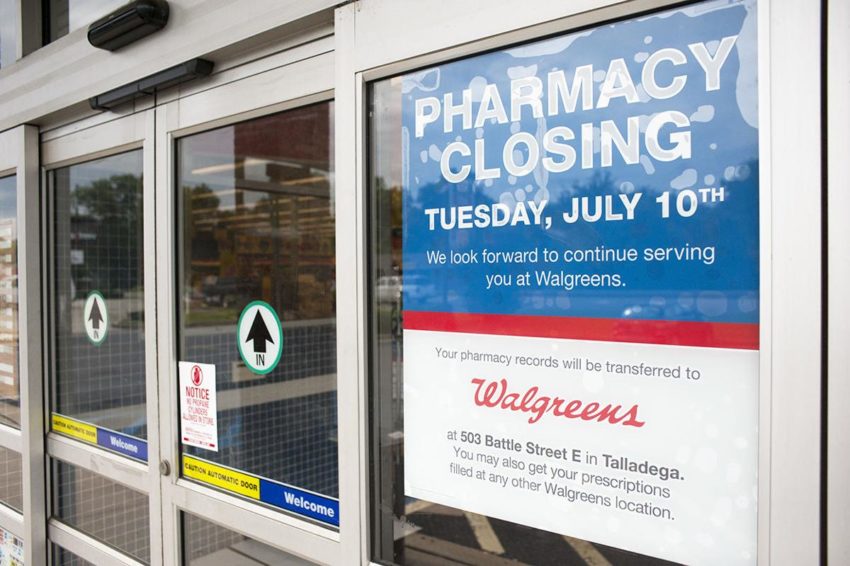
Hospital closures have become the norm in many rural areas. Now, rural pharmacies are headed on the same path, according to a U.S. News Report. Over the past 16 years, 1,231 rural, independently-owned pharmacies have closed. That's 16% of all rural pharmacies. Fewer than 6,400 pharmacies are left in rural communities. Rural communities that had at least one retail (independent, chain, or franchise) pharmacy in March 2003 had no retail pharmacy in March 2018, according to RUPRI Center for Rural Health Policy Analysis Rural Policy Brief. Residents of rural communities now have to travel great distances for medications and/or turn to mail-order prescriptions that make it impossible for in-person consultation concerning questions about the medication. “Closure of ...
It is a well known fact that where we live plays a vital role in our health, and those who live in rural areas struggle to access quality healthcare. Rural residents are more likely to die from heart disease, cancer, respiratory disease, stroke, and unintentional injuries than their urban counterparts. In Texas, more than 3 million people live in rural areas, and are more likely to be uninsured, have lower incomes, and higher rates of death from preventive chronic diseases. The Center for Optimizing Rural Health, part of the Texas A&M Rural and Community Health Institute, aims to change all that.
Center for Optimizing Rural Health
Texas A&M University has been chosen as the sole recipient of a five-year grant, which will fund the Center for Optimizing Rural Health, ...