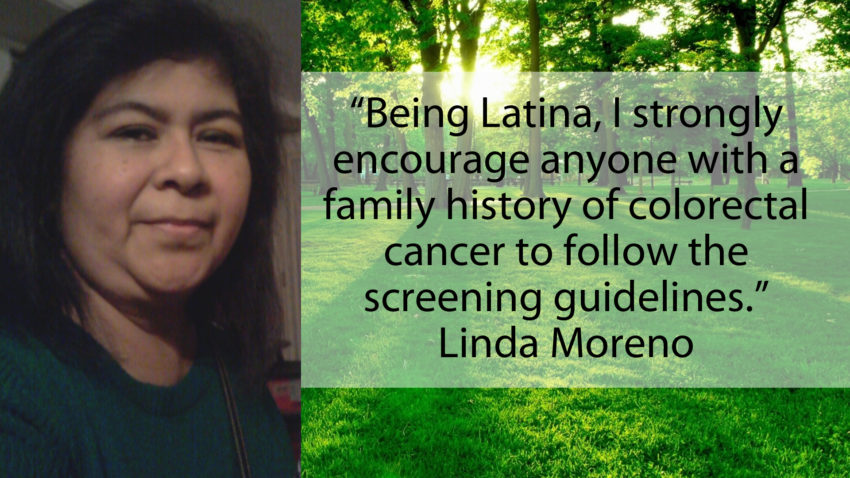
Linda Moreno and her San Antonio family provide a powerful example of the importance of family history and getting screened for colorectal cancer. One of six children, Moreno has a family history of diabetes, high blood pressure, rheumatoid arthritis, stomach and thyroid cancer. But she had no family history of colorectal cancer. After two of her siblings were suddenly diagnosed with colorectal cancer within two months of each other, Moreno and her three other siblings rushed to get themselves screened. “It was a shock to see my brother and sister diagnosed with colorectal cancer,” Moreno said. “I had my first screening colonoscopy at the age of 33 due to my family history. They found and removed two polyps.” Moreno, a mother of two, is now diligent in keeping a ...
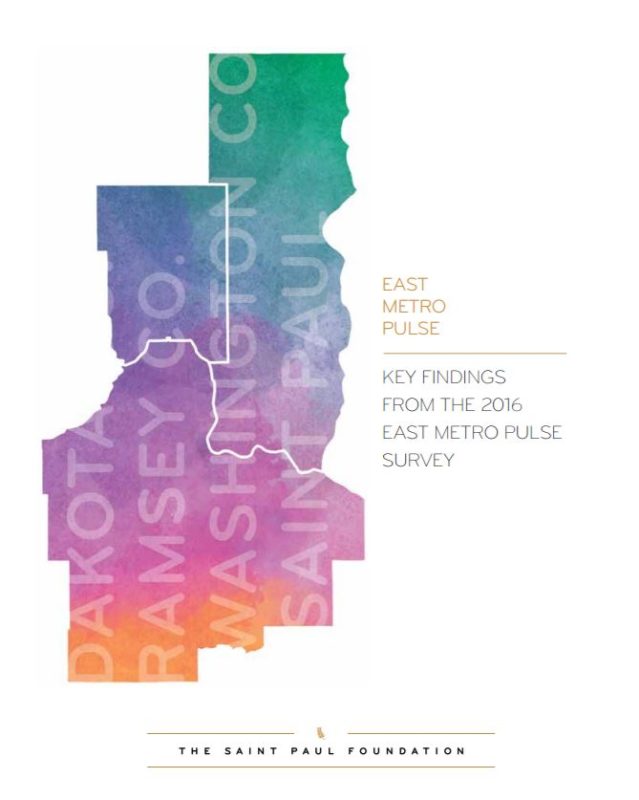
Lack of support can hinder Latino health. Recently, the St. Paul Foundation – a nonprofit community foundation based in St. Paul, MN (9.53% Latino population) – conducted a survey of more than 1,500 area residents to learn about their transportation, health care, and housing statuses. According to the Pioneer Press, the Foundation received a total of 400 completed surveys from respondents in Dakota County, 480 from Washington County and 430 from St. Paul, as well as another 230 from Ramsey County. Among the findings, the area has seen a large influx of Latinos since the year 2000. In Dakota County (6.44% Latino population), as an example, the Latino population has tripled in that time frame. In terms of transportation and transportation equity, the surveys determined ...
For many Latinos, discussing mental health issues still retains a strong and often negative stigma. The National Alliance on Mental Illness (NAMI) emphasizes that mental illness is no different for Latinos than for any other racial or ethnic group. Common mental health disorders among Latinos are generalized anxiety disorder, major depression, posttraumatic stress disorder (PTSD) and alcoholism. For many Latinos, a lack of access to mental health care resources means conditions go either untreated or undiagnosed. Language barriers also prevent many from expressing their symptoms and/or concerns to their doctors. In the city of Fresno, Calif., one group is looking to help remove some of these barriers. The Consejo Project, part of the Department of Social Work Education at ...
A new study reported by USA Today has confirmed some really bad news. Over the past four decades, colon and rectal cancers have increased dramatically and steadily, especially in young and middle-age adults. This could be even worse news for Latinos. According to statistics from the American Cancer Society, colon cancer is the second leading cause of cancer deaths among Latino men and the third leading cause of cancer deaths among Latina women. Scientists have not pinpointed an exact cause, but they have theorized that the rising obesity rats and inactivity and poor diets have played a factor in this news. “Colorectal cancer had been thought a success story” because overall rates have fallen as screening has increased among older adults, said lead researcher Rebecca Siegel ...
Everyone needs proper sleep, especially Latinos. Lack of sleep contributes to heart attacks, diabetes, obesity and other serious health issues that disproportionately affect Latinos, CDC reports. For World Sleep Day on March 16, 2018, let's explore why sleep is important for your health, how much Latinos sleep (or don't sleep), and how you can improve your sleeping habits. World Sleep Day is directed by World Sleep Society, World Association of Sleep Medicine, and World Sleep Federation.
How Much Sleep Do We Need?
The National Institutes of Health (NIH) suggests that children need at least 10 hours of sleep daily, teens need 9-10 hours, and adults need 7-8 hours.
Why Is Getting Enough Sleep Such a Big Deal?
People who get insufficient sleep are also more likely to suffer from ...
El Día Mundial del Sueño es el 17 de marzo de 2017. Este día de conciencia global es un momento importante para continuar la discusión de mejorar los hábitos de sueño saludable. De hecho, los Centros para el Control y la Prevención de Enfermedades han declarado insuficiente sueño un problema de salud pública; un contribuyente a la hipertensión, la diabetes, la depresión, la obesidad y el cáncer. De acuerdo con el Instituto Nacional de Salud, el insomnio le cuesta a la economía de los Estados Unidos hasta $411 mil millones al año en pérdida de productividad. Los trastornos del sueño afectan a entre 50 y 70 millones de estadounidenses. Por eso, Kaiser Permanente desarrollo un video útil de consejos que la gente puede utilizar para dormir mejor y para mejorar la ...
Colorado health leaders have a new answer to help Latinos overcome barriers to proper healthcare, like language, cultural stigmas, and a lack of access... ...a chat series. The new Community Hearth Health Actions for Latinos at Risk (CHARLAR) program, which originated in Denver (30.94%) before coming to Steamboat Springs (8.3% Latino population), arms Latinos with personal health knowledge they may not otherwise have. “Many Latinos have poor dietary and health habits,” said Erick Ocampo, a community connector for Northwest Colorado Health that is running the program, in an interview with Steamboat Today. “Overeating, not exercising, and not getting help for health issues until the issues are very serious … In our culture, we don’t really care.” In the summer of ...
If colorectal cancer is detected early, survival rates are vastly improved. Sadly, colorectal cancer screening rates are low among Latinos. This makes it the second-most diagnosed cancer in Latino men and women and the No. 3 cancer killer of Latinos. Good news: You can help change these statistics! For Colorectal Cancer Awareness Month in March, let's use #SaludTues on March 14, 2017, to see how you can prevent colorectal cancer and learn about the National Cancer Institute's Screen to Save Colorectal Cancer Outreach and Screening Initiative to boost screening among racial/ethnic and rural communities. WHAT: #SaludTues: Screen to Save Colorectal Cancer (CRC) Awareness”
TIME/DATE: 1-2 p.m. ET (Noon-1 p.m. CT), Tuesday, Mar. 14, 2017
WHERE: On Twitter with hashtag ...
Many Latinos think they're safe from sun damage due to their darker skin, even though advanced skin cancer is increasingly common in this group, HealthDay reports. Latinos thus don’t take steps to protect themselves from the sun’s harmful UV rays, said Dr. Maritza Perez, a dermatologist at the Icahn School of Medicine at Mount Sinai in New York, in an American Academy of Dermatology news release. Some Latinos even go indoor tanning before spending time in the sun, under the false belief that a "base tan" will protect them, Perez said. "The belief that Hispanic people don’t have to worry about skin cancer has existed among Latinos for generations," she said. "They hear it from their parents and grandparents, and then they pass this belief on to their children." With ...