An article published by the Journal of the American Board of Family Medicine has outlined the overall impact that the Affordable Care Act (ACA) has had on healthcare access for Latinos. In the U.S. Latinos have traditionally faced inequities and disparities in access to healthcare compared to Whites. With the passing of the ACA, Americans overall made historic gains in reducing the rates of the uninsured population. Latinos especially reached record lows in the number of uninsured individuals. According to the study, despite the historic gains, Latinos perform worse on most measures of access to and utilization of their health care than Whites. The reasons for these disparities are multifaceted and include citizenship status, language, and socioeconomic status. In order to ...
A new grant opportunity through the Atena Foundation's 2017 Cultivating Healthy Communities grant is open, offering up to $2 million in grants to organizations that increase opportunities for low-income, minority communities to make healthy choices in the places they live, work, learn, and play. Grant requests can range between $50,000 and $100,000 for projects that span 18 to 24 months. They are seeking partners whose work addresses pressing issues in the following domains: Built Environment, Community Safety, Environmental Exposures, Healthy Behaviors, and Social/Economic Factors.
This will be a highly competitive funding opportunity structured in two stages. Stage 1 involves a short application where all eligible organizations are invited to submit an online Stage 1 application ...
Latinos are the largest and fastest growing racial and ethnic group in the United States. Despite gains made with the passing of the Affordable Care Act, Latinos are also still the largest uninsured population in the country. One of the major ways that many Latinos have attained healthcare has been through Medicare. Currently, Medicare provides health coverage for most Americans when they reach age 65 or have been receiving Social Security disability benefits for 24 months. The service covers a portion of the health care costs of over 55 million Americans, including approximately 4.1 million Latinos. Recently, the Centers for Medicare & Medicaid Services (CMS) released an updated guide that outlines what Medicare doesn’t cover. In order to reduce health disparities, ...
Latinos in certain Chicago neighborhoods face worse physical and mental health and more food insecurity than nationwide, according to a new report, the Chicago Sun-Times reports. For the report, the Sinai Community Health Survey 2.0, researchers from the Sinai Urban Health Institute surveyed 1,900 residents in nine ethnically diverse Chicago neighborhoods, including Gage Park (92% Latino), Humboldt Park (89%) and South Lawndale (84%). Chicago is 29% Latino overall. “The data paint a stark and complex picture of health and wellness in many Chicago communities, varied by race, income and ethnicity,” said Dr. Sharon Homan, president of the Sinai Urban Health Institute, told the Sun-Times. “To develop meaningful interventions to improve health, we must first understand the ...
After Judy Regalado learned a close friend had died of colorectal cancer in her mid-30s, and after experiencing similar symptoms herself, she knew she had to get checked. But because the San Antonio area resident didn't have a family history or other risk factors, doctors asked her to wait until she turned 50 for a colonoscopy. They told her the symptoms could just be hemorrhoids, and referred her to a gynecologist instead. Judy still felt her symptoms could be something more serious. “I made an appointment with my primary care doctor and insisted on a colonoscopy, and I’m glad I did because I was diagnosed with stage III rectal cancer,” Judy said. “If I had not requested to have a colonoscopy, I would have been a statistic.” The colonoscopy caught Judy’s cancer ...
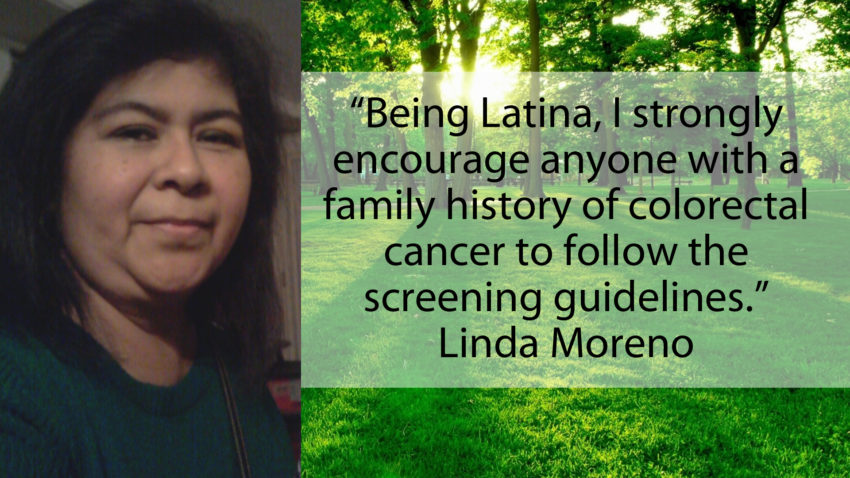
Linda Moreno and her San Antonio family provide a powerful example of the importance of family history and getting screened for colorectal cancer. One of six children, Moreno has a family history of diabetes, high blood pressure, rheumatoid arthritis, stomach and thyroid cancer. But she had no family history of colorectal cancer. After two of her siblings were suddenly diagnosed with colorectal cancer within two months of each other, Moreno and her three other siblings rushed to get themselves screened. “It was a shock to see my brother and sister diagnosed with colorectal cancer,” Moreno said. “I had my first screening colonoscopy at the age of 33 due to my family history. They found and removed two polyps.” Moreno, a mother of two, is now diligent in keeping a ...
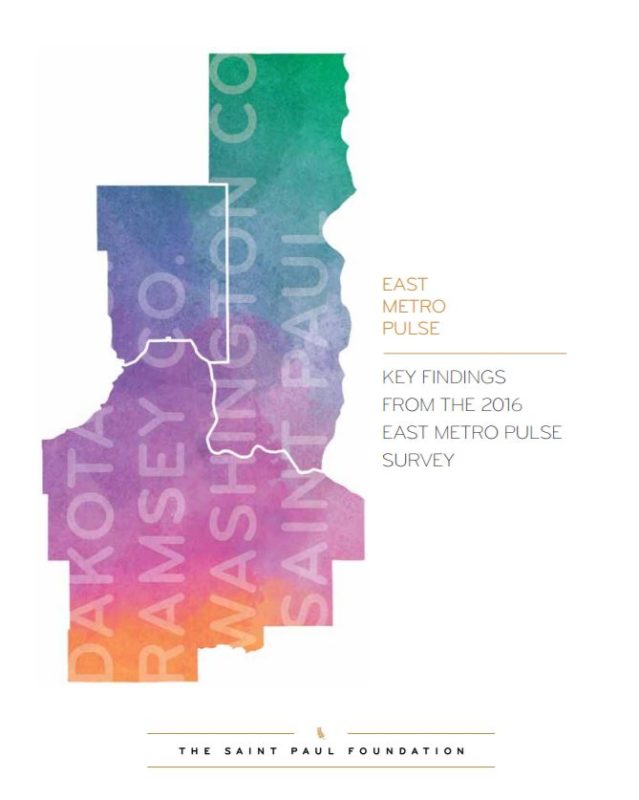
Lack of support can hinder Latino health. Recently, the St. Paul Foundation – a nonprofit community foundation based in St. Paul, MN (9.53% Latino population) – conducted a survey of more than 1,500 area residents to learn about their transportation, health care, and housing statuses. According to the Pioneer Press, the Foundation received a total of 400 completed surveys from respondents in Dakota County, 480 from Washington County and 430 from St. Paul, as well as another 230 from Ramsey County. Among the findings, the area has seen a large influx of Latinos since the year 2000. In Dakota County (6.44% Latino population), as an example, the Latino population has tripled in that time frame. In terms of transportation and transportation equity, the surveys determined ...
For many Latinos, discussing mental health issues still retains a strong and often negative stigma. The National Alliance on Mental Illness (NAMI) emphasizes that mental illness is no different for Latinos than for any other racial or ethnic group. Common mental health disorders among Latinos are generalized anxiety disorder, major depression, posttraumatic stress disorder (PTSD) and alcoholism. For many Latinos, a lack of access to mental health care resources means conditions go either untreated or undiagnosed. Language barriers also prevent many from expressing their symptoms and/or concerns to their doctors. In the city of Fresno, Calif., one group is looking to help remove some of these barriers. The Consejo Project, part of the Department of Social Work Education at ...
A new study reported by USA Today has confirmed some really bad news. Over the past four decades, colon and rectal cancers have increased dramatically and steadily, especially in young and middle-age adults. This could be even worse news for Latinos. According to statistics from the American Cancer Society, colon cancer is the second leading cause of cancer deaths among Latino men and the third leading cause of cancer deaths among Latina women. Scientists have not pinpointed an exact cause, but they have theorized that the rising obesity rats and inactivity and poor diets have played a factor in this news. “Colorectal cancer had been thought a success story” because overall rates have fallen as screening has increased among older adults, said lead researcher Rebecca Siegel ...