Sacramento has mild weather, light rail, and many bike paths. But people still heavily depend on cars in this 23% Latino city, according to its relatively low walk score. Sacramento also is like many other California cities, where urban planners face a big challenge to create more ways for a rising population to walk and bike. Fortunately, a group of diverse youth are making a difference for more walking, bicycling, and skating.
Youth Step Up for Safer Streets
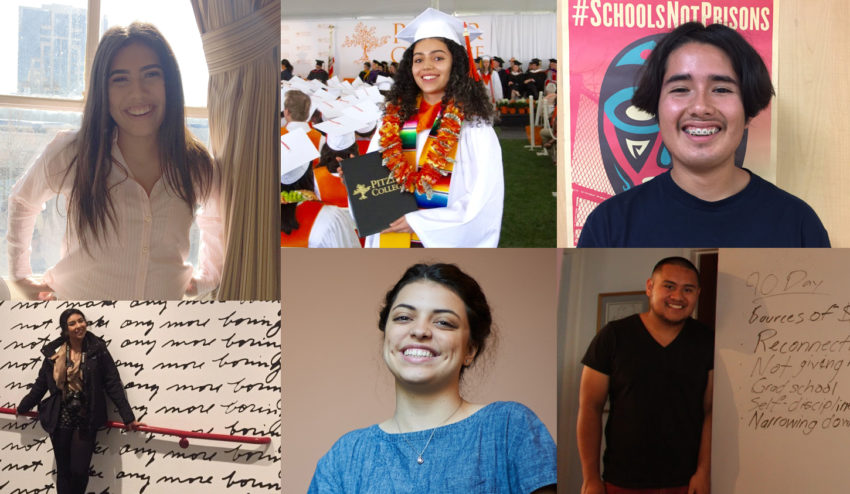
The Walk & Bike Youth Leaders Program started in Sacramento in 2017, thanks to the California Bicycle Coalition, California Walks, and the California Center for Civic Participation. Program organizers chose 11 youth ages 16-23. The youth will partake in four online training sessions. They will learn how to ...
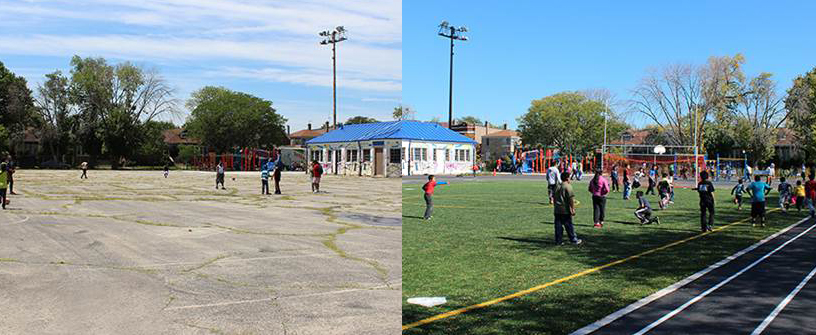
Finding safe places for kids to play hasn't been easy for Latino families in Chicago. For example, 30 years ago, the federal government sued the Chicago Parks District for favoring parks in white neighborhoods and neglecting parks in African-American and Latino ones. Schools in Chicago didn't have equitable funding to maintain their own playgrounds over the years, either. At the same time, the nation was shifting to a school day with less time for recess—creating a "recess drought." But school officials wanted to play a role in increasing access to safe green space for Latino kids and families.
Solving the 'Recess Drought' (and Preventing Floods)
Chicago Public Schools, the third largest school district in the nation, took a big first step in 2011. They passed a recess ...
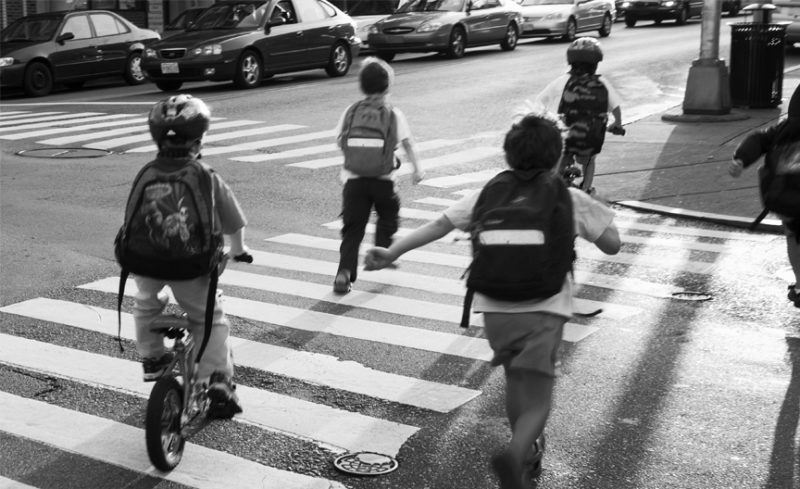
The U.S. is failing five of nine factors that reflect walking and walkable communities, according to a new report card. Children's walking behavior, pedestrian infrastructure, safety, institutional policies, and public transportation were graded an "F" by the new 2017 United State Report Card on Walking and Walkable Communities. The report is from the National Physical Activity Plan Alliance, which developed a system to evaluate U.S. walking and walkability.
Why walking is critical in Latino neighborhoods
Walking is a natural and inexpensive activity to improve health and prevent chronic disease. However, safe places to walk are often not accessible, particularly in Latino neighborhoods, according to our own research. Thus, many Latino children and adults don't walk and suffer ...
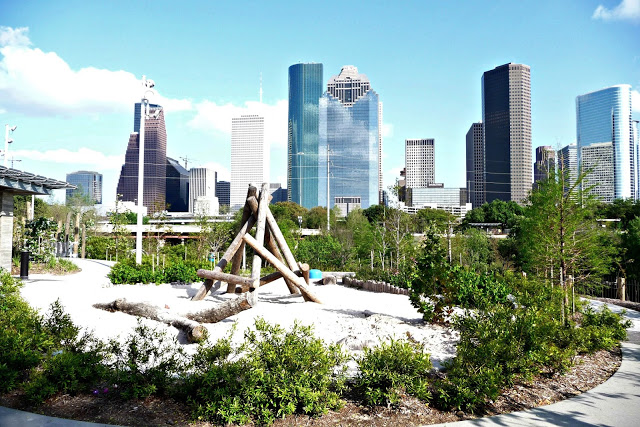
Texas State Parks are opening new natural play areas for children and people with disabilities to play and connect with nature. Latino kids in Texas (39.1% Latino), and across the country, lack safe outdoor places to play and be active, which is known as a nature deficit disorder. Families struggle to find green space that is both fun and appropriate for all age ranges. Particularly Latino families, which are often multigenerational. Childhood development leaders, architects, educators and urban planners worked together to design plans for natural playscapes in various outdoor spaces, like state parks, local parks, zoos, and botanical gardens to better engage kids and families with nature. Natural playscapes are designed to be built using natural materials and include boulders, ...
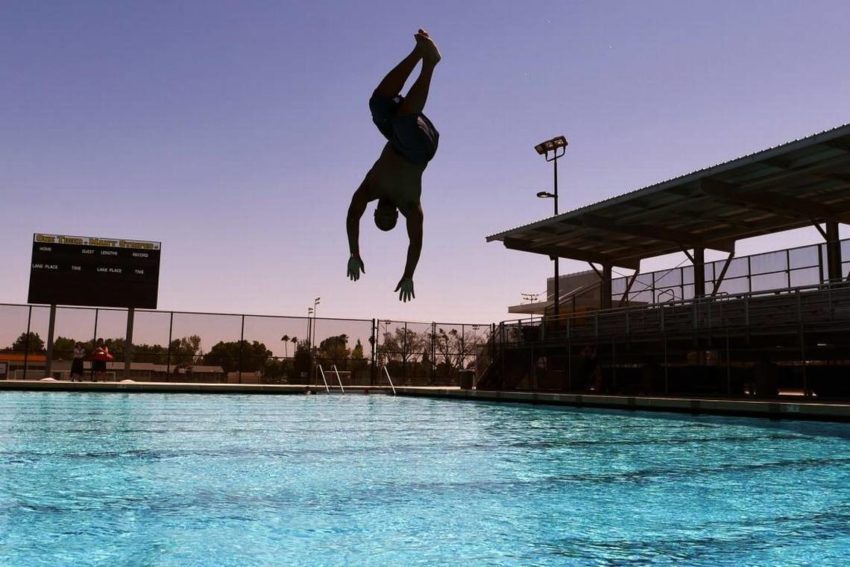
Schools in Fresno, CA (52.8% Latino) opened their green and blue spaces to the public. Green spaces are parks, playgrounds, sports fields and other outdoor play spaces. Blue spaces are swimming pools, lakes and rivers. Latino kids lack safe green and blue spaces, thus face higher rates of chronic disease, drowning, and drowning related injuries compared to white kids. In June 2016, the Fresno Parks, After School, Recreation, and Community Services Department (PARCS) started a new Weekend Recreation and Fitness Program (WRFP) to get help kids and families stay more active. With a $1.2 million dollar budget from the City of Fresno, Fresno Unified School District, and Central Unified School District, they opened school facilities, like playgrounds, sports fields and green space, ...
Latino children may have education disadvantages when starting kindergarten. Head Start, which is free for low-income families, may help to improve school readiness with curriculum to enhance children's language, pre-literacy, and social-emotional skills. In 2015, the Department of Health and Human Services Head Start passed new performance standards increasing the minimum program hours. This is great for kids and families, but a challenge for providers due to limited space. In Alexandrian, Minnesota, half-day classes could share the same facility, one in the morning and a second in the afternoon, but didn't have the space to offer full day programming for both classes. They needed more space. Jim Haugen, Head Start Supervisor approached Alexandria Technical and Community ...
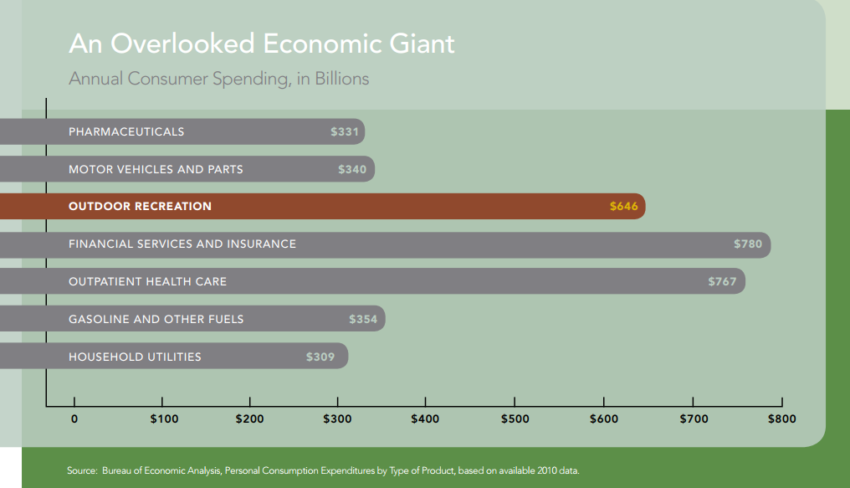
Americans spend more on bicycling gear and trips ($81 billion) than they do on airplane tickets and fees ($51 billion), and nearly as much on snow sports ($53 billion) as on internet access ($54 billion), according to a 2012 report by the Outdoor Industry Association (OIA). OIA predicts that Americans spend $646 billion each year on outdoor recreation, which supports 6.1 million direct jobs and $80 billion in federal, state and local tax revenue. Outdoor recreation includes gear, such as apparel, footwear, tents, and bikes; vehicles, such as boats, RVs, and motorcycles; and trips and travel. In many communities, it's outdoor recreation that provides steady employment. "Advancements in technical apparel, footwear and equipment are driving innovation and entrepreneurism, while ...
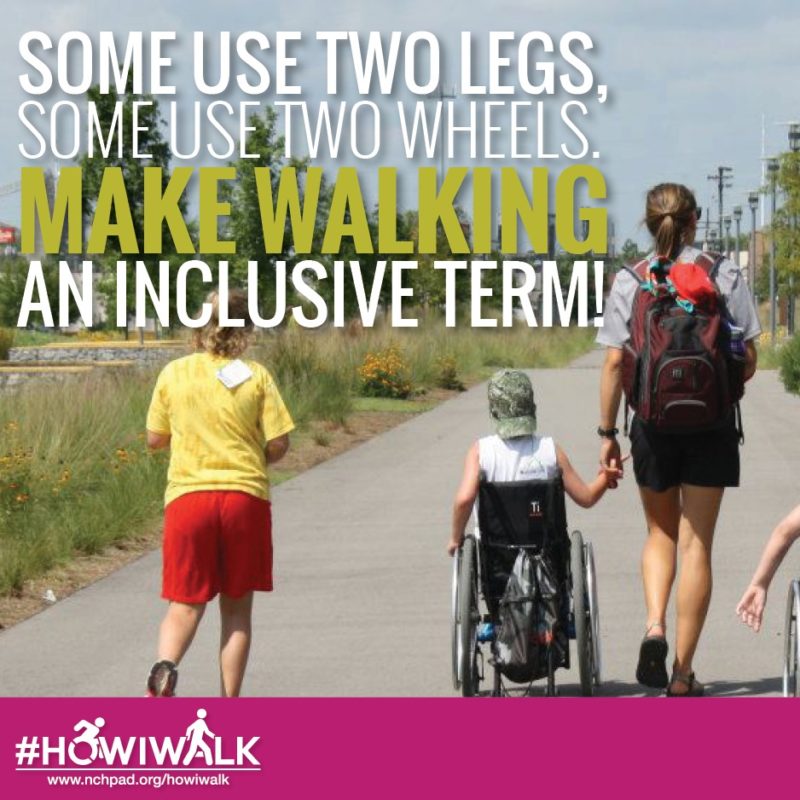
Walking is critical for accessibility. One-third of all American are not able to drive, either because they are too old, too young, too poor, or have some form of disability. People with disabilities are the only minority group you don't have to be born into. Meaning, at any time, any one of us could become part of this group due to injury or illness. The National Center on Health, Physical Activity and Disability (NCHPAD) was founded in 1999 as a resource center on health promotion for people with disability. They launched a campaign in 2015 to rebrand the word walking. Walking is particularly important for the elderly, people with disability, and lower-income people who have fewer opportunities to participate in sports of formal exercise programs. The How I Walk ...
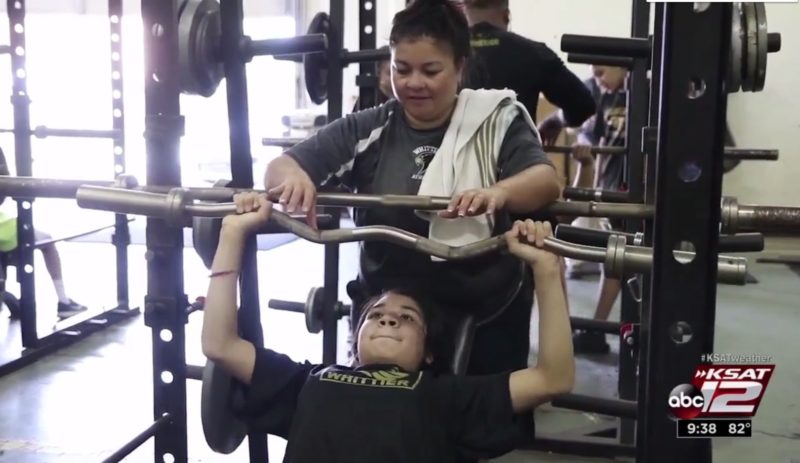
Twelve middle schools in the San Antonio Independent School District are opening the doors to their gym four days a week as a pilot program to help keep students active over the summer. Creating opportunities for kid's to remain active over the summer is critical to build a culture of health and reduce their risk for obesity and chronic disease. Particularly in disadvantaged neighborhoods which lack safe places for kids to play. The Athletic Conditioning & Enrichement (ACE) pilot program was developed by the district's assistant athletic director, Courtney Davis. For two hours a day, coaches teach middle school students about muscle strength, injury prevention, and nutrition. In collaboration with district's summer meals program, students receive two meals a day, before ...