Inadequate transportation can hurt a person’s social, economic, and health outcomes. But planners and policymakers have not had a good tool to measure transportation insecurity—a condition in which one is unable to regularly move from place to place in a safe or timely manner due to the absence of the material, economic, or social resources needed for transportation. So, in 2018, researchers from University of Michigan and others created a tool to explore transportation security modeled after the Food Security Index and based on interviews with families living in poverty. They call it the Transportation Security Index. In 2021, they validated the 16-question index using a nationally representative sample. “We hope [the Transportation Security Index 16] will be adopted ...
California can no longer punish cities for enacting sugary drink taxes, as per an October 2021 court ruling that declared the penalty provision of the state’s Keep Groceries Affordable Act of 2018 unconstitutional. The lawsuit was filed in 2020 by Cultiva La Salud and supported by ChangeLab Solutions and the American Heart Association. The implications of the ruling are widespread throughout the state. Charter cities, which include many of the largest cities in the state, can consider taxes that aim to reduce purchases of sugary drinks and help community nutrition with the revenue without the fear of punishment. Before this, the state could penalize a charter city that enacted a tax on sugary drinks by depriving the city of its sales tax revenues. Sales taxes often account for ...
Latinos and other people of color suffer high rates of obesity. This is often due to racist policies and discriminatory practices that create less access to healthcare, healthy food, affordable housing, and financial resources for families of color. What can we do about this? You are invited to join a virtual workshop, "Systems and Obesity: Advances and Innovations for Equitable Health and Well-Being," on Thursday, Oct. 28, 2021 (10 a.m. To 2:45 p.m. ET) and Friday, Oct. 29, 2021 (1 p.m. to 4 p.m. ET). This is the third workshop in a series from the Roundtable on Obesity Solutions of the Health and Medicine Division of the National Academies of Sciences, Engineering, and Medicine. Find the results of the first and second workshop. "The workshop will explore how to ...
Climate change is an ongoing environmental dilemma that threatens the health of all people. Yet, research has shown that certain groups, such as Latinos and other people of color, immigrants, those with a lower socio-economic status, and vulnerable occupational groups are most likely to suffer longer and more severely from climate change. “The effects of climate change add to other longstanding differences among people that result in different health outcomes for communities in the United States,” reported the U.S. Department of Health & Human Services.
What Is Climate Change?
Climate change is defined as a long-term shift in global or regional climate patterns. Long-term alterations in temperature or the typical weather patterns of a certain location can lead to ...
One in six U.S. youth have obesity, but the issue is worse among Latinos and other youth of color, according to a new report from the Robert Wood Johnson Foundation (RWJF). More than one in five Latino (21.4%), Black (23.8%), and American Indian/Alaska Native (28.7%) children ages 10-17 have obesity. The reasons? Structural racism and systemic health inequities. Racist policies and discriminatory practices affect our food system, access to healthcare, affordable housing, and critical family supports like childcare, the RWJF report says. Together, the effects of these policies and practices force families into hard choices on how to spend limited resources, especially during COVID-19. “The state of childhood obesity in America is an urgent call to action for leaders at all ...
Climate change is making life harder for Latinos and other communities of color. A groundbreaking 2019 study estimated that Black and Latino populations experience 56% and 63% more pollution respectively than their activities cause. Cities across the U.S. will experience harsher extreme weather events and increases in daily temperatures, and some might no longer be inhabitable. How can we help? Let’s use #SaludTues on Tuesday, Nov. 2, 2021, to discuss emerging strategies to reduce the use of harmful chemicals and toxins, promote clean indoor and outdoor air, and engage Latinos in speaking up for a cleaner climate and environment! WHAT: #SaludTues Tweetchat “The Climate Crisis and Latinos”
WHEN: 1-2 p.m. ET (Noon-1 p.m. CT), Tuesday, Nov. 2, 2021
WHERE: ...
Over 2 million U.S. teens say they use e-cigarettes, according to a new survey released by FDA and CDC. The study, which found that a quarter of these teens reported they vape daily, was based on data from the 2021 National Youth Tobacco Survey, a cross-sectional, self-administered survey of U.S. middle- and high-school students. "The use of tobacco products by youths in any form, including e-cigarettes, is unsafe. Most e-cigarettes contain nicotine, and nicotine exposure during adolescence can harm the developing brain," according to the FDA and CDC survey report, published in the Morbidity and Mortality Weekly Report.
Key Report Findings on Youth E-cigarette Use
In 2021, 11.3% of high-school (1.72 million) and 2.8% (320,000) of middle-school students reported current e-cigarette ...
Having been in the industry for over 40 years, Jim Morris is no newcomer to journalism. He’s worked at several news organizations across Texas and spent two decades at the Center for Public Integrity, a news nonprofit in Washington, D.C. In August 2021, he started Public Health Watch, a nonprofit investigative news organization that seeks to hold systems accountable and expose threats to the safety and wellbeing of the country. As the Executive Director and Editor-in-Chief of a virtual news organization, Morris faces some challenges. But in the end, it’s worth it to be able to help advocate for workers’ health and expose people to the human stories in public and environmental health. “I'm attracted to those kinds of stories. You can almost always tell a really ...
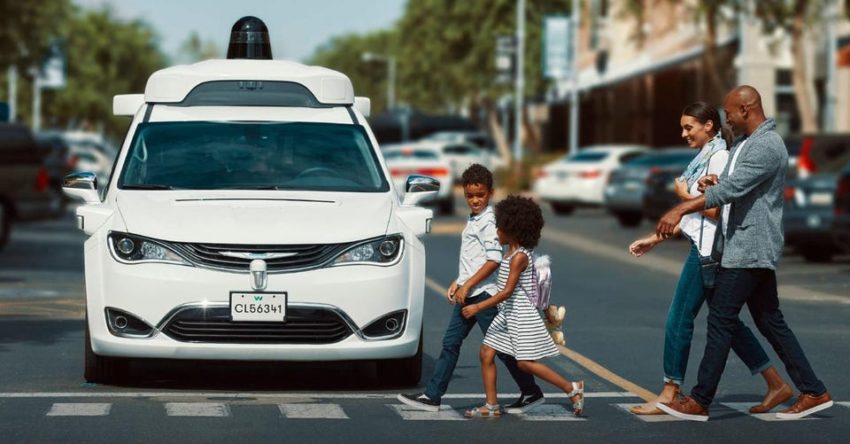
Pedestrian fatalities have increased 50% since 2009. Autonomous vehicles—those driven by automated driving systems rather than a human—are often suggested as a solution by politicians, planners, even some safety advocates. But with our nation’s struggle to regulate the automobile industry and failure to protect people walking, many worry about the decades-long shift to autonomous vehicles because cars will still dominate roads and road design. Moreover, many worry that electric driverless vehicles district from the social, economic, and health issues cities are facing today. “Public health will benefit if proper policies and regulatory frameworks are implemented before the complete introduction of [autonomous vehicles] into the market,” according to David Rojas-Rueda ...