By Reena Singh
Guest Blogger, Voices for Healthy Kids Voices for Healthy Kids recently completed research to get the Latino community’s take on sugary drinks and sugary drink taxes. The research identified several messaging findings and strategies to help engage the Latino community in efforts to reduce the consumption of sugary drinks. Specifically, the research found after receiving more information, support for sugary drink taxes jumped 28%. So, what did we learn about building relationships and engagement with Latino communities on efforts to increase access to healthy beverages and reduce the consumption of sugary drinks?
1. Materials and Messages Need to Be in Spanish and English
45% of Latinos in the survey reported they speak Spanish daily. The majority (62%) of ...
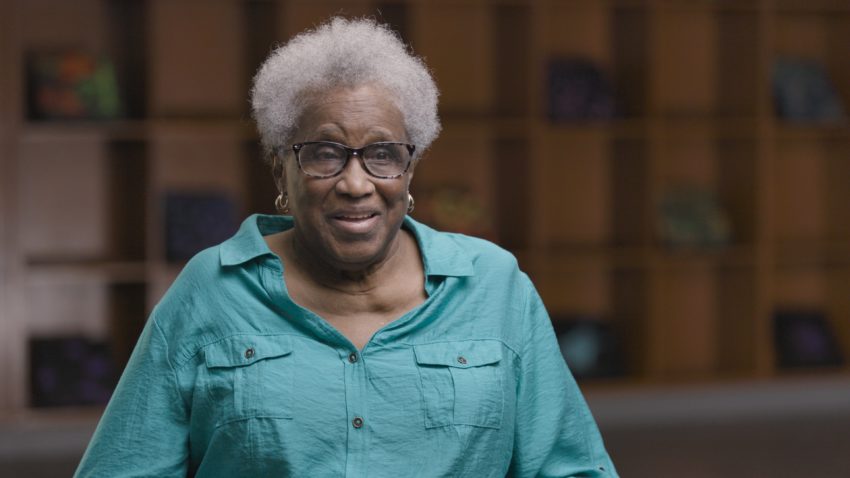
Cancer is a tough, scary, life-threatening journey, especially for women of color. That is why researchers conduct clinical trials, which are studies to find more effective treatments or achieve a better understand breast cancer and survival among minorities. But, to make progress, clinical trials need diverse volunteers – like Elsada Wilson. Wilson joined a clinical trial at Mays Cancer Center at UT Health San Antonio and found hope for herself, her family, and the future. “I felt like I was helping further studies and knowledge,” she said. "If it helps me then I'll be able to help my family and help other people that need help. I wanted to help others. I said to myself, ‘It might be that small thing that might help another person.’ Right?”
Wilson’s Breast ...
Latinos are 1.5 times more likely to develop Alzheimer’s than their white peers. Its why diversity in clinical trials is absolutely critical. Fortunately, those studies can help us fight back against Alzheimer’s. If you are age 55 to 80, you can volunteer for the AHEAD Clinical Trial that aims to protect against the onset of Alzheimer's disease, led by the experts at the Glenn Biggs Institute for Alzheimer’s and Neurodegenerative Diseases at UT Health San Antonio. “I got involved with the AHEAD clinical trial because both of my parents had Alzheimer’s,” Dave Ralberer, an AHEAD study participant and study partner, said. “My mother was 72 when she passed away. My dad has been struggling with the disease for 13 years. I have the unusual opportunity to be working with ...
El cáncer es un camino difícil, miedoso y peligroso para la vida, especialmente para las mujeres de color. Por esto es que los investigadores realizan estudios clínicos, que son estudios para encontrar tratamientos más efectivos o para lograr un mejor entendimiento del cáncer de seno y la supervivencia en las minorías. Pero, para progresar, los estudios clínicos necesitan voluntarios diversos, como Elsada Wilson. Wilson participó en un estudio clínico del Mays Cancer Center de UT Health San Antonio y encontró esperanza para ella, su familia y el futuro. "Sentí que estaba ayudando a avanzar los estudios y el conocimiento", dijo. "Si me ayuda, entonces podré ayudar a mi familia y ayudar a otras personas que necesitan ayuda. Quería ayudar a los demás. Me dije a mí ...
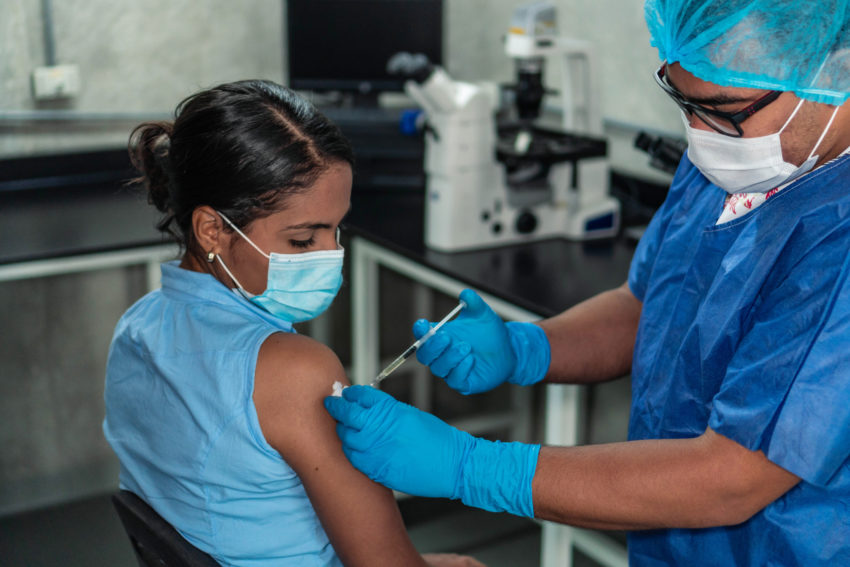
As the American people still grapple with the COVID-19 pandemic, medical experts are now in the process of distributing a booster shot, which many say can help. The booster shot is critical in making headway with bringing the pandemic to an end, according to Dr. Anthony Faucci, the Director of the National Institute of Allergy and Infectious Diseases and the Chief Medical Advisor to the President. "I’ve made it clear that my opinion has always been that I believe that a third-shot booster for a two-dose mRNA [vaccine] should ultimately and will ultimately be the proper, complete regimen," he said in a recent interview with The Atlantic. "The vaccine is very successful. The durability of it is something that’s a subject of considerable discussion and sometimes debate." As the ...
We have updated our Health Equity Report Card to include place-based information on your county’s Social Vulnerability Index Score and COVID-19 cases, deaths, and hospitalizations. The Salud America! Health Equity Report Card, first launched in 2017, auto-generates Latino-focused and local data with interactive maps and comparative gauges, which can help you visualize and explore inequities in housing, transit, poverty, health care, food, and education. You will see how your county stacks up in these health equity issues — now including social vulnerability and COVID-19 — compared to your state and the nation. Then you can share the Report Card with your local leaders to advocate for healthy change! Get your Health Equity Report Card!
Why We Need to Consider ...
Latinos are the largest racial/ethnic minority at 18.5% of the U.S. population. Yet they face considerable health inequities — from discrimination to a lack of access to health care, transportation, affordable housing, healthy food, and more. This contributes to a high burden of diabetes, obesity, and disease for Latinos. In response, we need more understanding of the root causes of health inequities, diversity in the health and research fields, better education, and greater societal presence for Latinos, according to a new article in the Journal of the American Medical Association (JAMA) by Dr. Amelie G. Ramirez, director of Salud America! at UT Health San Antonio, and Drs. Rita Lepe and Francisco Ciagarroa of the Transplant Center at UT Health San Antonio. "The changing ...
Healthcare spending is disproportionately skewed toward white people, with less money spent on Latino patients, according to new research from the University of Washington’s Institute for Health Metrics and Evaluation and others. “This study found statistically significant differences in estimated healthcare spending across six race/ethnicity groups, with differences present for total spending, age-standardized spending, spending by type of care, and health-condition-specific spending per notified case,” according to the study. The disparity has significant implications for policies needed for equity in healthcare spending. “Despite making up 18.5% of the U.S. population, only 11% of healthcare spending goes toward Latinos. We can address this disparity by examining the ...
By Andrea Reichl
Breast Cancer Survivor in San Antonio On June 8, 2015 I got the dreaded call that would change my my world as I knew it. I had only been 38 for one month and cancer never even crossed my mind as a possibility. I previously have had a mammogram and ultrasound annually due to a lump that was being monitored since my early 20s. Six months after my last mammogram my nipple became red and itchy. My gynecologist sent me to a breast specialist, who rudely told me it was because I didn’t have babies. It was devastating to hear that because she was unaware that for over 10 years my husband and I tried to have kids, unsuccessfully. She prescribed me a cream that didn’t work. I decided to go back to my gynecologist as things just didn’t feel right, and I ...