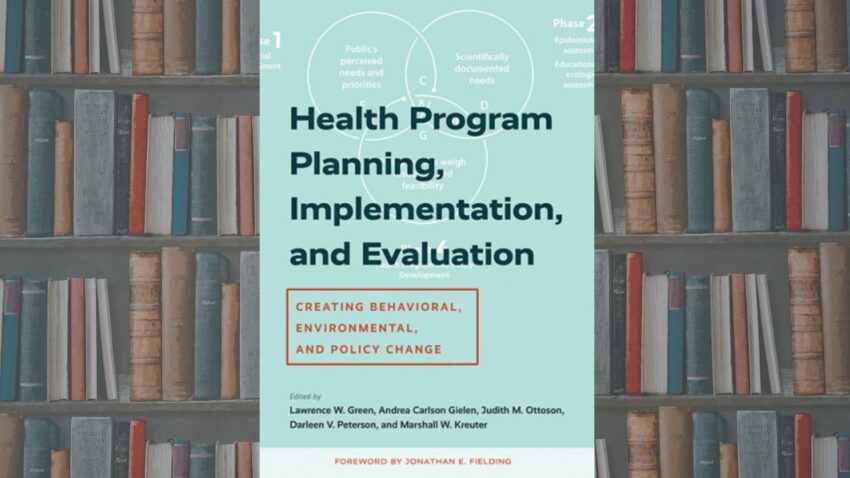
Cancer health disparities. COVID-19. Climate change. These challenges require public health leaders to create programs and policy solutions that address a complex web of factors that influence health status, from biology to social determinants and systemic inequities. In a new book, Health Program Planning, Implementation, and Evaluation, public health education specialist Dr. Lawrence W. Green and his team of editors and chapter authors combine their expertise to offer a high-level guide to public health promotion and programming. The book has a chapter, "Applications in Community Settings," written by Dr. Amelie G. Ramirez and Dr. Patricia Chalela of UT Health San Antonio. "Program and policy solutions to population health challenges require systematic planning, ...
15-year-old Anna Valdez fidgeted in her chair as her eyes scanned the stethoscope, cotton balls, and other medical supplies on the far wall of the exam room. Anna had traveled by bus to the hospital by herself, hoping to get some medical attention. But the uninsured California teenager did not receive the initial response she was anticipating from the resident physician. After a discussion with the nurse though, he was more responsive to her concerns and began outlining Anna’s course of treatment. “In that moment, I thought, ‘Wow, that is really impactful.’ I experienced a lot of [issues] because I was poor, so I was really impressed that a nurse could have that kind of impact.” At 16 years old, Anna found out she was pregnant. She dropped out of high school; ...
With the emergence of COVID-19, which continues to disproportionately impact Latinos, the world saw first-hand why public health is so important. To help Americans recover from the COVID-19 pandemic, the Biden Administration passed the American Rescue Plan in 2021. Since then, funds have been allocated to improve the health and wellbeing of Americans, including more than $226M to grow the community and public health workforce. Announced on Sept. 30, 2022, this large sum will specifically help train community health workers (CHWs) who connect people to healthcare, build trust within communities, and facilitate communication between patients and healthcare providers, according to a US Department of Health and Human Services (HHS) press release. "Patients depend on community and ...
Alzheimer’s patients and their loved ones have new reason for hope after positive results from clinical trial of a new treatment called lecanemab. Lecanemab – a drug designed to slow the progression of Alzheimer’s disease by targeting amyloid plaque buildup in the brain – reduced the progression of cognitive decline among trial participants by 27% over 18 months, compared to placebo, according to UsAgainstAlzheimers. “This is very important and quite positive news that gives our nation’s 6 million Alzheimer’s patients and their loved ones reason to hope again. In fact, the data is a reminder that each drug in this class of therapies is quite different,” said George Vradenburg, chair and co-founder of UsAgainstAlzheimers. What do the results show, and how will ...
Wanda Montalvo sat at her desk working on paperwork, she could hear nurses and physicians bustling about in the lobby. It was the 1980s, and Wanda was proud to be the secretary for the medical director’s office at the local community health center in Brooklyn, New York. Wanda saw her position as “paying it forward,” as she depended on community health centers growing up in a low-income and underinsured Latino household. However, she couldn’t help but wonder if there was something more she could do to give back to her community. After earning her Bachelor of Nursing degree, the first-generation college student went on to earn her master’s degree in nursing from Long Island University and her PhD in nursing science and health policy from Columbia University in New ...
Thirteen-year-old Ricardo Correa sat in the pediatric endocrinologist’s office alongside his mother, listening with fascination and soaking up information like a sponge. When the appointment ended, he returned to his home in Panama and spent the next few years learning more about his own health and taking every opportunity to help others who were sick or hurt. By age 18, Ricardo knew he wanted to become a doctor who could stop the spread of infectious diseases and help prevent chronic diseases. “When I was a kid, my mother always said that I could do two things in my life,” Ricardo Correa, MD, EdD, said. “One was being a singer and another being a doctor. Of course, the singer part never worked out – I was not privileged to have a voice. But the doctor part always was ...
The Biden Administration has reversed the 2019 public charge policy changes implemented by the Trump Administration, according to the US Department of Homeland Security. The final rule was published on Sept. 9, 2022 and will go into effect on Dec. 23, 2022. The 2022 “fair and humane” public charge rule will benefit Latino immigrant families, as it will help address the “chilling effects” of the 2019 rule. Here’s what you need to know.
What is Public Charge?
A person is considered a “public charge” if they would be reliant on certain public benefits upon entry into the US. If someone is considered a public charge, officials can deny their entry into the US or modifications to their citizenship status.
What Changed Under the 2019 Public Charge Rule?
Before ...
The Latino population has grown to represent 18.9% of the nation’s population. This rise, however, means that more Latinos will experience Alzheimer’s disease and dementia. Studies have shown that physical activity can impact older Latinos and their brain health. Let’s use #SaludTues on Nov. 1, 2022, to dive into brain health in older Latinos and how different types of physical activity can benefit and prevent dementia! WHAT: #SaludTues: How Can Physical Activity Benefit Brain Health for Older Latinos
TIME/DATE: 1-2 p.m. EST (Noon-1 p.m. CST), Tuesday, Nov. 1, 2022
WHERE: On Twitter with hashtag #SaludTues
HOST: @SaludAmerica
CO-HOSTS: Us Against Alzheimer (@UsAgainstAlz); Susie Aguiñaga, Assistant Professor, Department of Kinesiology and Community Health ...
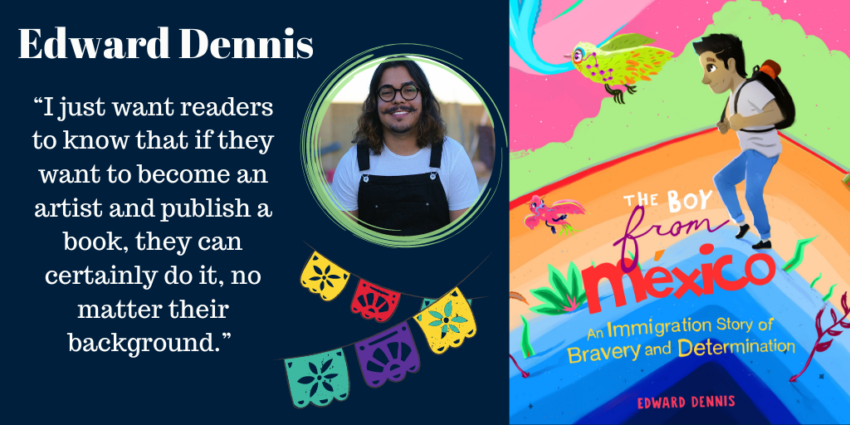
In a modest house in Maryvale, Arizona, a young Latino boy watched wide-eyed as the famous artist, Bob Ross, painted a masterpiece on TV. With each brush stroke and happy little tree, the boy’s excitement grew in anticipation for the end result – a beautiful piece of landscape art. The boy grew even more excited as he realized two of his other artistic role models – Mr. Rogers and Levar Burton from Reading Rainbow – would appear on TV later that day. Feeling inspired, the boy – Edward Dennis – scurried off to sketch some drawings and work on his own passion and talent for art. Now grown up, Edward is a freelance artist with an impressive resume that includes clients like Disney, Shimano, Giant Bicycles, Toyota, and various video game companies. But his ...