 by
by 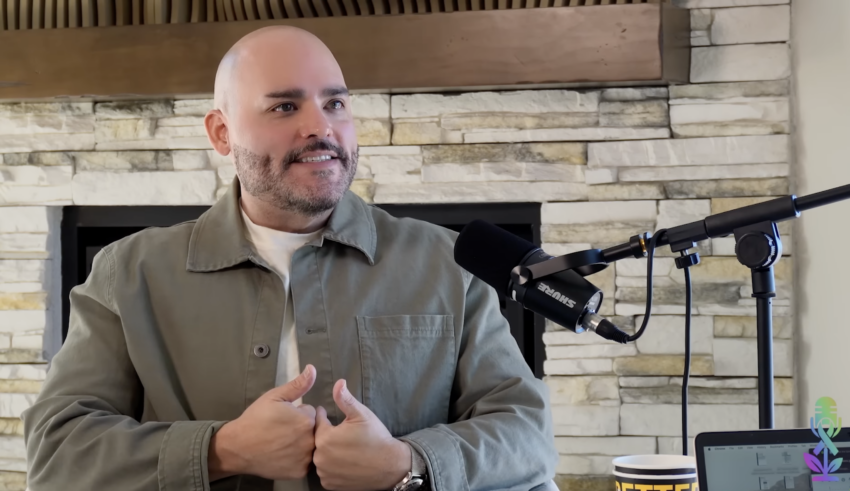
Share On Social!
Cancer can have a big cost.
That cost is physical and emotional – but also financial.
From lack of insurance to access to affordable care, the financial strain of cancer can keep patients from getting the care they need, resulting in worse health outcomes and higher risk of death.
Dr. Mateo Banegas appeared on an episode of the What I Wish I Knew: A Cancer Podcast on Jan. 27, 2026, to discuss the financial challenges of getting fair cancer treatment.
Banegas is an associate professor and co-director of CHEER in the Department of Radiation Medicine and Applied Sciences (RMAS) at the UCSD School of Medicine.
Let’s take a look at the topics he covered and how they can help you or someone you know who is dealing with cancer.
The Hidden Cost of Cancer
In the podcast episode, “The Hidden Cost of Cancer: Bills, Trade-Offs, and Where to Get Help,” Banegas uses his background in non-medical drivers of health, primarily when it comes to the social and economic risk factors of health to talk about:
- Why financial toxicity can impact health outcomes and treatment decisions
- The “shock” of out-of-pocket costs (and how missed work compounds it)
- The reality of trade-offs: medical bills vs basic needs like food
- How navigators and social workers can help—but only if the conversation starts early
He also offers insight into the meaning behind “financial toxicity,” how to talk to your care team about financial support, and how to approach resources and assistance programs.
“I think it’s just that people shouldn’t struggle, you know, from day to day having to choose between can they get healthy, can they pay medical bills and put food on their for their family,” Banegas said.
You can listen to the podcast on YouTube, Spotify, Apple Podcast, or Amazon Music.
What I Wish I Knew Podcast
This is just one episode in a series of podcasts that seek to educate, support, speak up for, and build a community of healthcare providers, cancer patients and survivors, caregivers, nonprofits, and more.
“Our mission is to provide a balanced platform that encourages open dialogue around treatment options beyond the rigid mainstream narrative,” according to the podcast website.
Other topics in the series include fertility preservation and cancer care, immunotherapy, the emotional impact of cancer, and understanding of treatment options.
The podcast is hosted by McKenna Avery, the founder of the podcast and a cancer survivor, and Dr. Dan Sullivan, who is a naturopathic medical doctor.
Their website also includes many resources to help inform and empower individuals with cancer and caregivers to make the best medical choices to improve health outcomes for all.
Improve Health for All People in Your Community
What does healthcare access look like in your community?
Find out by downloading a Salud America! Health Report Card for your town!
Enter your county name and get auto-generated local data with interactive maps and comparative gauges on several health indicators. This can help you visualize and explore local issues in education, housing, transportation, food, health, and more.
See how your county stacks up compared to the rest of your state and nation.
Then email the Report Card to local leaders to raise awareness, include the data in a presentation or grant proposal, or share it on social media to drive healthy changes in your community!
Explore More:
Latino CancerBy The Numbers
25
years
of life expectancy between some U.S. cities.