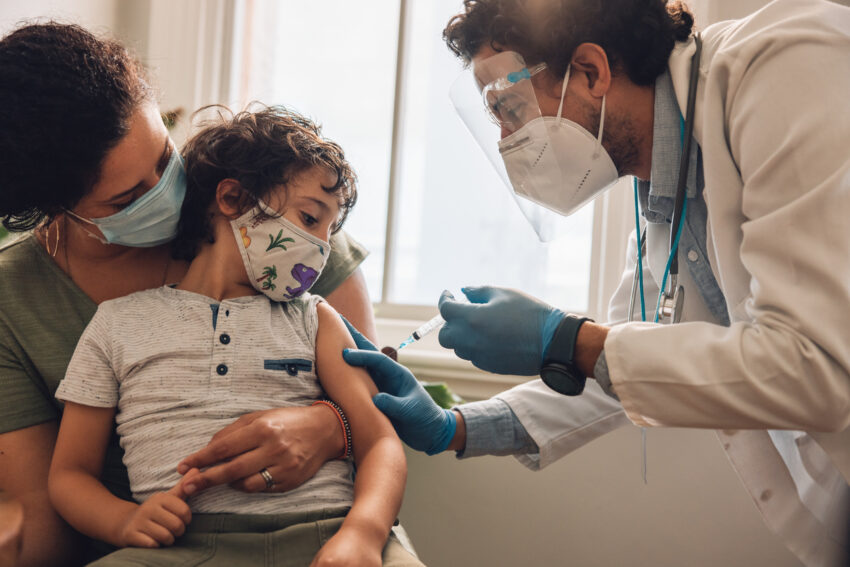
The COVID-19 saga continues as the virus continues to mutate, and the Centers for Disease Control & Prevention (CDC) identify new subvariants of the Omicron variant of SARS-CoV-2, the virus that causes COVID-19. The CDC is studying a new subvariant, called BA.2.12.1, to determine how it spreads and how well existing treatments and vaccines for COVID-19 work against it. “[BA.2.12.1 and other subvariants of Omicron] are more contagious with more immune escape, and they are driving a lot of the increases in infection that we’re seeing across the nation right now,” said Dr. Ashish Jha, White House Covid-19 response coordinator, according to Vox. Latinos, who are disproportionately affected by COVID-19 hardships, are still struggling to recover from the initial hit of the ...
You may be wearing PPE on your face right now. A mask is a common form of PPE, or “personal protective equipment,” as are respirators, gowns, gloves and eye protection frequently worn by frontline healthcare workers. These all help protect the wearer – you! – from germs that can make people sick. But they have a second important function, too. “So, the unique thing about PPE in healthcare is that it actually serves two purposes, and both of those purposes are really important. One part is to protect you, but the other part is to protect your patient and coworkers from germs that you might be carrying,” said Dr. Abigail Carlson, an infectious diseases physician with the CDC, as part of CDC Project Firstline’s Inside Infection Control video series.
What is PPE and ...
Los latinos representan menos del 10% de los voluntarios en los estudios clínicos de cáncer (enlace en inglés). La falta de latinos en los estudios clínicos hace que sea más difícil para los investigadores encontrar tratamientos desarrollados específicamente para este grupo – que representa el 18.5% de la población de los Estados Unidos y una diversidad de culturas. Las doctoras Amelie G. Ramírez y Patricia Chalela de UT Health San Antonio identificaron barreras y estrategias para promover la representación latina en los estudios clínicos en un nuevo comentario (enlace en inglés) publicado en JCO Oncology Practice. Se necesitará más que simplemente aumentar el conocimiento sobre los estudios clínicos. "Para lograr la participación equitativa de los latinos y ...
Oncologists who identify as Latino remain highly underrepresented in the workforce, according to a new report from the American Society of Clinical Oncology (ASCO). Although the percentage of Latino hematologists/oncologists has risen slightly over the past decade, from 4.1% in 2008 to 4.7% in 2018, Latino participation decreases at nearly every step in the path to becoming an oncologist, according to ASCO. “As a result, [Latino] patients are deprived the benefits of a representative workforce, such as improved access, enhanced culturally and linguistically competent care, and minimization of health disparities,” wrote Dr. Gladys Rodriguez of the START Center for Cancer Care in San Antonio, and her colleagues, in a recent study in JCO Oncology Practice. Why is this a ...
Different viruses are spread in different ways. The main way that SARS-CoV-2, the virus that causes COVID-19, spreads between people is by respiratory droplets. “In this case, a ‘droplet’ doesn’t just mean water that you can see, like big raindrops or splashes in the sink or a pool,” said Dr. Abigail Carlson, an infectious diseases physician with the Centers for Disease Control & Prevention (CDC), as part of CDC Project Firstline’s Inside Infection Control video series. “These droplets we’re talking about are actually really tiny, and where they come from may surprise you.”
Where Do Respiratory Droplets Come From?
You might think that when you breathe out, all that comes out is air. But our breath contains water too, in the form of respiratory droplets. ...
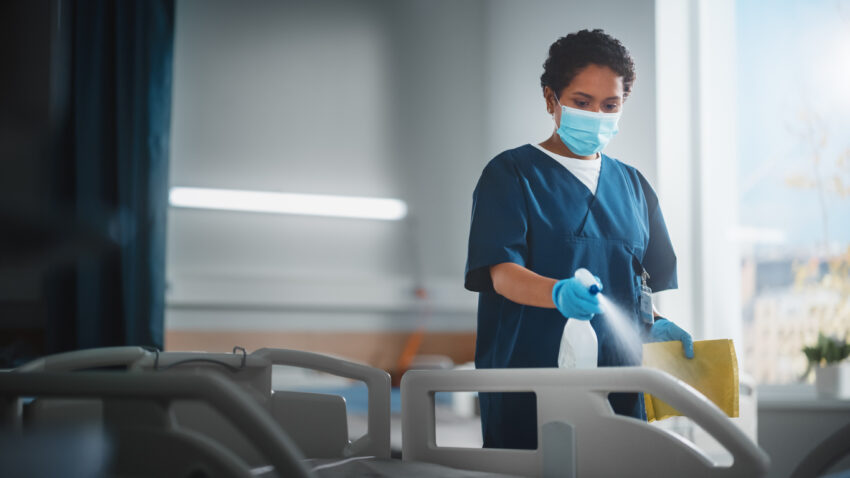
Cleaning removes dust, dirt, and germs from surfaces and objects. Disinfection makes sure that as many germs as possible are destroyed or killed. Cleaning and disinfection are both important infection control actions in hospitals and other healthcare settings because they keep germs away from people and help keep germs from spreading. Seems like common sense, right? “Even though it’s common sense, it’s important to think through all the reasons why we’re so careful about keeping an environment clean,” said Dr. Abigail Carlson, an infectious diseases physician with the CDC, as part of CDC Project Firstline’s Inside Infection Control video series.
The Importance of Cleaning and Disinfection: The Immune System
When we are healthy, our bodies have many built-in ways to ...
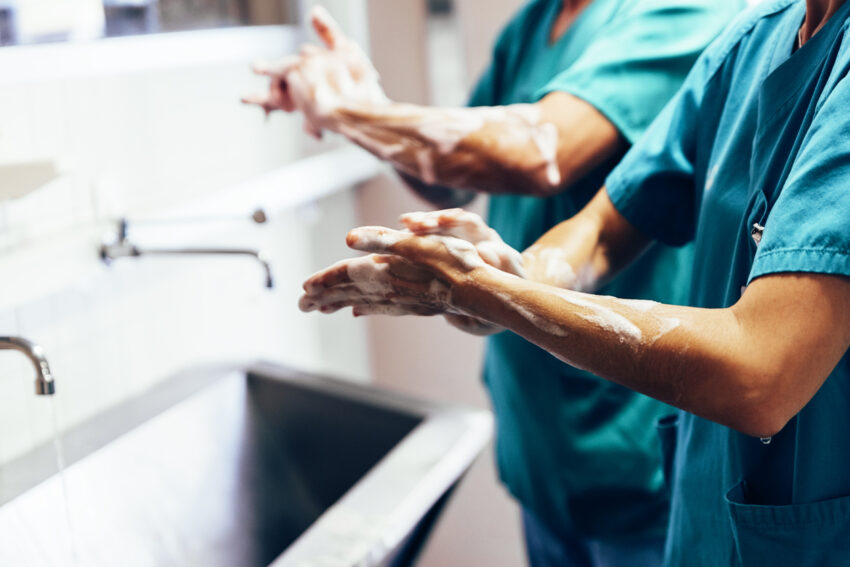
Do you realize how many things you touch with your hands every day? When we touch anything from our phones to our doorknobs, we can pick up germs like bacteria, fungi, and viruses. Germs can get in between our fingers or under our fingernails where it’s warm and damp, or in cuts on the skin, and grow and spread quickly, causing illness. That’s why hand hygiene and cleaning your hands is an important for infection control for frontline healthcare workers. “The simple answer is, when you clean your hands, you're stopping the spread of germs to your patients, to the environment, and to the things in the environment and from your patients or the environment to you,” said Dr. Abigail Carlson, an infectious diseases physician with the CDC, as part of CDC Project Firstline’s ...
May is Healthy Vision Month! The National Eye Institute (NEI) has theme for Healthy Vision Month—"Healthy Vision: A Family Focus" and "Visión saludable: ojos sanos para su familia." This is important because families of color, like Latinos, face barriers to eye health care. "We want to inspire families to team up and learn how to protect their vision together! We’re centering this year’s campaign around people who are more likely to have eye problems because of barriers in access to eye care," according to NEI. "A note to Spanish-speakers: Instead of directly translating, we purposefully transcreated some elements of the Healthy Vision Month content to make sure it’s culturally relevant." Here are five ways to promote health equity and healthy vision for families.
1. ...
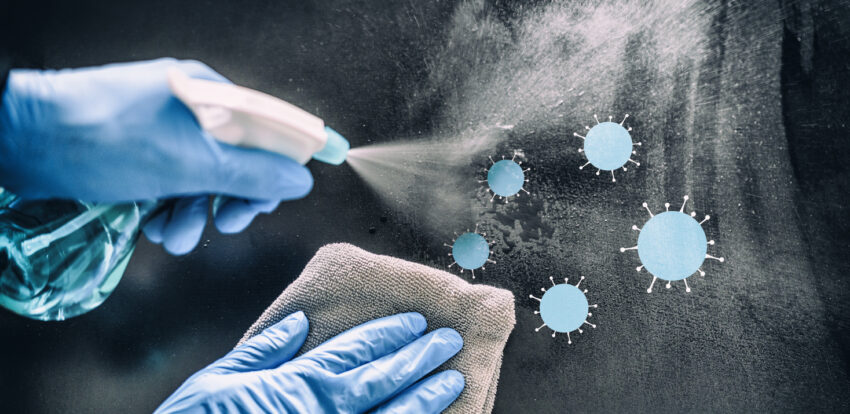
Cleaning and disinfection are both important for preventing infections from spreading in healthcare settings. But cleaning is not the same as disinfection. Let’s explore the importance of cleaning and disinfection, and the difference between them, with the help of the CDC’s Project Firstline, a training and education collaborative designed to ensure all healthcare workers have the infection control knowledge and understanding they need and deserve to protect themselves, their patients, and their coworkers.
What is Cleaning?
Cleaning removes things like dust, dirt, grime, and other spills, smears, and everyday messes from surfaces. Cleaning can also remove things that are not visible, like germs. "You can think of cleaning as removing the ‘gunk’ that you can see on ...