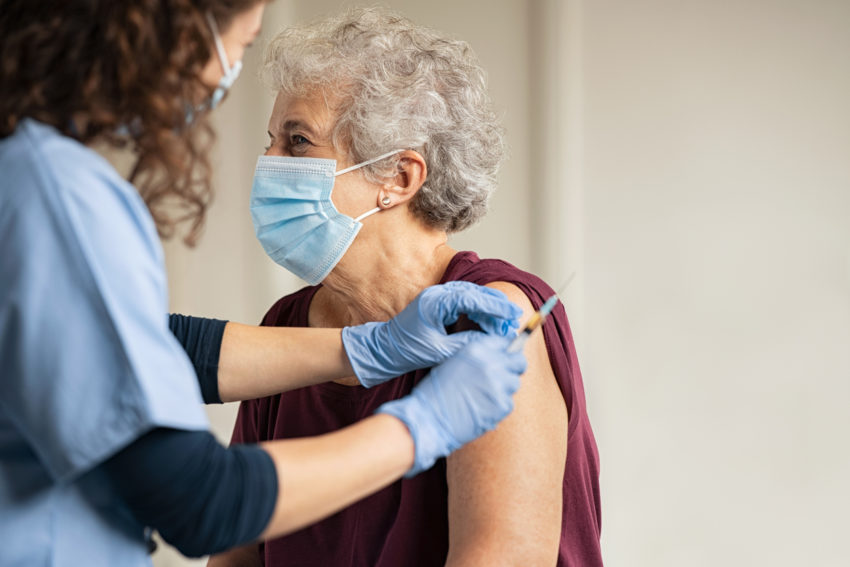
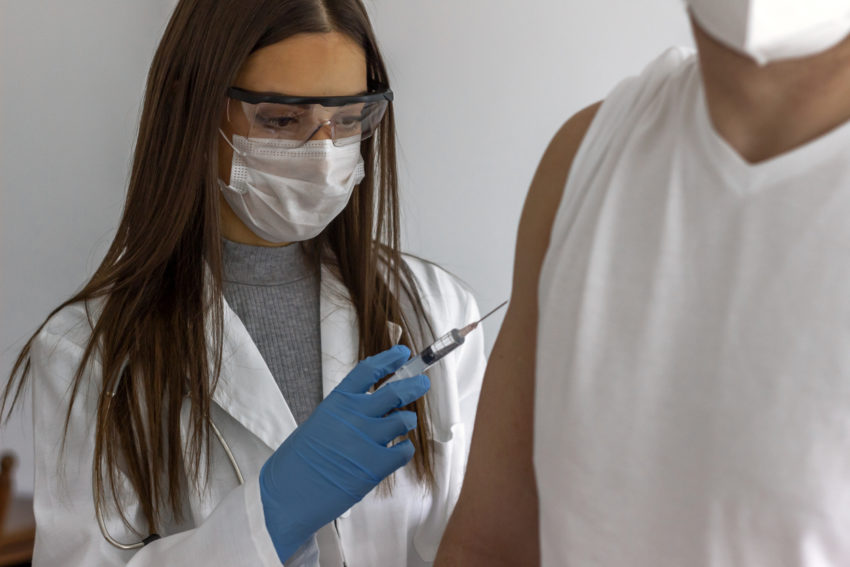
In one of America’s most populated Latino cities, some people of color are disinclined to get a COVID-19 vaccine. This hesitation comes in spite of the heavy toll coronavirus has taken on Latinos in this metropolitan area — as well as across the country. Public Health experts—such as Dr. Amelie Ramirez, the director of UT Health San Antonio’s Institute for Health Promotion Research and Salud America!—believe that the best way to solve this problem is community-oriented communication. “I feel that the messenger really needs to be the individual who lives, works and worships in the community with them,” Ramirez told Laura Garcia of the San Antonio Express-News.
COVID-19 Vaccinations in San Antonio
Countless lives are saved because of vaccines, which are rigorously ...
Stress can happen for many reasons. Abuse. Discrimination. Poverty. But when the human body’s response to stressful situations is activated too frequently or intensely without supportive relationships, stress becomes more than “just stress.” It becomes “toxic stress.” And toxic stress can harm your brain, body, and behavior, and increase lifelong risk for disease, especially for Latinos and other people of color. Fortunately, we can address and even prevent toxic stress. The new Roadmap for Resilience: The California Surgeon General’s Report on Adverse Childhood Experiences, Toxic Stress, and Health is the nation’s first guide to address toxic stress by cutting a main cause─adverse childhood experiences (ACEs)─in half in a generation. We at Salud ...
As we fight the COVID-19 pandemic, we have to make sure we’ve got all the right facts. Public health experts are seeing a lot of misinformation about COVID-19 spread on social media. Whether conspiracy theories or jokes about side effects, experts are concerned about the implications it could have. Misinformation could especially hurt Latinos, who are being disproportionately hurt by the COVID-19 pandemic and have shown hesitancy about receiving the COVID-19 vaccine. “It’s the repetition [of misinformation] that worries me,” said Eveyln Pérez-Verdía, a strategist who tracks Spanish disinformation, according to NBC News. "People are seeing this constantly.” What is some of the misinformation being spread about COVID-19? Let’s check the myths and facts. UPDATE ...
Alzheimer’s disease is an illness that affects the lives of many, and it impacts some Americans more than others. In fact, studies show that U.S. Latinos are 1.5 times more likely to develop Alzheimer's than their White peers. That number is only going to get worse over time if dedicated action isn't taken. The number of Latinos living with Alzheimer’s is projected to grow from 430,000 in 2014 to 3.2 million in 2060. That is more than an alarming seven-fold increase. Yet Latinos are underrepresented in clinical research across the board. Fortunately, Texas officials and researchers are working on this issue.
How Big a Problem is Alzheimer's Disease in Texas and Among Latinos?
The problem is huge in Texas, according to the experts. "In Texas in 2019 alone, 1650 ...
Despite experiencing some of COVID-19’s worst impacts, Latinos struggle to get a vaccination — especially in Austin. This comes at a time when many from communities of color are already uncertain in the first place. There are higher rates of Blacks and Latinos who report hesitancy about obtaining a COVID-19 vaccination, according to the COVID Collaborative. This kind of information is exactly why those ethnic groups need to be prioritized in the vaccine rollout, according to the Austin Latino Coalition. "Due to the historical discrimination that has often posed barriers to economic advancement, lack of access to health care, food and other systemic inequities that still exist today, Latinos, African-Americans, and low-income communities have borne the brunt of the COVID-19 ...
The U.S. Department of Agriculture (USDA) and Department of Health and Human Services (HHS) have issued their new dietary guidelines for 2020-2025. But they’re missing some important expert guidance: Reducing sugar and alcohol intake. The Dietary Guidelines Advisory Committee, made up of 20 expert scientists, advised that the USDA and HHS reduce suggested sugar intake be lowered from 10% to 6% of daily calories and that daily alcohol intake for men be reduced from two to one drink a day. Thousands of people, including many Salud America! members, spoke up in agreement over the past few years, pushing for these and other strong nutritional guidelines. Despite expert advice that these sugar and alcohol restrictions would help fight obesity and other health disparities, the ...
As 2020 comes to an end, let’s take a look at health this year. In a year defined by the COVID-19 pandemic, parents have several concerns about the health and safety of their children. Overuse of social media/screen time (72%), bullying/cyberbullying (62%), and Internet safety (62%) were parents top overall concerns, according to the C.S. Mott Children’s Hospital National Poll on Children’s Health 2020. The survey asked a national sample of Latino, Black, and white parents to rate the top health concerns for U.S. children ages 0-18. “Overall, 8 of the Top 10 concerns most commonly rated by all parents as a ‘big problem’ are frequently associated with changes in lifestyle and may be related to efforts to control the COVID-19 pandemic,” according to the survey ...
Multiple COVID-19 vaccines are now authorized for emergency use, but uncertainty lies ahead. Several new studies show that older Americans, especially Latino and Black adults, are skeptical of the safety and efficacy of a COVID-19 vaccine. The results indicate mistrust between communities of color and public health officials, likely due to historical racism in health care and implicit bias. This mistrust concerns health care officials, as a vaccine is key to controlling the pandemic. “Effective vaccines will be crucial to getting this pandemic under control and preventing serious illness and death from COVID-19, especially among people over 50 and those with underlying health issues,” said Dr. Preeti Malani, the poll’s director and a specialist in geriatrics and ...
Every person is a unique individual. But if you look closely, you’ll see each person lives, learns, works, and plays within social and environmental conditions that influence their individual health and wealth. Some people face health barriers because of structural and systemic policies that curb their access to quality housing, transportation, medical care, food, jobs, schools, parks and other social determinants. Individuals have no choice when it comes to these structural health barriers. “Despite the tremendous, lifelong impact of our community conditions on our health, we focus most of our energy and resources on treating the outcomes of these problems but lack the essential urgency for attacking the root causes of poor health,” according to Brian C. Castrucci, Dr. ...