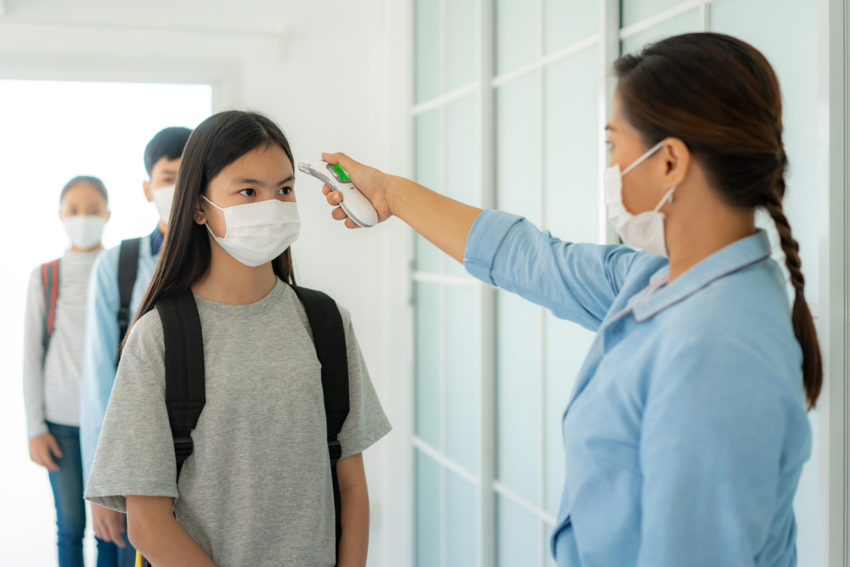
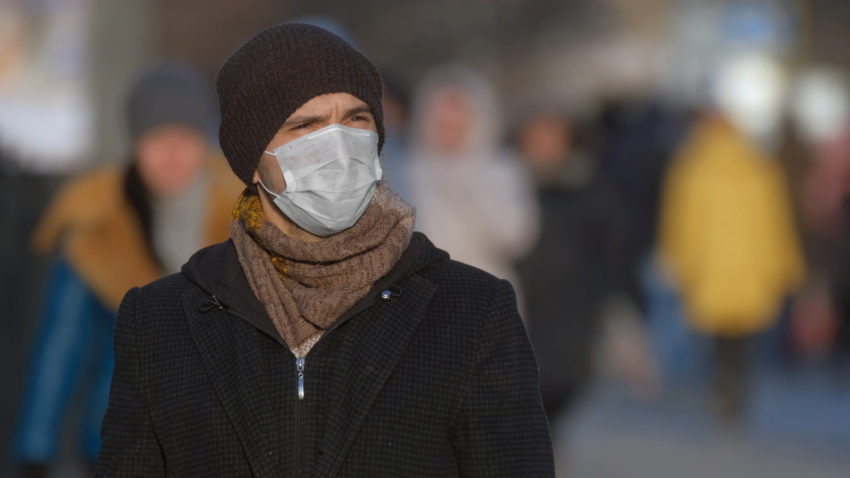
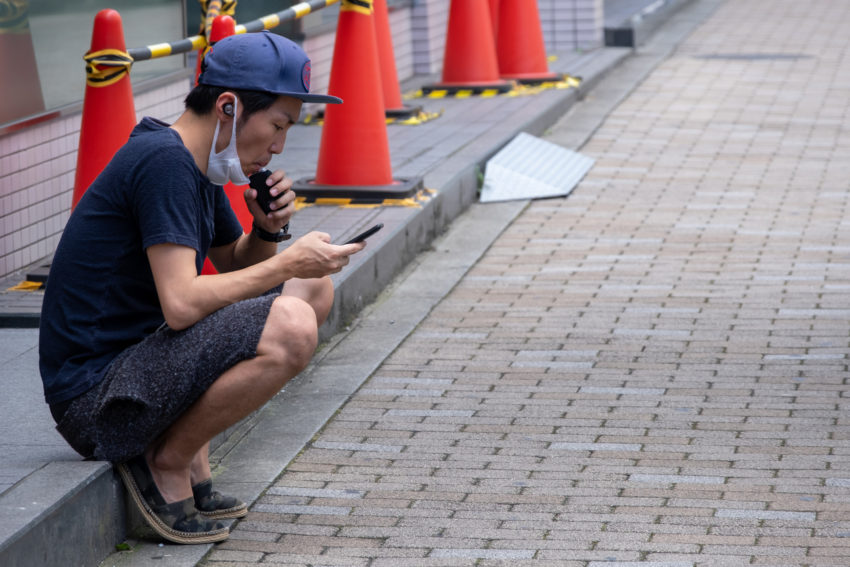
Despite the nation's high rates of coronavirus infections, transitions, and deaths, many U.S. schools reopened for the fall semester. Some school districts have chosen to adhere to stricter guidelines through remote learning, while others are implementing in-person teaching with specific safety protocols, and others a hybrid of virtual and in-person. Whatever type of learning, the bottom line is that COVID-19 has not gone away. Outbreaks are happening, and teaching in school only adds to the risk of spreading coronavirus infection, according to Margie Kochsmier, an infection preventionist with FHN Healthcare System in Freeport, Ill. "Anyone—including children—can get COVID-19. Generally, children tend to have more mild symptoms, but it's important to remember that anyone ...
U.S. leaders have "failed miserably" in planning and executing a cohesive national response to COVID-19, which has killed over 170,000 people here, according to a new report. The report is Public Health Law Watch's Assessing Legal Responses to COVID-19. It features 50 top national experts evaluating the policy response to the pandemic. The experts blame neither resources nor individual courage, but rather "a failure of leadership and the implementation of an effective response." COVID-19 revealed weaknesses in the nation’s health care and public health systems. It also worsened existing health inequities for Latinos and other people of color—even creating new disparities. Still, the report offers 100+ recommendations on how federal, state, and local leaders can better ...
More and more, new research shows that smoking and vaping is associated with a substantially higher risk of COVID-19 progression. Worse, this comes at a time of worry over the impacts of these habits, including a series of vape-related lung illnesses as well as fatalities. Earlier this week, the California State Assembly passed a ban on the sale of flavored tobacco products, including e-cigarettes and vapes. While this is significant progress, the fight to ban these kinds of items in the Golden State isn't over, yet. The bill will go to the State Senate for a final vote.
The Bill and Its Potential Impacts
Senate Bill 793, authored by Senator Jerry Hill (D-San Mateo), specifically makes any sale punishable by a fine of $250. This also includes flavored e-cigarettes, cigars, and ...
Latino farmworkers living in rural communities are experiencing some of the most devastating effects of the coronavirus pandemic. These laborers are experiencing high rates of COVID-19 infections. Their access to medical care, which was limited even before the virus, has only worsened during the pandemic. On top of everything else, farmworkers are also having to battle against poor workplace treatment, according to Rosalinda Guillen, the Executive Director of Community to Community Development. "There's just a myriad of indignities that the workers suffered at those packing sheds that we're hearing from other workers in other areas where the same thing is happening over and over and over again," Guillen said. "It is about the disease. It is about workers feeling that finally it ...
Helping families recover from the economic impact of COVID-19 requires far more than a paycheck, particularly when already underfunded social services and transit agencies face budget cuts. To build resilience after COVID-19, cities need to invest in people and in places. More specifically, cities need to build a community-based workforce to ramp up social services, and cities need to invest in affordable transportation options.
Cities Face More Than COVID-19 Economic Devastation
The economic fallout from COVID-19 is real for cities and families, particularly for Latinos, who were already drastically underpaid compared to white workers. Beyond unequal pay, Latino and low-income families face a legacy of discriminatory policies and practices that have resulted in unaffordable ...
Too many social support tasks fall to armed police officers. As local leaders discuss COVID-19 recovery plans, they need to consider how to address these social support issues in tandem with economic issues. Many cities are exploring how to reform or reimagine police. This often includes partnering with community-based social, behavioral, and mental health services. However, community partners may lack capacity for city-wide change. That’s why cities need to build a community-based workforce to coordinate community development, help families recover from the pandemic’s economic fallout, and reform police, simultaneously.
Expensive Spending on Traditional Policing
Public safety is a major city expense. Of the 50 largest cities, spending on police accounts for the ...
We already know that smoking cigarettes, cigars, and other tobacco products result in worse coronavirus outcomes. What could be worse? Teenagers and young adults who vape face a much higher risk of COVID-19 than their peers who do not, according to new research from Stanford University. In fact, that data—collected from a May 2020 national survey of 13 to 24-year-olds—showed that vapers are five times more likely to get COVID-19. The risk is seven times higher for dual—smoking and vaping—users. "Young people may believe their age protects them from contracting the virus or that they will not experience symptoms of COVID-19, but the data show this isn't true among those who vape," Dr. Shivani Mathur Gaiha, the study's lead author and a postdoctoral scholar, said in a ...
Amid the surging COVID-19 pandemic and one of the hottest summers in world history, public parks are a refuge. But not all parks are created equitably. Parks that serve primarily Latinos and others of color are half the size of parks that serve majority White populations. They are also five times more crowded, with hotter temperatures, according to a new study from The Trust for Public Land. "As cities struggle with extreme heat this summer, parks are one of the best ways for residents to find relief," said Diane Regas, leader of The Trust for Public Land. "We all need and deserve parks—and all of the benefits they provide—all of the time. But during this period of compounded public health emergencies, unequal access to quality parks can be downright dangerous."
What Did the ...
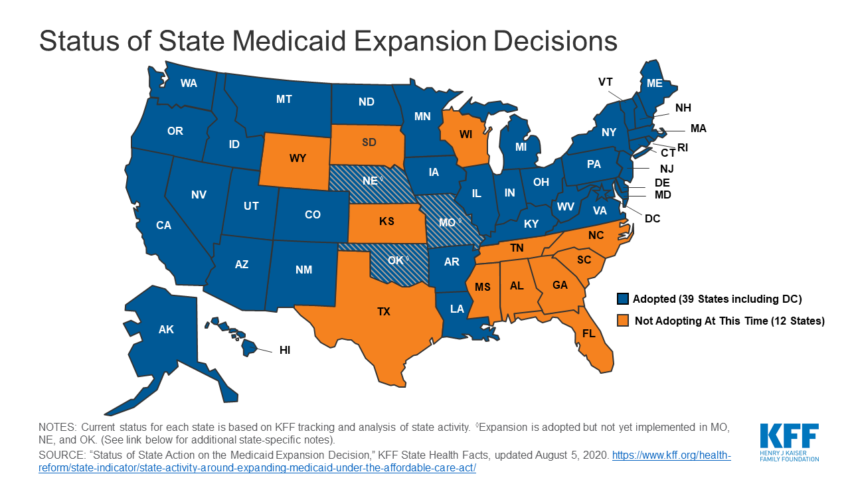
As of June 2020, 14 U.S. states continued to reject Medicaid expansion, leaving many without an affordable healthcare coverage option. Then COVID-19 hit—hardest among low-income, uninsured families, particularly Latinos. In response to surging coronavirus cases, Oklahoma (11.1% Latino), the state with the second-highest uninsured rates, voted to expand Medicaid on July 1, 2020. A month later on Aug. 4, Missouri (4.4% Latino) also voted to expand Medicaid. In these two states alone, roughly 430,000 low-income adults will be eligible for Medicaid. “The American Heart Association supports expanding Medicaid because people living with low incomes are disproportionately affected by heart disease, hypertension, and stroke. Medicaid serves as the coverage backbone for the ...