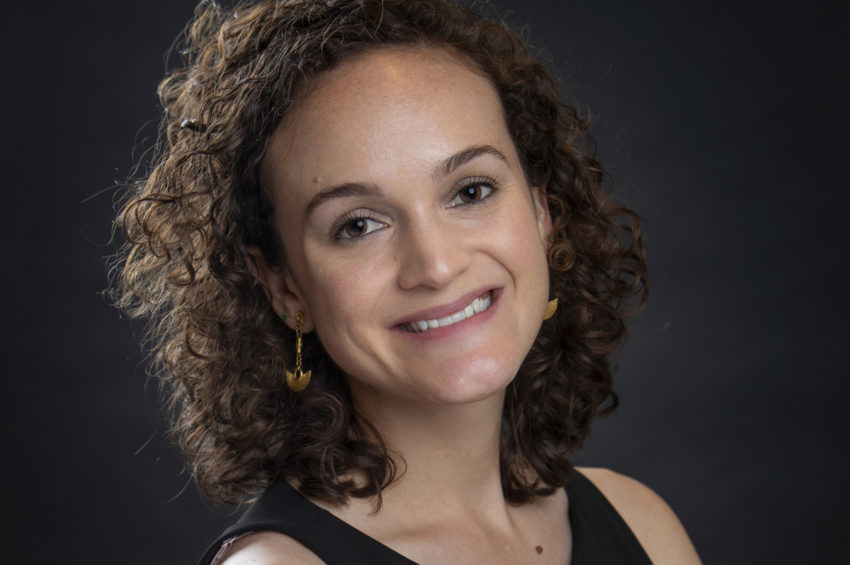
Like the beautiful turquoise bracelet and shawl gifted to her by her Colombian abuela, Clara Reyes is fearless when it comes to facing challenges and seeking solutions. That’s why it’s no surprise Reyes is blazing a path to better health for Latinos. Reyes, who has served on a Peace Corps mission to El Salvador, is currently a clinical trials program manager in the Department of Public Health Sciences at New Mexico State University (NMSU). She works with several NMSU faculty members to manage a randomized clinical trial in two U.S.-Mexico border counties. The trail is testing a culturally adapted program for Latina mothers diagnosed with cancer and their children. To further her experience and education, Reyes applied for the Éxito! Latino Cancer Research Leadership ...
U.S. school districts serving the largest populations of Black, Latino, or American Indian students get about $1,800 less per student in state and local funding than those serving the fewest students of color, according to Ivy Morgan and Ary Amerikaner of The Education Trust. That means a district with 5,000 students faces a funding shortfall of $9 million per year. And it gets worse. This kind of funding shortfall creates an environment that doesn't support academic progress among students of color, Amerikaner said. For example, the 2019 Nation’s Report Cards for math and reading in grades 4 and 8 show achievement diverged from 2003-2009 and 2009-2019 for Latino and all students. Students scoring in the 10th percentile in 2019 are making fewer gains than they were in ...
A majority-Latino community is among the five winners of the 2019 Robert Wood Johnson Foundation (RWJF) Culture of Health Prize! Gonzales, Calif. (94% Latino), was chosen from nearly 200 applicants. Two other cities with large Latino populations—Lake County, Colo. (36% Latino) and Broward County, Fla. (30% Latino)—also won the health prize. Greenville County, S.C., and Sitka, Alaska, also received the prize. These communities made strong efforts to build a culture of health, where everyone has a fair and just opportunity to be as healthy as possible. They brought neighborhood, school, and business partners together to improve health for all residents. Winning communities get a $25,000 prize. "The 2019 RWJF Culture of Health Prize winners recognize that health is about ...
Over 12 million U.S. babies, toddlers, and preschoolers spend time in child care. Are you aware of how pricey that child care is? The price of child care is sky-high almost everywhere, but certain families face inequities and pay even more depending on where they live, according to the new report from Child Care Aware. California (39.3% Latino) is home to the most expensive center-based infant care. Families here pay 17.6% of their annual income. Nebraska (11.2% Latino) is home to the most expensive family child care. Families here pay 14% of their annual income. Low-income families should spend no more than 7% on child care, according to federal guidelines. "Every family should be able to access affordable and high-quality child care. Yet this is not currently the case, ...
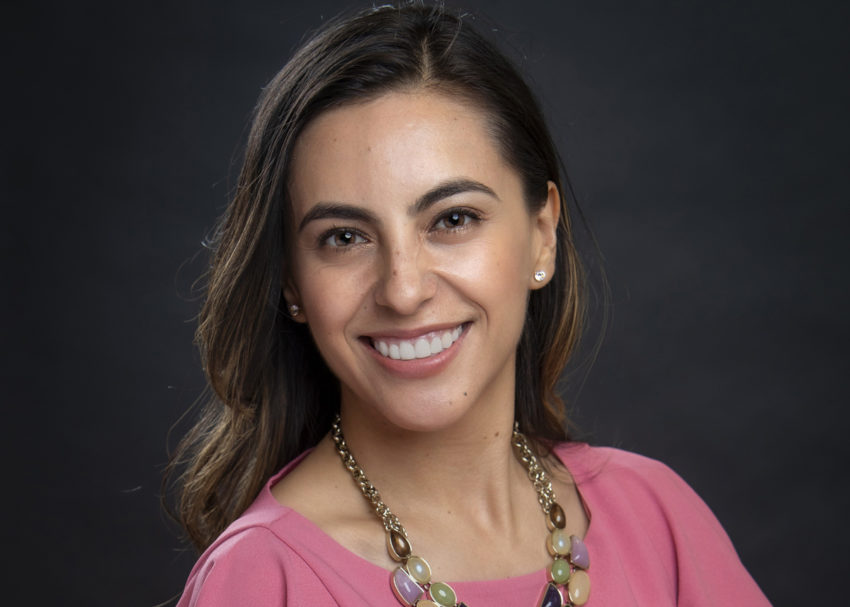
Only a few years since immigrated from Tijuana with her brother after her mother passed from breast cancer, Maria Rocio Torres wants to help people fight cancer. Torres witnessed her mother and family suffered a lack of healthcare. Vowing to help make sure that no other families had to miss cancer screenings and other care, Torres moved to the United States at age 17 and worked multiple jobs while she earned a master’s degree in public health at the University of Arizona. Torres, who radiates love, respect, empathy, and compassion, wants to bridge medicine and public health to bring research and interventions to her people to prevent cancer. To further her experience and education, Torres applied for the Éxito! Latino Cancer Research Leadership Training program. The ...
Do you know how roadways are graded? Most transportation indicators grade based on the level of motor vehicle traffic on a road, with little consideration for people walking, bike or taking transit, and vehicle travel. This leads planners to design car-focused roads that neglect transit and non-motorized travel, which is counterproductive to social, environmental, and health goals. Using level of service (LOS), for example, to assess road performance tends to expand roadways and increase vehicular speeds to benefit cars and trucks only. This ends up enabling more vehicle travel and reducing feasibility of walking, biking, and busing. That’s why five early-adopter cities in California transitioned away from a narrow focus on moving as many cars as fast as possible, to a more ...
Youth suicides have spiked over the last decade, and substance misuse is exacting a heavy toll on teens, according to a new report. The report from Trust for America’s Health and Well Being Trust, Addressing a Crisis: Cross-Sector Strategies to Prevent Adolescent Substance Use and Suicide, indicates that trends are worse for racial/ethnic, gender, and other minority youth. The report also highlights emerging approaches to help put youth on healthy pathways into adulthood. "Adolescence is a challenging time when the impact of poverty, discrimination, bullying and isolation can be intense," said John Auerbach, head of Trust for America’s Health, in a statement. "Fortunately, there are policies and programs that can reduce some of these circumstances and the risks associated ...
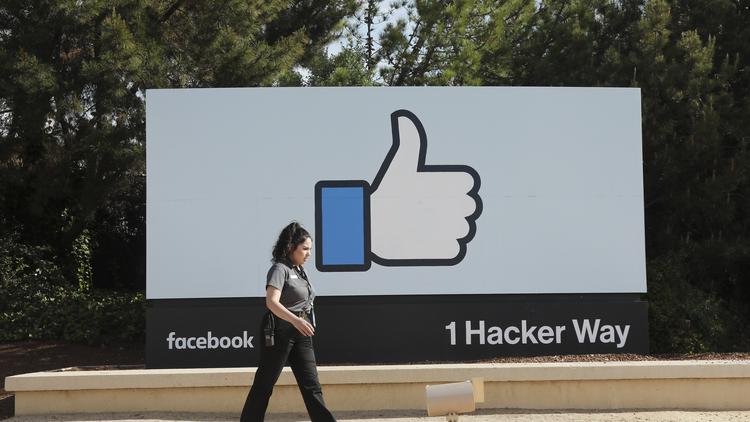
Facebook has announced a $1 billion pledge for grants, loans, and land to address the California housing crisis that it and other tech giants helped create. The $1 billion commitment will be distributed for five projects: $250 million for mixed-income housing on excess state-owned land where housing is scarce.
$225 million in land that Facebook recently purchased in Menlo Park, home of Facebook’s headquarters, where real estate prices have skyrocketed. The plan is for over 1,500 units of mixed-income housing. $150 million to build affordable housing in the San Francisco Bay Area, including housing for the homeless. $25 million to build housing for teachers and essential workers in San Mateo and Santa Clara, enabling them to live near the schools where they work. ...
You may be one of the 42.9 million people who got the flu last season. Perhaps you were among the over 645,000 people hospitalized due to the flu. Or maybe you even knew one of the 61,200 people who died from flu-related causes, according to CDC estimates. Today, health experts are bracing for the next flu season. Flu activity in the U.S. begins around October and runs through May, so now is the time to get your flu shot! “We know it isn’t perfect, but we need to emphasize the importance of partial protection,” says Dr. William Schaffner, director of the National Foundation for Infectious Diseases. “If you get the shot and you still get the flu, you are less likely to get pneumonia, less likely to be hospitalized and less likely to die.”
This is especially ...