Merely being a minority person of color can be worse for your mental health than low income or experiencing neighborhood violence. Puerto Rican teens and young adults growing up in the South Bronx of New York City are more likely to experience anxiety and depression than their peers growing up in San Juan, Puerto Rico, says a new study in World Psychiatry. Both of these groups live in similar conditions — the big difference is the youth in New York grow up as a minority. “How others interact with you as a minority can affect your mental health and how you see yourself,” said lead author Dr. Margarita Alegria of the Disparities Research Unit at Massachusetts General Hospital. Members of minority groups often experience racism and discrimination. They also hold the idea ...
Inequities in pay follow women from job to job. Employers that request an applicant’s salary history─a long-time standard practice to set compensation for new-hires─perpetuate these gender pay inequities. “Relying on salary history allows a new employer to continue underpaying a woman who faced a pay gap and lost wages due to bias or discrimination at a previous job,” according to a 2018 report from the American Association of University Women (AAUW). One method to close the gender pay gap is to ban employers from relying on previous or current salary information when setting pay for new employees. Closing the gender pay gap is good for physical, mental and social health. However, less than half of states have such bans. Find out which places have banned salary ...
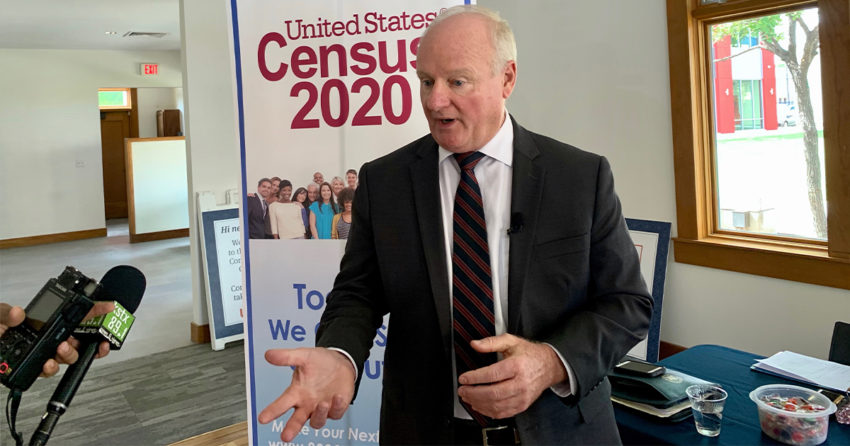
Abiding by the constitution’s directive to number the population once a decade, the U.S. Census Bureau is in full swing preparing for the 2020 survey. Area offices across the country are opening to begin recruiting census takers, establish community partnerships, and inform every person of why they should participate. Additionally, this is the first time the census will be available online for every person in America—regardless of citizenship status—to complete. This survey is too important to overlook, primarily because it influences funding and lawmaking, according to Lloyd Doggett, U.S. Representative for Texas’ 35th District, who spoke at the grand opening of the San Antonio (64% Latino) Census Area Offices on Thursday. “Based on the census count, the federal ...
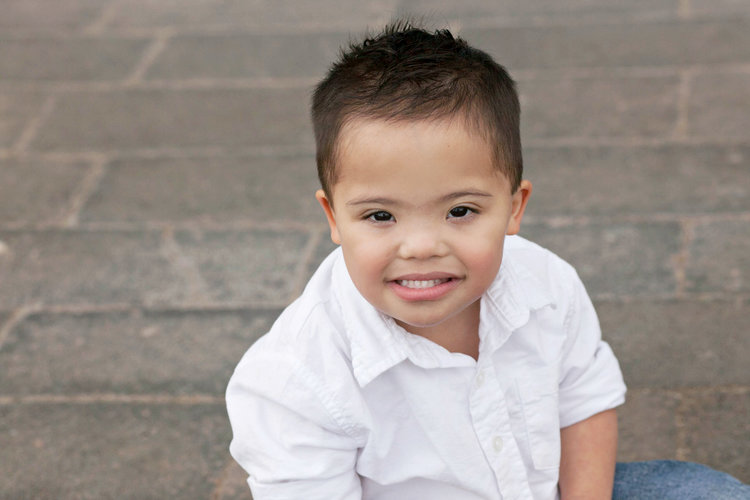
Down syndrome affects all race and ethnicity groups, with 1 in 700 U.S. babies born with Down syndrome every year and 1 in 1,200 children and adults currently living with this condition, according to federal data. But did you know that Latinos have an unusually higher risk for Down syndrome? For instance, in Texas, Latinos had the highest number of Down Syndrome births when compared to other race/ethnicity groups. October is Down Syndrome Awareness month. This is a good time to discuss Down syndrome knowledge, disparities, and support for Latino families.
What Is the Risk of Down Syndrome for Latinos?
Down syndrome is a genetic disorder where a person has three copies of chromosome 21 instead of two. However, the exact cause is unknown. "In a process called non-disjunction, ...
More teens in Mexico feel distracted and addicted to their mobile devices than in other countries, according to a new study. With 67% of the U.S. Latino population hailing from Mexico or having Mexican heritage, this addiction could complicate life here, too, say researchers from USC Annenberg School for Communication and Journalism and Common Sense. “Parents today are facing unprecedented challenges navigating both their children’s and their own mobile device use," said USC Annenburg Dean Willow Bay, in a news release. "We’re seeing that in Mexico, for example, over half of parents feel their teen’s mobile device use has negatively impacted family meals, conversations and activities.”
The New Normal: Parent, Teens, and Mobile Devices in Mexico
The study surveyed more ...
Your health depends on the social conditions where you live—like stable housing, safe transportation, and health food. But the health care system often overlooks these social conditions in favor of medical interventions. To improve the nation's health, health care leaders should integrate social care into health care delivery. “Integrating social care into health care delivery holds the potential to achieve better health outcomes for the nation and address major challenges facing the U.S. health care system,” according to a new report from the National Academies of Sciences, Engineering and Medicine (NASEM). Policymakers, health system leaders, and other stakeholders can achieve this integration through 10 key actions.
5 Goals to Integrate Social Needs into Health ...
Bullying is a fact of life for many kids, especially those of color. 24.7% of African-American students and 17.2% of Latino students report being bullied at school. Race-related bullying is significantly associated with negative emotional and physical health effects, according to a Salud America! research review. On the plus side, many resources—including many in Spanish—can help prevent or address bullying.
Website: StopBullying.Gov En Español
StopBullying.gov, an initiative of the US Department of Education's Office of Safe and Healthy Students, has a Spanish-language website. Like the English-language version, the site provides teachers, parents and community leaders with the resources they need to prevent bullying. It also contains research and best practices on ...
U.S. Latinos would have a larger economy than Brazil if they were its own country. In fact, they would have the eighth-largest economy in the world, according to the Latino Donor Collective (LDC) U.S. Latino GDP 2019 report. LDC partnered with American economic and demographic experts to collect this data. The report aims to factually illustrate Latinos' role as a powerhouse in contributing to the American economy, according to Matthew Fienup, executive director of the Center for Economic Research and Forecasting at California Lutheran University and one of the authors of the report. “Given robust population growth, high labor force participation, rising incomes, and strong increases in educational attainment, we expect the significant growth premium enjoyed by U.S. Latinos to ...
It is no coincidence that the region that has the highest percentage of Non-White students (90%) is also 11.7 times more likely to discipline their Black students than their White students, as data shows in ProPublica research. Worse, the District of Columbia is also 3.7 times more likely to discipline their Latino students than their White students. There are many other factors to consider when discussing racial inequity. Miseducation recently published an interactive map graphic that allows users to seek out their school district and compare it to others all over the U.S., using information from the United States Department of Education's civil rights data. This data covers school districts that are currently under Desegregation Orders. As of 2018, there are more than 50 ...