U.S. Latinos would have a larger economy than Brazil if they were its own country. In fact, they would have the eighth-largest economy in the world, according to the Latino Donor Collective (LDC) U.S. Latino GDP 2019 report. LDC partnered with American economic and demographic experts to collect this data. The report aims to factually illustrate Latinos' role as a powerhouse in contributing to the American economy, according to Matthew Fienup, executive director of the Center for Economic Research and Forecasting at California Lutheran University and one of the authors of the report. “Given robust population growth, high labor force participation, rising incomes, and strong increases in educational attainment, we expect the significant growth premium enjoyed by U.S. Latinos to ...
It is no coincidence that the region that has the highest percentage of Non-White students (90%) is also 11.7 times more likely to discipline their Black students than their White students, as data shows in ProPublica research. Worse, the District of Columbia is also 3.7 times more likely to discipline their Latino students than their White students. There are many other factors to consider when discussing racial inequity. Miseducation recently published an interactive map graphic that allows users to seek out their school district and compare it to others all over the U.S., using information from the United States Department of Education's civil rights data. This data covers school districts that are currently under Desegregation Orders. As of 2018, there are more than 50 ...
Suicide is rising drastically, especially in rural parts of the United States, according to a new study. The rate of suicide rose 41% among those ages 25-64 over the past 17 years of data. In addition, suicide rates among people living in rural counties were 25% higher than those in metro areas, NBC News reports. To reduce these inequities, the Rural Health Information Hub (RHIhub) released a free Rural Suicide Prevention Toolkit. "The modules in the toolkit contain resources and information focused on developing, implementing, evaluating, and sustaining rural suicide prevention programs," RHIhub states on their website.
The Issue of Rural Health Care and Suicide
People who live in rural areas face unique health challenges: Limited access to primary and mental health ...
Rural populations in the United States face unique health disparities because of their distances from health care providers and limited access to resources. There are nearly 3.2 million Latinos that live in rural areas of the country, and for them to receive assistance, programs needed to be implemented to lessen these locational barriers. Lower life expectancies and higher rates of pain and suffering are reported in rural areas by the National Advisory Committee On Rural Health and Human Services. “The Committee is deeply concerned about the gaps between rural and urban life expectancy and mortality that has largely gone unnoticed in the larger discussion about health disparities that tend to focus solely on populations and ignore the geographic aspects of this issue.”
Why ...
By Marisa Bejar
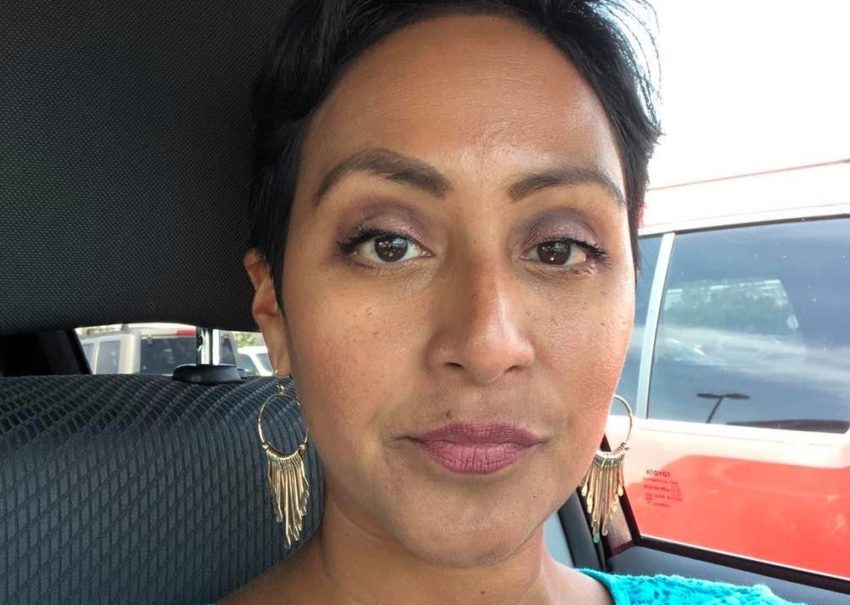
Native of Texas, Cancer Survivor My name is Marisa Bejar. I’m a military wife from Texas stationed in Maryland. My boys are 10 and 8. I'm a 7-year survivor of breast cancer, as of Sept. 20, 2019.
'Too Young to Get Breast Cancer'
I found a lump in my left breast in July 8, 2012. I went to the doctor and she told me it’s probably a clogged milk duct. "You’re too young to get breast cancer," the doctor told me as she put in a referral for a mammogram. July 16 was the day I had my mammogram. I was in a room full of different-aged ladies. I got called back for my mammogram and then called back for different angles. I knew something was up because my girls were never popular. I was a size A. I had a mammogram and an ultrasound that day. I love the ...
Access to affordable housing, coupled with residential segregation continues to be problematic for communities across the U.S. While this impacts many communities across the U.S., Latino, and African American communities are especially struck. Recent data goes to show that Latino neighborhoods face more significant risks of experiencing gentrification than other minority groups, according to the Harvard Gazette. The good news is, new solutions are emerging through policy and plans aimed at promoting equity in housing for all. One way current political leaders are trying to do this is through "Opportunity Zone" incentives. The problem? This kind of program can lead to the gentrification of racially segregated communities who face displacement when their home is ...
One in five children struggles with obesity in America today. Worse, this trend impacts over 25% of Latino kids, which is more than their white and black peers, according to Trust for America’s Health’s newest State of Obesity report. In an effort to combat those numbers, the National Collaborative on Childhood Obesity Research (NCCOR) recently released its Measures Registry, Measure Registry User Guides, and Measures Registry Learning Modules platform. “NCCOR’s goal in introducing these Learning Modules is to provide a useful resource for those in the field,” the group states in a recent press release. “The Modules highlight key concepts…making it easier to understand measurement issues in the four major domains of the Measures Registry: individual diet, food ...
Latino-owned businesses struggle with bias and racism when it comes to securing financing, according to a report published by the Stanford Latino Entrepreneurship Initiative (SLEI). The State of Latino Entrepreneurship report examines national trends underlying Latino business growth. Lack of business funding—due to bias—is the report's prime concern. “It’s easy to slip into the notion that everyone is a racist, and that’s wrong,” said Jerry I. Porras, who leads the SLEI at Stanford Graduate School of Business, in a press release. “But there’s a lot of unconscious racial bias — not intended, if you will, but a product of our socialization. Over time, if you’re able to recognize how this bias is creeping into our culture, you can consciously make the ...
In every state, paying for child care continues to strain family budgets, and government subsidies aren’t helping enough with the cost, according to new fact sheets. Even when families can afford it, child care can be hard to find. That’s why the new fact sheets, created annually by the Center for American Progress (CAP), highlight child care prices, gaps in funding and access, and wages of child care workers─as well as policies that could address these inequities for Latino and all families. “Comprehensive early learning policies such as capping the amount families pay for child care, implementing universal preschool for 3- and 4-year-olds, and ensuring all eligible children receive child care subsidies would provide enormous benefits to families and state economies,” ...