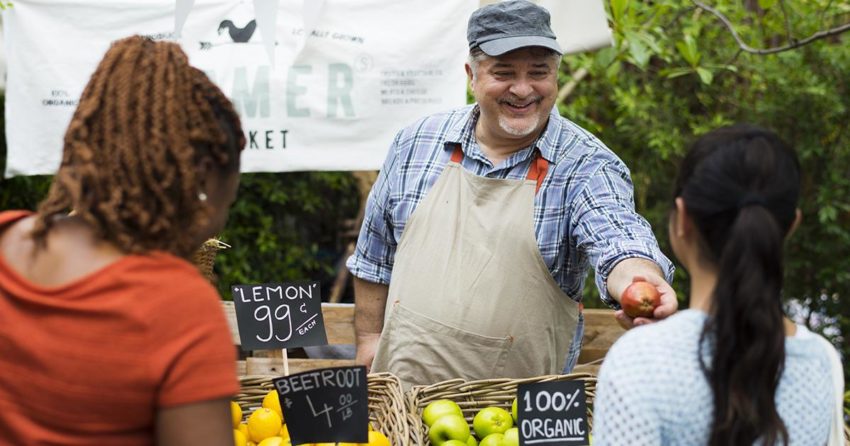
Does your town have a farmers market? If not, you might miss out on healthy fresh produce and social connections. Farmers may fail to engage in the local economy. To celebrate the Farmers Market Coalition's National Farmers Market Week on Aug. 4-10, 2019, we at Salud America! are showcasing the benefits of farmers markets as a way to increase access to fruits and vegetables among Latino and all people!
Farmers Markets Can Help Latinos
Latinos frequently live in food swamps. In these swamps, Latinos have no easy access to supermarkets and farmers’ markets, while abundant access to fast food and corner stores. This results in overconsumption of unhealthy foods, according to a Salud America! research review. The number of U.S. farmers’ markets has more than doubled in the ...
Early experiences can influence a person’s entire life. Specifically, stress due to adversity, poor nutrition, and exposure to environmental toxins can lead to biological changes, which make people more likely to experience physical and mental health problems later in life. Although individual interventions are important for addressing immediate needs, they alone will not advance health equity, according to a new report from the National Academies of Sciences, Engineering, and Medicine. The report provides science-driven recommendations to address the social, economic, environmental, and cultural determinants of health and early adversity. They say to advance health equity, decision-makers must address the systemic root causes of poor health and chronic ...
Most Latinos and Americans spend the majority of their time inside of homes, offices, restaurants, movie theaters, and other buildings. The indoor air quality in these spaces might not cross most people’s mind. However, researchers say the air inside buildings can billow into a significant health concern because poor air quality can lead to numerous short- and long-term complications — headaches, dizziness, fatigue, respiratory diseases, Toxicant‐Induced Loss of Tolerance (TILT), and even cancer. “It is important to be aware of your environment,” Dr. Claudia Miller, an environmental health professor and leader of the Hoffman TILT program at UT Health San Antonio, writes. “This is especially important for indoor air, as most people spend 90% of their time ...
Like many large-scale manufactured products in today’s society, the shirts, sweaters, and pants found on the racks contain harmful chemicals – some of which can cause breakouts and rashes. One primary health concern, allergic contact dermatitis, forms on one’s body when their skin comes in contact with harmful substances. Worse, it can have a delayed effect, and now researchers suggest that consumers wash all newly-purchased clothing before wearing. “What’s maddening for the consumer is that you buy a shirt that says ‘100% cotton,’ and yet you’re given no information about any of the chemicals or additives that have been used,” David Andrews, a senior scientist who has investigated chemicals in clothing with the Environmental Working Group, told TIME.
What ...
It’s no secret that racial bias is prevalent in healthcare settings. Now, there is more quantitative data to back that sentiment. Research published in JAMA Network Open last May found that as medical residents’ symptoms of burnout, they become more prone to racial bias. "Rates of burnout symptoms that have been associated with adverse effects on patients, the healthcare workforce, costs, and physician health exceed 50% in studies of both physicians‐in‐training and practicing physicians," the study states. "This problem represents a public health crisis."
Physician Burnout
Physician burnout is a well-known, documented issue. Workload, pressure, and chaos can significantly contribute to burnout. Research has shown that 54% of doctors report feeling burned out. ...
Fifty years after the federal Fair Housing Act banned racial discrimination in lending, Latinos and other minorities continue to be routinely denied mortgage loans at rates far higher than their white counterparts. Worse, research shows this disparity can lead minorities to apply for high-cost mortgages. That research draws on 2016 data, which is among the most recent, available evidence, according to The Hill. "An analysis of data released by the Federal Financial Institution’s Examination Council released by Clever Real Estate Hispanic home buyers are 78% more likely to use high-cost mortgages for home purchases, putting them at greater risk of foreclosure," John Bowden, a Hill reporter writes. "Just 10% of white applicants were denied mortgages that year."
What does the Data ...
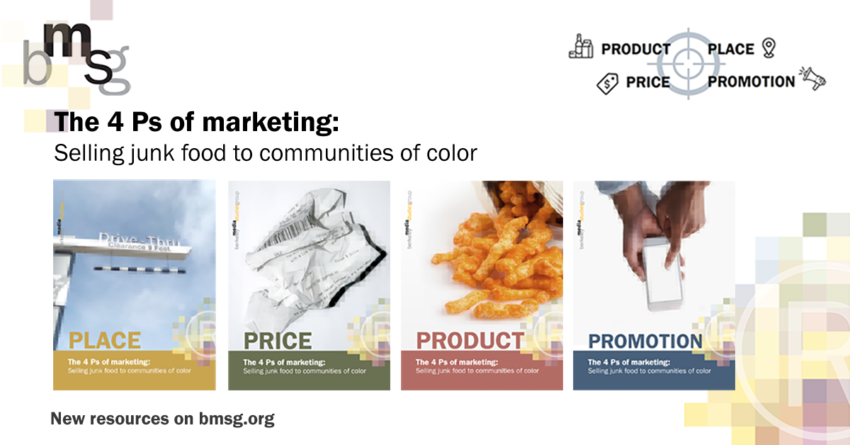
Targeting foods and drinks high in sugars, salt, and fats to Latinos and communities of color contributes to health inequity. To improve the nutritional quality of products that are directed toward and sold to Latinos and communities of color, advocates need to understand marketing strategies used by the food and beverage industry. A new series of four briefs from Berkeley Media Studies Group (BMSG), The 4 Ps of Marketing: Selling Junk Food to Communities of Color, explains how each marketing principle works and provides examples to illustrate how target marketing contributes to health inequities. For example, food and beverage companies use marketing tactics founded on the “marketing mix” principles of the 4 Ps—product, place, price, and promotion—to target Latino kids ...
Improving safe routes for people to bike can help cities reach their health, equity, economic, and climate change goals. Kansas City, Missouri (10.2% Latino), for example, can save 36 lives every year and increase local spending by $500 million if the city fully implements its bike plan over the next two decades, according to a new study from the University of Missouri Kansas City’s Department of Architecture, Urban Planning, and Design. Commissioned by Bike Walk Kansas City, researchers analyzed various social and economic benefits of the Kansas City Bicycle Master Plan. “This research confirms how essential a quality bike network is to so many city goals: safety, health, economic opportunity, and fiscal sustainability,” Bike Walk KC’s Director of Community Planning, ...
Rates of colorectal cancer, found in the colon or rectum, are on the rise among American adults under the age of 50. A new study, published the American Cancer Society’s peer-reviewed journal CANCER, discovered that the disease is impacting more and more young people by using data from the National Cancer Database registry. The research group, led by Dr. Boone Goodgame of The University of Texas at Austin, examined the data of over 1,185,763 patients. "Several studies have shown that the rates of colorectal cancer in younger adults have risen slowly in the US since the 1970s, but for practicing physicians, it feels like we are seeing more and more young people with colorectal cancer now than we were even 10 years ago," Goodgame, told Wiley. What were their ...