by
by 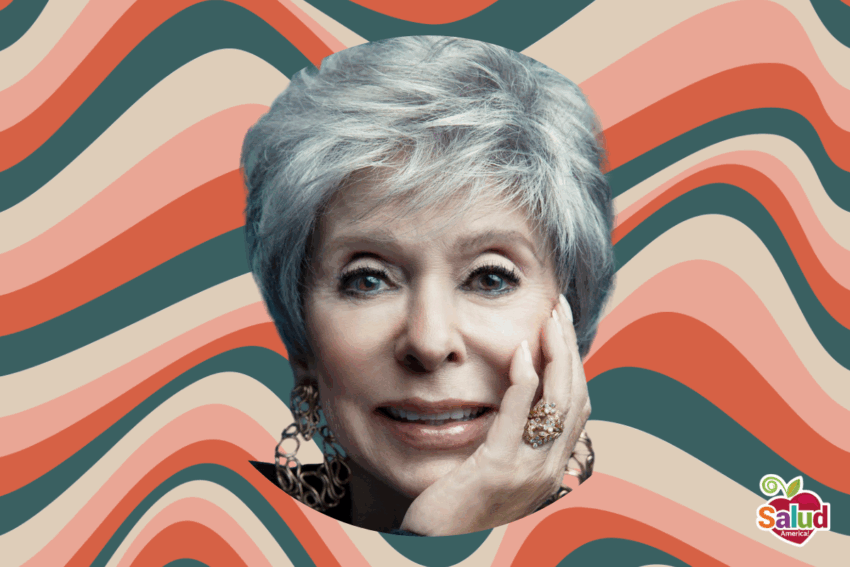
Share On Social!
For over 70 years, Rita Moreno has dazzled audiences with charm, wit, and humor on the stage and big and small screens.
But Rita is so much more than the characters she portrays.
The only thing film gets right is that Rita is as larger-than-life as her characters.
But before she was Rita Moreno, the actress sashaying on the set of the movie musical West Side Story, she was Rosa Dolores Alverío, a young Puerto Rican girl with dreams of making it into movies.
“Nobody said I was going to be a star someday. Especially not in this country. I was just a Puerto Rican child. But I knew I was going to be very active in show business. I loved it,” she told TIME.
From Puerto Rico to New York City
Born in 1931, Rita had an upbringing that many immigrants could relate to.
Immigrating from Humacao, a small town in Puerto Rico, at age of 5, Rita found herself in New York City, with its unlimited possibilities and social rules based on class and background, according to the documentary film Rita Moreno: Just a Girl Who Decided to Go for It, which chronicles her life and career.
Eventually she found a safe haven in the world of dance. She eventually dropped out of school to become a full-time dancer to support her family.
However, she had grander dreams for herself in the entertainment industry.
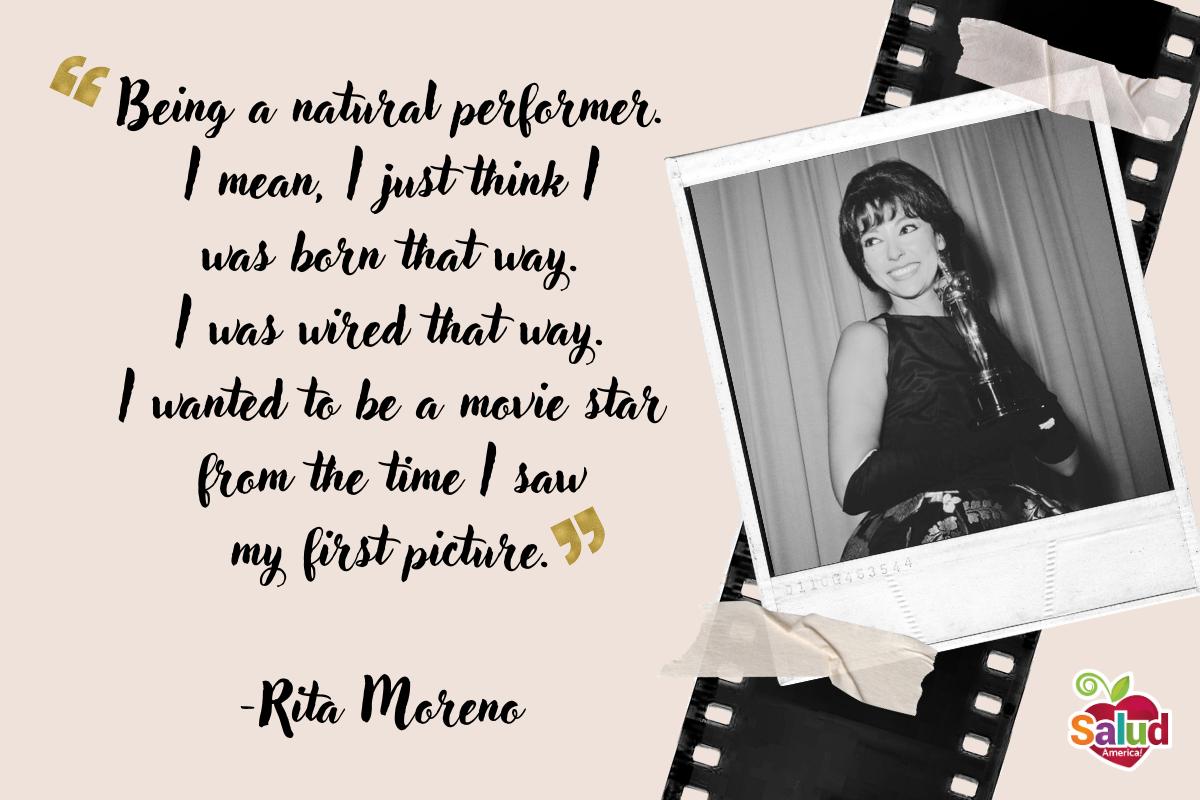
“Being a natural performer. I mean, I just think I was born that way. I was wired that way. I wanted to be a movie star from the time I saw my first picture,” she said.
During a particular performance, Rita was sought out by a talent scout from MGM and signed a contract with the studio.
Before she knew it, she was on the way to Hollywood.
Overcoming Hollywood Misconceptions
Rita got started in show business at age 16 and began playing characters whom she referred to as “native” girls on the big screen.
“Hollywood in those days was a place where people like me played native girls. An accent was always necessary. They were dark skinned. They were nothing like me. And all of these characters were always treated like illiterate, immoral. They were always men’s little island girls,” she said in the documentary film.
She would be dressed in offensive clothing that mocked the populations she was supposed to be portraying and was painted with thick makeup she described as the color of mud.
Rita craved a role outside of the ones she was given due to her background and the condition of Hollywood at the time.
“You see a script, you see a small role for a young woman, you say, ‘Oh, I could play the heck out of that.’ And your agent says, ‘They don’t want to see you.’ That’s heartbreaking,” she told TIME.
Her first big acting role outside of the caricatures she played came in the form of the character of Zelda in the movie musical Singin’ in the Rain (1952).
“I thought, ‘Okay. I’m not going to have to do those parts anymore.’ I was so thrilled,” she recalled in the documentary.
But when everything was said in done, she returned to her previous roles in Hollywood, such as Tuptim in The King and I.
“I hated being Hispanic because I learned very early that it was not [seen as] a good thing. You were looked down upon, or you were thought of as a[n] … object,” Rita said in the documentary.
For years she put up with inferior and offensive roles and it wouldn’t be until the breakout role of Anita in West Side Story that Hollywood really saw her for who she really was.
Getting Her Big Break
West Side Story (1961) is a modern-day retelling of Shakespeare’s Romeo and Juliet with rival gangs the Sharks and the Jets replacing the feuding families the Capulets and the Montagues.
In the film, Rita plays the feisty Puerto Rican friend and confidante to the main female protagonist, Anita.
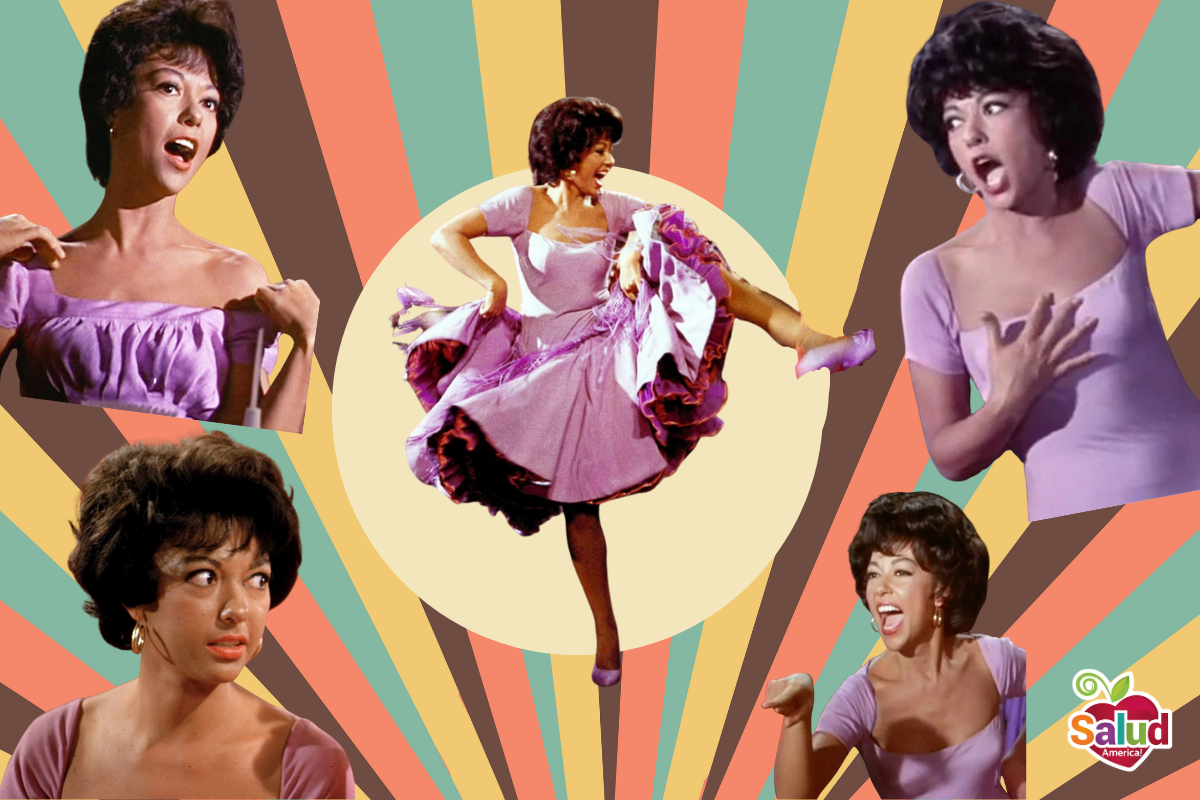
While the story of star-crossed lovers Maria and Tony plays out on screen, Rita’s character expresses her displeasure for the couple’s romance and union given their respective differences.
The character also lends her singing and dancing talents to the role, especially in the musical number “America,” which highlights stigmas many Puerto Ricans faced in the 1950s.
What’s more, the film covers topics such as misconceptions and judgement based on background, love, and violence — all against the backdrop of 1950s New York City and accompanied by an award-winning score.
“West Side Story changed my life. Anita had size and presence and dignity, and she became my role model,” she said to TIME.
For her stand out performance as Anita, Rita took home the Oscar for Best Supporting Actress in a Motion Picture.
She was the first ever Latina to win the prestigious award.
Rita also nabbed the Golden Globe for her role.
Illustrious Film, Music, and Stage Career
After her breakout role in West Side Story, Rita went on to star in flicks such as Summer and Smoke, Cry of Battle, and The Night of the Following Day, according to IMDb.
Rita was the first Latina to win an Emmy, a Grammy, an Oscar, and a Tony, granting her EGOT status at age 45, according to The Kennedy Center, which she received honors from in 2015.
She is one of only 12 to receive the EGOT honor.
She received a Tony for her 1975 comedic performance in The Ritz as Googie Gomez.
The Grammy award came from her performance on The Electric Company Album in 1977.
The actress has had two Emmy wins — one for her appearance on The Muppet Show in 1977 and one for The Rockford Files in 1978.
In the 80s and 90s, she made several appearances in films and TV.
In the 2000s and 2010s, her career took her in many different directions, including a role in the sitcom One Day at a Time, the voice of Aunt Mimi in Rio 2, and a return to the live-action big screen where her success began.
West Side Story Revival
Rita recently starred in the 2021 West Side Story revival directed by Steven Spielberg.
This time the actress starred opposite Ansel Elgort as Valentina, a character who is the voice of reason and provides guidance and support to the male lead.
“Tony Kushner created the role … he said, ‘Instead of Doc, why don’t we have Rita Moreno play Valentina,’” she said on the morning talk show, TODAY.
In the film, her character even gets to interact with the character she once brought to life.
“It was surreal,” she told The Project in an interview.
Rita honors the legacy of West Side Story as the new character and provided her voice once again to the project that made her famous by performing the song “Somewhere.”
She also served as executive producer on the film.
“It’s ironic and delicious and there’s something mischievous about it,” she said on the morning talk show, TODAY.
One thing she praised the writer and director for was that this iteration of the now-classic musical prioritized Latino actors to play Latino roles — something that was unheard of over 60 years ago when she was cast as Anita.
“[They] made a huge deal of the fact that every person playing a Latino had to be a Latino,” Rita said on TODAY.
La Pionera
Now 93, Rita reflects on her over 70-year career in Hollywood and the substantial impact it had on her community.
“I really don’t think of myself as a role model. But it turns out that I am to a lot of the Hispanic community. Not just in show business but in life. But that’s what happens when you’re the first, right?” She reflected in Rita Moreno: Just a Girl Who Decided to Go for It.
As “La Pionera,” Rita has paved the way for generations of actors of different backgrounds, and countless women, looking to make a name for themselves in the entertainment industry
Her dedication to her craft has also shown Hollywood that Puerto Ricans can’t be placed into a box or category.
“I had no real role model. There was nobody that I could look up to and say that’s somebody like me. There was no such person. Which is probably why I’m now known in my community as La Pionera, ‘the pioneer,’” she said.
Explore More:
Increasing RecognitionBy The Numbers
3
Big Excuses
people use to justify discriminatory behavior
This success story was produced by Salud America! with support from the Robert Wood Johnson Foundation.
The stories are intended for educational and informative purposes. References to specific policymakers, individuals, schools, policies, or companies have been included solely to advance these purposes and do not constitute an endorsement, sponsorship, or recommendation. Stories are based on and told by real community members and are the opinions and views of the individuals whose stories are told. Organization and activities described were not supported by Salud America! or the Robert Wood Johnson Foundation and do not necessarily represent the views of Salud America! or the Robert Wood Johnson Foundation.