by
by 
Share On Social!
Some men are less likely to get screened for colorectal cancer and more likely to be diagnosed at harder-to-treat stages.
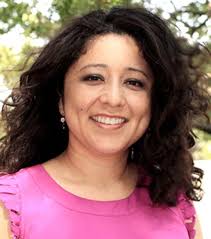
That’s why Dr. Cynthia Mojica, a researcher at the Institute for Health Promotion Research at UT Health San Antonio, is creating tailored and language-relevant print-based tool to persuade men to get colorectal cancer screening.
Mojica’s efforts are fueled by a new grant from the Health Science Center’s Mentored Research Career Development (KL2) Program in Clinical and Translational Science.
“The grant award will give me training, mentorship and research support to help me bring the community into the research process to help create a tool that can change their behavior and lead them to get screened,” Mojica said.
As part of the award, Mojica will go through training workshops, coursework, professional and programmatic activities, and conferences.
She’ll also have assistance from an experienced mentorship team:
- Dr. Deborah Parra-Medina, a professor at the IHPR at UT Health San Antonio;
- Dr. Amelie G. Ramirez, professor and director of the IHPR at UT Health San Antonio;
- Dr. Sally Vernon, professor of behavioral sciences and epidemiology at The University of Texas-Houston School of Public Health;
- Dr. Barbara Turner, professor of medicine at UT Health San Antonio; and
- Dr. Janna Lesser, associate professor of nursing at UT Health San Antonio.
For her research, Mojica will: identify and evaluate existing health-decision tools on colorectal cancer screening, such as brochures; convene an expert panel to review the best elements of existing tools; convene focus groups to determine how to tailor a tool; and create a new tool that melds the best existing tool elements with linguistic tailoring to increase men’s screening behaviors.
She will then submit for a larger-scale grant to try out the new tool.
“If successful, this new tool will provide a culturally relevant, language-appropriate tool to convince more men to get screened for colorectal cancer,” Mojica said. “Colorectal cancer screening is clearly not a priority for many men, but it can save lives.”
By The Numbers
25.1
percent
of Latinos remain without health insurance coverage