by
by 
Share On Social!
The US is on the verge of a complete health care overhaul.
These changes include Medicaid eligibility, cuts to funding, and changes making accessibility and renewal more difficult.
According to a new UnidosUS report, this overhaul is projected to cut the health care of nearly 14 million Americans with the mass majority being Latino over the next 10 years.
Unless action is taken to intervene and counteract these changes, millions are anticipated to lose health insurance, leading to unaffordable treatment and care costs and worse health outcomes.
Let’s break down the report and how these coverage changes impact the health of Latinos and all families.
Significant Health Care Coverage Changes
The report highlights two significant acts that are contributing to the loss of health coverage, the primary event being the passing of the “One Big Beautiful Bill,” which was signed into law in early July 2025.
This bill made historic cuts to health care, increased hurdles to program participation, and created deterrents for the expansion of Medicaid edibility, including terminating eligibility for lawfully present immigrants, according to the report.
The second significant change impacting health care access was the expiration of health care tax credits supplies by the Affordable Care Act.
When congress failed to pass legislation extending an enhanced ACA tax credit, which was enacted in 2021 to help with insurance affordability during the COVID-19 pandemic, the tax credits were reverted to their original costs.
This decision resulted in an average increase of health coverage by $1,000 a year for more than 20 million Americans, including 6.5 million Latinos who have health coverage through the Affordable Care Act, according to the report.
Not only is coverage changing, but there have been other efforts to keep Latinos from getting the health support they need.
This includes a crackdown on deportations, which has deterred people from applying for health care or seeking care, cuts to funding for programs that help families understand and navigate health insurance, and the termination of ACA coverage for DACA recipients.
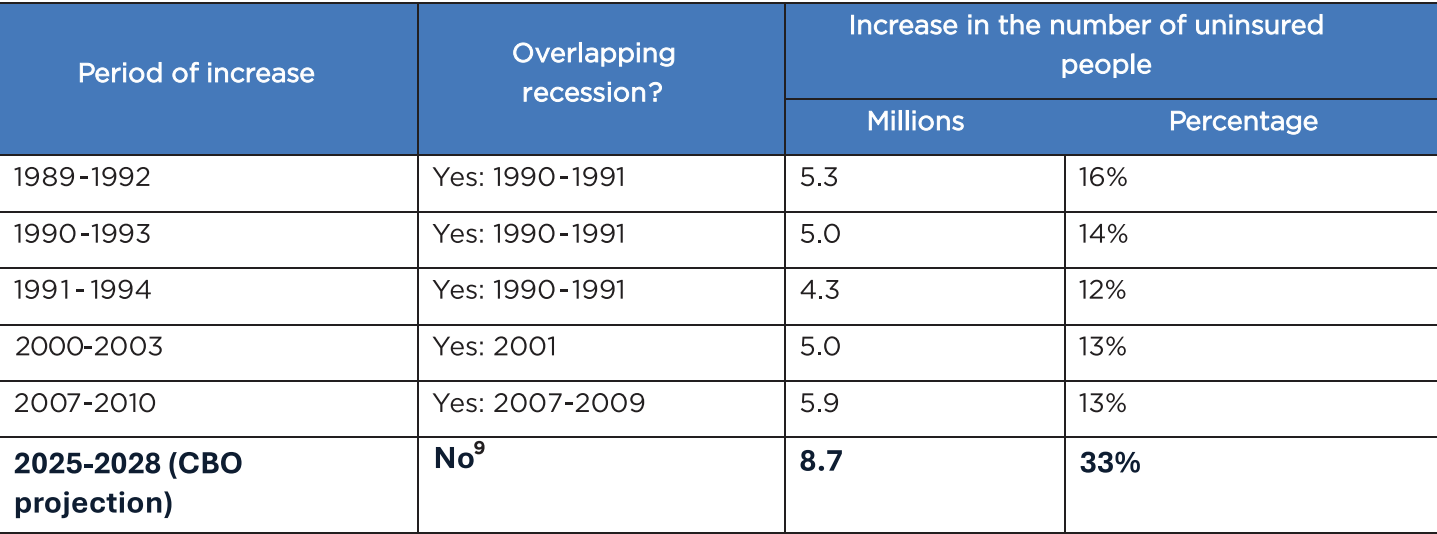
Given the current state of health care in the US under these changes, the number of uninsured Americans is projected to grow by 8.7 million over the next several years.
This represents a 33% increase.
Of those who will lose health care coverage, 4 million will be Latino, making up a large majority of those slated to be uninsured due to significant cuts and changes to coverage.
Health Care Cuts Seek to Undo Years of Progress
While Latinos continue to be one of the most uninsured and underinsured populations in the US, over the last decade changes to health care coverage at the federal and state levels have increased access to health care for millions of Latinos.
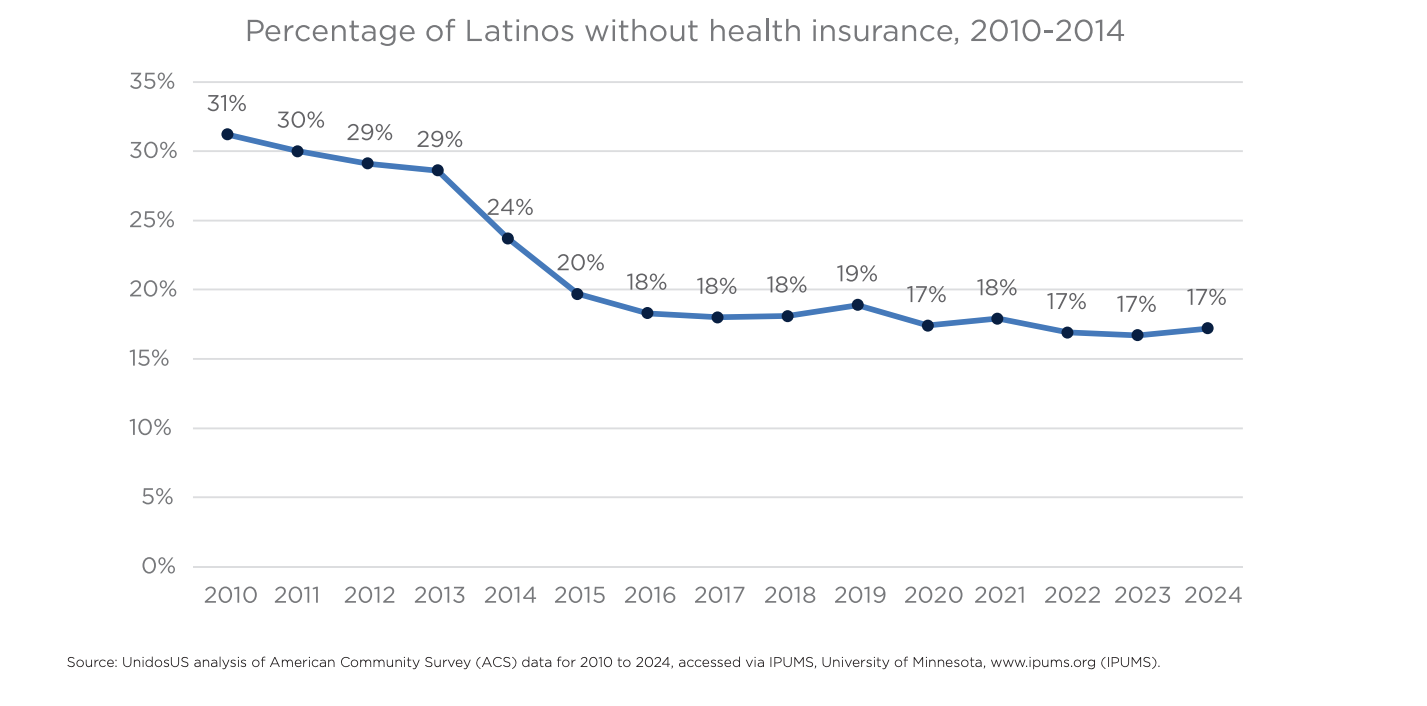
Between 2010 and 2024, Latino access to health insurance improved with the passing of the Affordable Care Act.
Under the Affordable Care Act, families, including many that struggled with accessing Medicaid due to strict restrictions, had access to health care options that fit their needs and budgets.
In combination with the Affordable Care Act, many states also expanded Medicaid coverage.
In the years these changes were enacted, Latinos without health care coverage dipped from 31% to 17%.
By expanding Medicaid coverage, the number of Latinos under the age of 65 receiving Medicaid doubled from 15% to 26% in states that expanded.
These leaps in access to health care will slowly unravel over the next few years, putting millions of Latino families at risk.
State of Latino Health Care in 2024
Latinos face many hurdles to health care coverage, resulting in worse health outcomes.
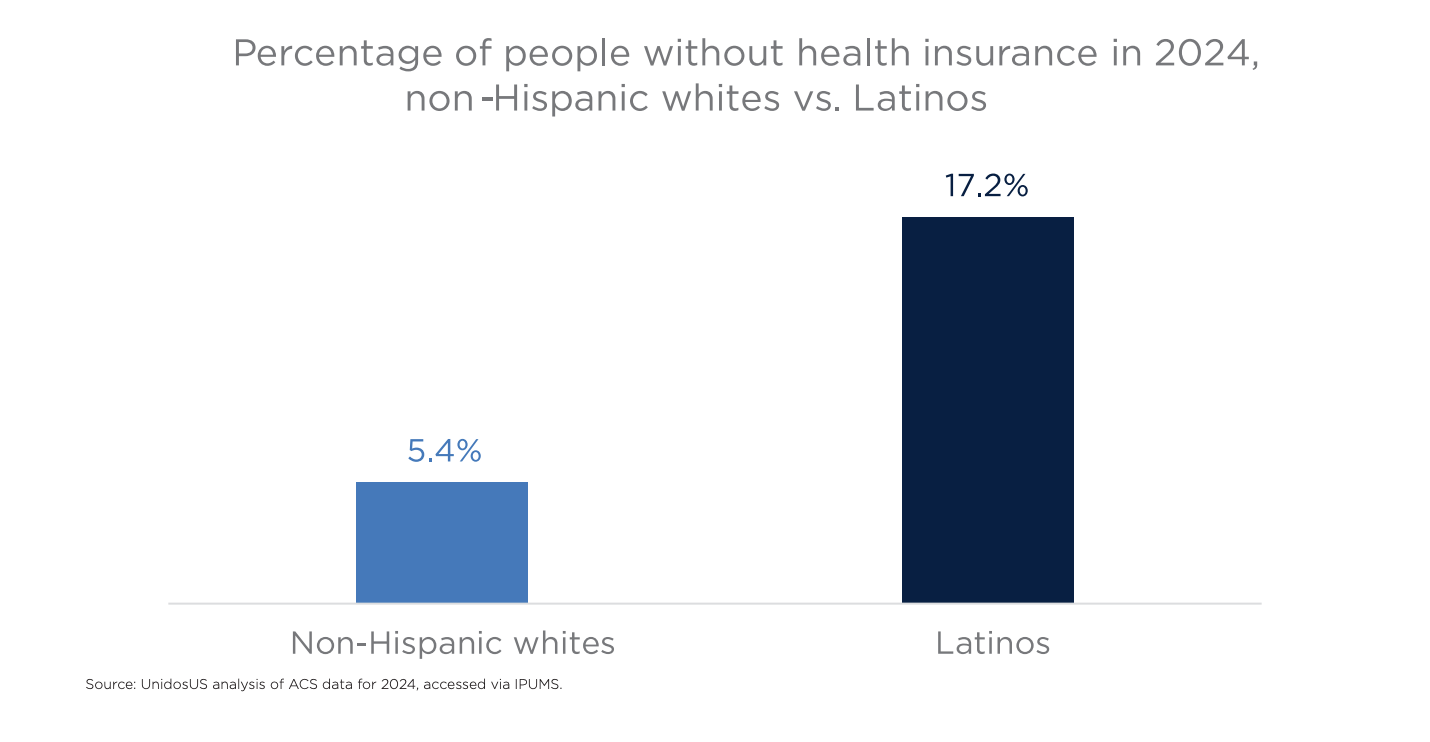
Before these changes were even proposed, 36% of Latinos had no regular health care provider, compared to 16% of white individuals, according to the report.
Affordability continues to be a driving force behind lack of access to health care.
55% of Latino adults admitted to having difficulty affording health care costs, compared to 40% of white individuals.
As a result, 43% of Latinos postponed health care due to cost, compared to 34% of white individuals.
This is even more apparent when it comes to prenatal care, which is essential in preventing preterm labor and maternal mortality.
32% of pregnant Latinas didn’t receive prenatal care in the first trimester, compared to 18% of white individuals.
The gaps in care are projected to get worse over the next few years because of the changes to access.
Actions to Restore Health Care Access and Prevent Loss
In response to these changes, the report outlines several actions to take to minimize more damage, restore access, and prevent loss of coverage in the future.
First, the report mentions the need for reversing these harmful decisions that will keep millions of Americans from seeking care.
In addition, it suggests creating an infrastructure that will prevent by not only restoring the former programs and benefits, but re-imagining these to help support a wider variety of communities and individual health care needs to ensure better health outcomes for all people.
The idealic federal health coverage interventions would seek to eliminate barriers to health care, including ineligibility and renewal.
In the same vein, more advancements need to be made to support speeding up the process and create standards that help those who need health care most get the coverage they need.
For states that have not expanded Medicaid, additional assistance through the Affordable Care Act should be provided to ensure families can afford coverage.
Lastly, more must be done to support linguistically accessible and background-tailored health information, regardless of citizenship status.
Improve Access to Health Care Where You Live
Do you know what kind of health care inconsistencies are plaguing your community?
Find out by downloading a Salud America! Health Report Card for your town!
Enter your county name and get auto-generated local data with interactive maps and comparative gauges on several health indicators. This can help you visualize and explore local issues in education, housing, transportation, food, health, and more.
See how your county stacks up compared to the rest of your state and nation.
Then email the Report Card to local leaders to raise awareness, include the data in a presentation or grant proposal, or share it on social media to drive healthy changes in your community!
Explore More:
AccessBy The Numbers
142
Percent
Expected rise in Latino cancer cases in coming years