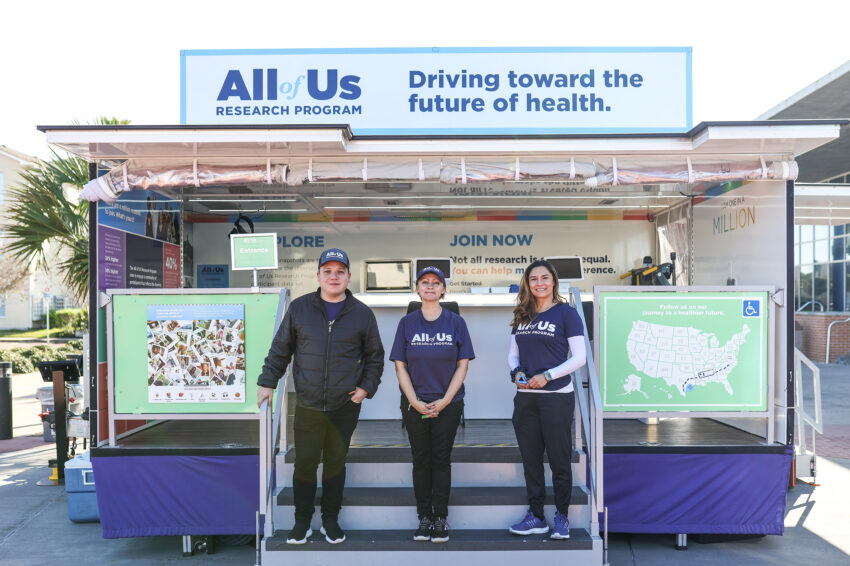
Sit down and buckle up because the National Institutes of Health’s All of Us Research Program could be pulling into a town near you!
On April 16, 2024, the All of Us Research Program announced its annual nationwide tour focused on engaging historically underrepresented communities in medical research, according to a recent news release.
The national mobile tour, dubbed “the All of Us Journey,” kicked off its route with stops on the East Coast in Ohio before eventually making its way to the New York area in early May.
Other East Coast stops include Washington, D.C., Maryland, and Virginia along with first-time destinations of Vermont, New Hampshire, and Rhode Island.
The program plans to visit more than 80 communities, including central regions like Texas, Colorado, and New ...
Dr. Rebecca Jones of UT Health San Antonio has been approved for a 2-year, $250,000 funding award through the Eugene Washington PCORI Engagement Awards (Engagement Awards) program, an initiative of the Patient-Centered Outcomes Research Institute (PCORI). The funds will support the creation of the Creando Conexiones: Cancer Health Research Agenda, which will outline research priorities identified by South Texas cancer survivors, caregivers, and community members. The coalition is directed by a core team led by Jones and an executive committee led by Jason Massiatte, president and CEO of Ma Hila’s Heart Children's Cancer Foundation. Join the Creando Conexiones coalition! "We know that research has the most impact when guided by voices of cancer survivors and community ...
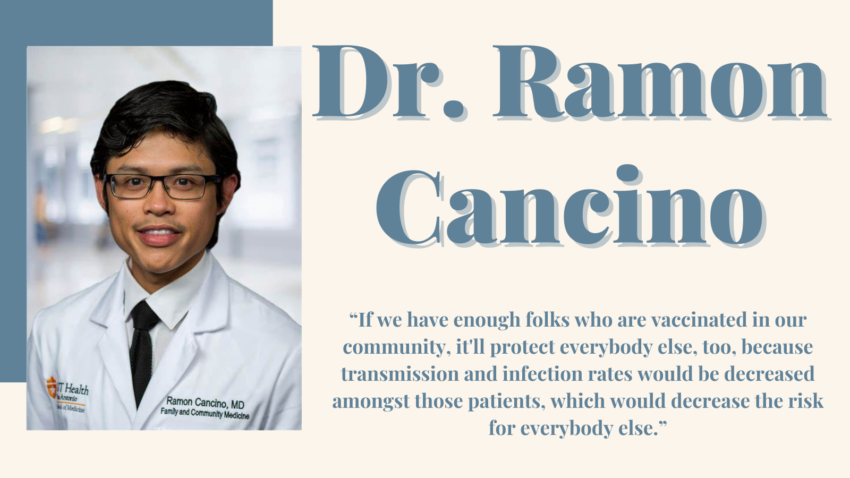
The COVID-19 virus is still a threat for many. U.S. Latinos continue to suffer a from a high number of COVID-19 cases. Fortunately, vaccines are available and free for children and adults, and they’re the best way to protect yourself and your family against the worst outcomes of the virus! Dr. Ramon Cancino, a family medicine physician at UT Health San Antonio and leader of the UT Health Physicians Primary Care Center, stressed the importance of getting vaccinated. “If we have enough folks who are vaccinated in our community, it'll protect everybody else, too, because transmission and infection rates would be decreased amongst those patients, which would decrease the risk for everybody else,” Cancino said. Find a vaccine near you!
Difficulties ...
Growing up, David Acosta was blessed to be part of a loving family with his mother and father, four brothers, and an abuelita in Southern California. They found joy in helping each other and others. Acosta realized in childhood he wanted to choose a future career that would bring joy to others – he decided to become a doctor. "I knew from an early age that I wanted to go into medicine and help out,” Acosta said. “My family [was] probably most instrumental in me going down this path.” Acosta went on to get his medical degree, practice medicine, and now serves as workforce leader at the Association of American Medical Colleges (AAMC). But his path wasn’t always easy.
The 'Familia' Side of Medicine
Acosta was introduced to medicine and its ...
Since the 1960s, community health centers (also called Federally Qualified Health Centers) have made it their mission to increase people’s access to primary healthcare by reducing challenges, such as cost, lack of insurance, distance, and language. But beyond clinic walls, many people have big needs, like unstable housing, that hurt their health. These are called the non-medical drivers of health (NMDoH) That is why the National Association of Community Health Centers (NACHC) helped create an NMDoH screening tool – PRAPARE® (Protocol for Responding to and Assessing Patient’s Assets, Risks and Experiences) – to enable community health centers to identify immediate needs among patients and refer them to local resources for aid. Today, PRAPARE® helps hundreds of community ...
This is part of the "Advancing the Science of Cancer in Latinos: 2022 Conference Proceedings," which summarizes findings and discussions of the 2022 Advancing the Science of Cancer in Latinos Conference on Feb. 23-25, 2022, in San Antonio, Texas.
Framing Latino Cancer Research and the Census Bureau Data That Enable It
Mr. Robert L. Santos is the Director of the US Census Bureau, the first Latino to serve in that position. Lessons from a Vibrant Career Director Santos began by sharing wisdom gleaned from 40 years of research, including two ways in which it is important to think differently about research problems. First, researchers tend to emulate the methods and thought processes that they have been taught, but these conventional approaches may become self-propagating, and ...
With the emergence of COVID-19, which continues to disproportionately impact Latinos, the world saw first-hand why public health is so important. To help Americans recover from the COVID-19 pandemic, the Biden Administration passed the American Rescue Plan in 2021. Since then, funds have been allocated to improve the health and wellbeing of Americans, including more than $226M to grow the community and public health workforce. Announced on Sept. 30, 2022, this large sum will specifically help train community health workers (CHWs) who connect people to healthcare, build trust within communities, and facilitate communication between patients and healthcare providers, according to a US Department of Health and Human Services (HHS) press release. "Patients depend on community and ...
¿Alguna vez ha querido ayudar a mejorar la salud de los latinos? ¡Ahora es su oportunidad! El Programa Científico All of Us de los National Institutes of Health está reclutando por lo menos a un millón de personas de diversas nacionalidades, para compartir información sobre su historia de salud y de su medio ambiente. La información recogida para la base de datos ayuda a los investigadores a aprender cómo la genética, el estilo de vida y nuestro medio ambiente afectan nuestra salud. Como parte del esfuerzo, los participantes donan muestras biológicas en la forma de una muestra de sangre o de saliva. Las muestras biológicas pueden ayudar a los investigadores a encontrar nuevas formas de prevenir, diagnosticar o tratar enfermedades, como el Alzheimer o el cáncer, ...
Cuando una persona dona muestras biológicas o biospecímenes—sangre, líquido, o muestras de tejido—le da a los investigadores la oportunidad de entender, tratar y prevenir de una mejor manera, condiciones médicas desde el cáncer hasta el Alzheimer. Se necesitan de manera especial muestras biológicas de latinos, quienes sufren disparidades de salud. “Los latinos que donan muestras biológicas son héroes. Sus contribuciones permiten a los investigadores hacer descubrimientos médicos y crear terapias nuevas para ayudar a millones de latinos en todo el país”, dijo la Dra. Amelie G. Ramirez, líder de Salud America! programa latino de equidad en salud del Institute for Health Promotion Research en el Department of Population Health Sciences, de UT Health San ...