Through prolonged activation of the toxic stress response, adverse childhood experiences (ACEs), like neglect and poverty, disrupt the development of brain architecture and other organ systems and are strongly associated with some of the most common and serious health conditions facing our society. This means toxic stress is a health condition with clinical implications. The healthcare system can play a central role in preventing, detecting, and mitigating toxic stress. That’s why, in December 2020, Dr. Nadine Burke Harris released her Roadmap for Resilience: The California Surgeon General’s Report on Adverse Childhood Experiences, Toxic Stress, and Health. Salud America! is exploring this as part of its 11-part series on toxic stress. Below are primary, secondary, ...
Alzheimer’s disease is an illness that affects the lives of many, and it impacts some Americans more than others. In fact, studies show that U.S. Latinos are 1.5 times more likely to develop Alzheimer's than their White peers. That number is only going to get worse over time if dedicated action isn't taken. The number of Latinos living with Alzheimer’s is projected to grow from 430,000 in 2014 to 3.2 million in 2060. That is more than an alarming seven-fold increase. Yet Latinos are underrepresented in clinical research across the board. Fortunately, Texas officials and researchers are working on this issue.
How Big a Problem is Alzheimer's Disease in Texas and Among Latinos?
The problem is huge in Texas, according to the experts. "In Texas in 2019 alone, 1650 ...
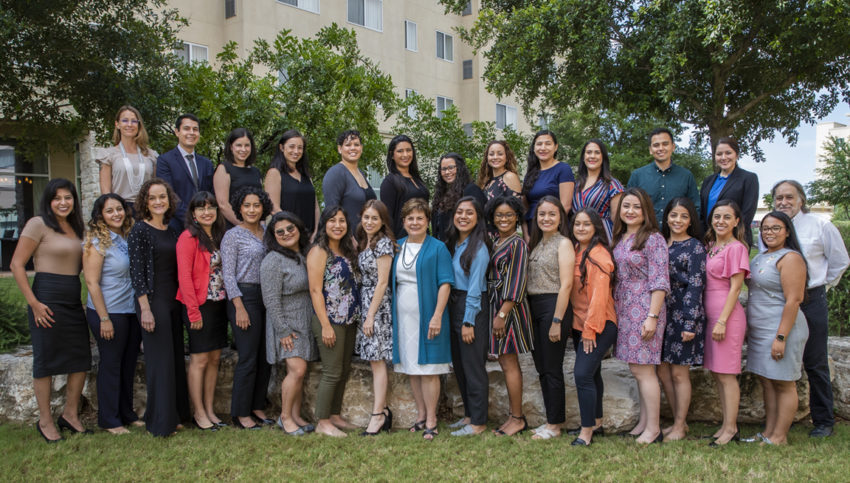
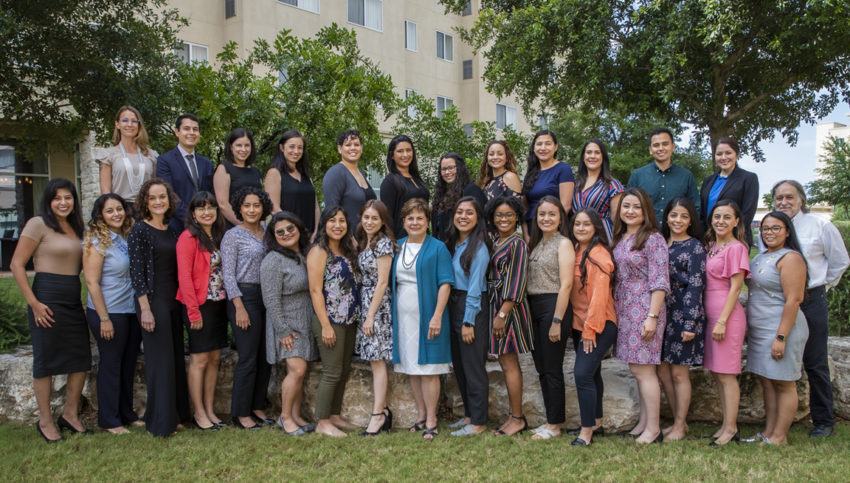
Apply now for the 2021 Éxito! Latino Cancer Research Leadership Training program and optional $3,250 internships from the Institute for health Promotion Research (IHPR) at UT Health San Antonio! Each year, Éxito! recruits 25 U.S. master’s level students and professionals to participate in a five-day, culturally tailored Éxito! summer institute to promote pursuit of a doctoral degree and cancer research. COVID-19 postponed the 2020 Éxito! program. Now applications for 2021 are open with limited spots available. At the next Éxito! summer institute, set for June 7 -11, 2021, in San Antonio, participants will interact with Latino researchers, mentors, and doctoral experts. They will learn about Latino cancer, succeeding in a doctoral program, and the diversity of careers ...
Many severe side effects of prescription drugs are not reported, according to new findings from JAMA Internal Medicine. Moreover, the researchers who completed the study comment that current FDA regulatory practices need reform, especially the process used to report harm caused by medical devices. “Over the last 4 decades, the approval and regulation processes for pharmaceutical agents have evolved and increased in complexity as special programs have been added and as the use of surrogate measures has been encouraged,” the researchers write. “The FDA funding needed to implement and manage these programs has been addressed by expanding industry-paid user fees. The FDA has increasingly accepted less data and more surrogate measures and has shortened its review times.”
What ...
Apply now for the 2020 Éxito! Latino Cancer Research Leadership Training program and optional $3,250 internships from the Institute for health Promotion Research (IHPR) at UT Health San Antonio! Each year, the Éxito! program recruits 25 U.S. master’s level students and professionals to participate in a five-day, culturally tailored Éxito! summer institute to promote pursuit of a doctoral degree and cancer research. At the next Éxito! summer institute, set for June 1-5, 2020 in San Antonio, participants will interact with Latino researchers, mentors, and doctoral experts to learn about Latino cancer, succeeding in a doctoral program, and the diversity of careers in cancer research. Ten optional internships also are available to program participants. Applications are ...
Minorities who visit an emergency room in the U.S. are less likely to receive prescriptions for certain medications than Whites, according to a new study. Researchers found that Latinos and Blacks specifically face disparities in obtaining analgesics, which include a wide range of pain killers. The study also noted that other minority communities might undergo similar experiences, but further research is needed in the topic. “The reasons for these disparities are likely complex and multifold and may include factors such as implicit bias, language barriers, and cultural differences in the perception and expression of pain and institutional differences in ERs that serve mostly Black and Hispanic patients,” Dr. Andrew Meltzer, senior author of the study and a researcher at George ...
Researchers have recently discovered 65 genetic variants in minority populations, which could lead to improved specialized medicines for those groups. Up to this point, doctors have conducted the majority of medical discovery research using data from people with European ancestry, according to the international science journal, Nature — leading to a lack of diversity that hinders precision medicine for minority populations. The news is excellent for Latinos and all minorities who have traditionally been understudied or left out of clinical research. “This is an extremely important public health issue,” Misa Graff, assistant professor in the school’s epidemiology department and co-author of the paper told UNC News. “We need to work hard to make sure that the ...
In medical school, physicians are trained to exclude their own personal upbringings, and that of their patients, from clinical decisions. That doesn't always happen in reality. In fact, doctors are often susceptible to their unconscious bias, research shows. Unconscious bias, also known as "implicit bias," happens when automatic processing is influenced by stereotypes. These stereotypes then impact your actions and judgments.
Doctors & Implicit Bias
Many studies have shown that physicians—especially white physicians—have implicit preferences for white patients. Implicit bias can lead to false assumptions and adverse health outcomes. For example: Implicit bias is a major reason why Latino men are much less likely to receive optimal treatment for high-risk ...
We already know that where we live plays a significant role in our health. Latinos and others living in rural areas struggle to access healthcare. They are more likely to die from heart disease, cancer, respiratory disease, stroke, and unintentional injuries than their urban counterparts. A grassroots effort aims to change that. ¡Vivir Mi Vida!, a pilot program at the University of Southern California (USC), is improving the health of rural, middle-age Latinos.
¡Vivir Mi Vida!
¡Vivir Mi Vida! is a 16-week lifestyle intervention translated as “Live My Life!” It aims to optimize health outcomes in Latino patients. Researchers worked with community partners to develop ¡Vivir Mi Vida! five years ago at USC’s Mrs. T.H. Chan Division of Occupational Science and ...