When it comes to good health, every step counts-literally. New Jersey Healthy Communities Network in 2016 awarded $860,000 to the Sussex County YMCA and 43 other organizations to support environmental and policy change initiatives promoting healthy eating and active living, according to one source. As part of this grant, in Franklin, New Jersey (7.5% Latino), the Sussex County YMCA, Franklin Mayor Nicholas Giordano, and Walmart in Franklin partnered for the Healthy Parking Spots Initiative. They installed eight highly visible signs in the Walmart parking lot to tell shoppers how many steps to the store entrance. The Sussex County YMCA plans to expand the Healthy Parking Spots program to other retailers in the future. The purpose of Health Parking Spots program is to ...
The number of people participating in the U.S. Department of Agriculture’s (USDA) Supplemental Nutrition Assistance Program (SNAP) has steadily declined over the last few years to its current low. As of June 2016, 43 million people have accessed SNAP benefits compared to a record high of 48 million in 2013; this is a drop of nearly 4.4 million people. In 2013, nearly 8 million Latinos participated in SNAP and comprised 16% of all SNAP benefits. Since 2007, the number has largely been between 16% and 17%. Nearly 30% of all Latino children currently live in food-insecure households. The 89 counties in 2013 with majority Latino households make up 3% of all counties in the U.S.; 27% of these are counties with the highest rates of childhood food insecurity. In order to reduce health ...
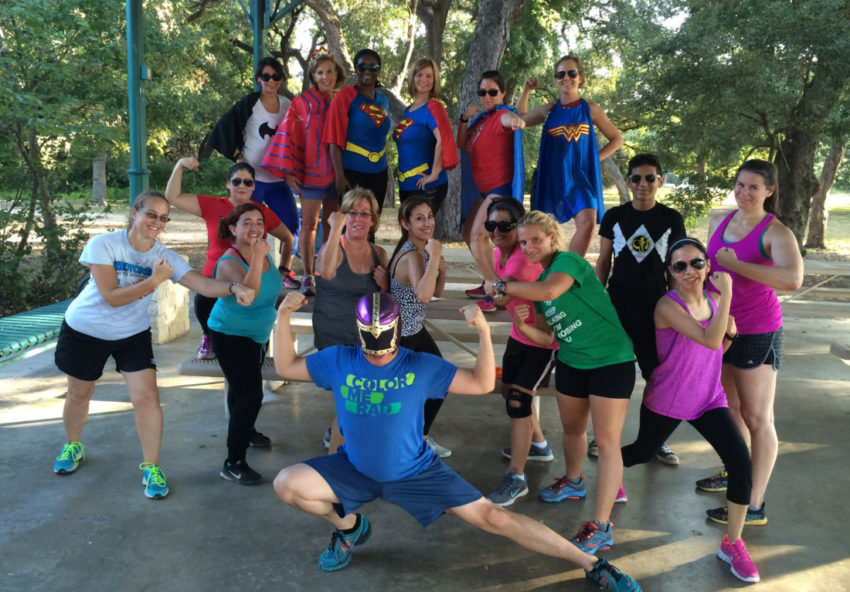
Are people in your city physically inactive? Community leaders in largely Latino San Antonio knew people weren't active enough, and had high risk of heart disease, diabetes, asthma, stroke, depression, stress, and more. So the city's Parks and Recreation Department helped launch Fit Pass and Fitness in the Park—two accessible, affordable strategies to attract Latino and all residents to be active at local parks and improve their mental and physical health. The city's excited progress is featured in a new Rivard Report article and Salud Heroes story by Amanda Merck of Salud America!, a national Latino childhood obesity prevention network based at the UT Health Science Center at San Antonio. For Fitness in the Park, city health worker Pete Garcia and his team developed a plan ...
Lacking access to and opportunities for physical activity is one of the big reasons Latino kids are more overweight and obese than their peers, and suffer more disease. So, what can we do to make physical activity a daily part of the lives for Latino kids? Join a new webinar from 3-4 p.m. ET on Tuesday, Sept. 27, 2016, to help learn about policy change and systems-change efforts taking place across the country to ensure physical activity is a meaningful part of the lives of all children. Sponsored by the National Council of La Raza (NCLR) and including Salud America!, the webinar will bring together a panel to highlight successful efforts that have been accomplished throughout the country. The webinar panel includes: David Thomsen, Policy Analyst, Health Policy Project, ...
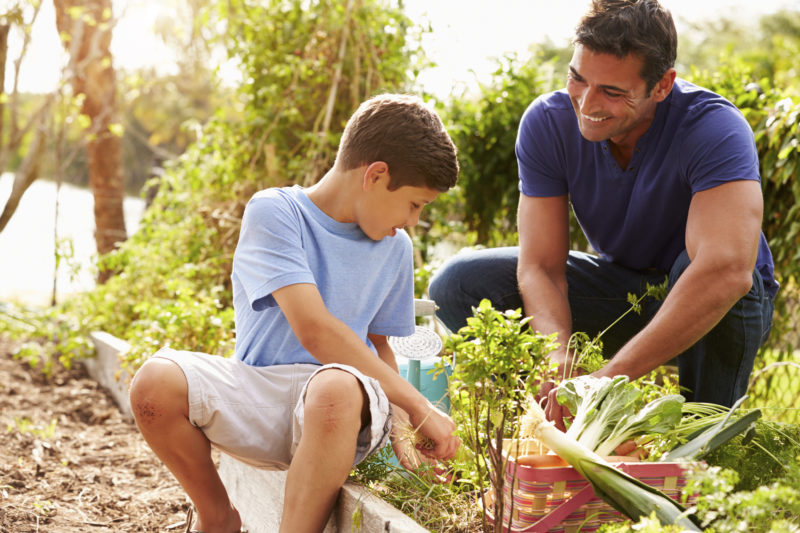
Do you have a home or small urban garden? Compost pile? According to a new study, you may be helping the environment and reducing climate change. Researchers from the University of California at Santa Barbara studied how well-tended gardens for every family home in California may help increase the chance of the state reaching its goal of reducing emissions by 2020. The study reveals that anyone who gardens in their home or backyard could help contribute to reducing two pounds of carbon emissions for every pound of homegrown vegetables consumed. Latino's often miss out on gardening opportunities or fresh food access in their neighborhoods, studies show. Reducing access to growing healthy foods could also increase the high risks that Latino's already face in dealing with ...
In 2008 an acre sized school farm started at IDEA schools on the border of Texas and Mexico in Donna, Texas, (92.3% Latino). The farming classes taught by Hernan Coldemero, practice agriculture basics and learn about food systems, all the while consuming healthier school lunches. In fact, 95% of the 6600 lbs of produce is used in school lunches while the leftover produce helps to keep the farm and schools sustainable, selling the produce to parents at the school's farmers market Noah, a student who comes after school to help take care of the plants and hopes to learn more about how to grow food so he can one day plant a garden at home said in the video, "Not all schools have this opportunity", he said, "If you're going to the cafeteria and eating fruits and vegetables, you can ...
Latinos age more slowly at the molecular level than other ethnic groups, according to a new study, the L.A. Times and Raycom News Network report. Researchers studied the DNA from blood of 6,000 people from two African groups, African Americans, Caucasians, East Asians, Latinos and Tsimane, an indigenous people in Bolivia. The DNA from blood reveals the health of a person’s immune system. The blood of Latinos and the Tsimane aged more slowly than the blood of other groups. Why? Latinos' slower aging may result from their Native American ancestry, the study's main author, Steve Horvath of the David Geffen School of Medicine at UCLA, told the L.A. Times. The process cannot be explained by Latinos' diet, education, obesity or socioeconomic status, factors for which the ...
The first ever water park for people with special needs is under construction in San Antonio, TX (68% Latino) and should open in spring of 2017. Gordon Hartman, CEO of The Gordon Hartman Family Foundation, opened Mogran's Wonderland, an amusement park with special-needs individuals in mind in 2010. Since 2013, he has been working with water park consultants, local doctors, and special-needs therapists on Morgan's Island Inspiration, the soon-to-be water park with special-needs individuals in mind. In 2013, Hartman built Toyota Field-an attempt to bring MLS to San Antonio-as well as the South Texas Area Regional Soccer Complex for youth and adult club soccer. He announced plans for the new $9.9 million water park the day after he sold to the City of San Antonio and Bexar ...
Are you looking for funding to support school physical activity projects and nutrition initiatives for this school year? Action for Healthy Kids is granting over $1.6 million to schools for the 2016-2017 school year! Grants range from $500 to $1,000. Funding can be used to support initiatives such as: Recess, Play Space/Gymnasium Refurbishing, Physical Education Equipment, Classroom Physical Activity Breaks, Nutrition Education, School Gardens, Healthy Celebrations and more! Physical activity is critical to improve Latino kids mental, emotional, and physical health. SELECT states are eligible to apply: CA, IA, IL, KS, *MO, NE, PA, TX, WI. Application deadline is Friday, September 16, 2016. Learn more and apply here.
...