 by
by 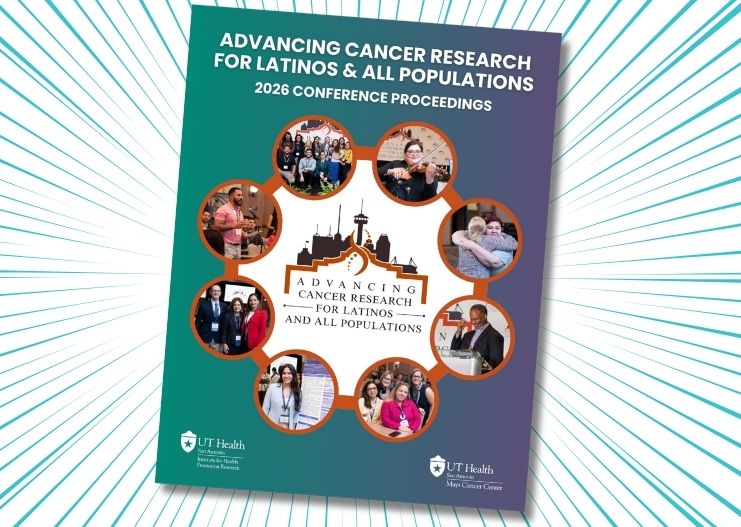
Share On Social!
With cancer still a top health threat, UT Health San Antonio leaders and national cancer experts have published an online book with innovative recommendations to reduce cancer among Latinos and all people.
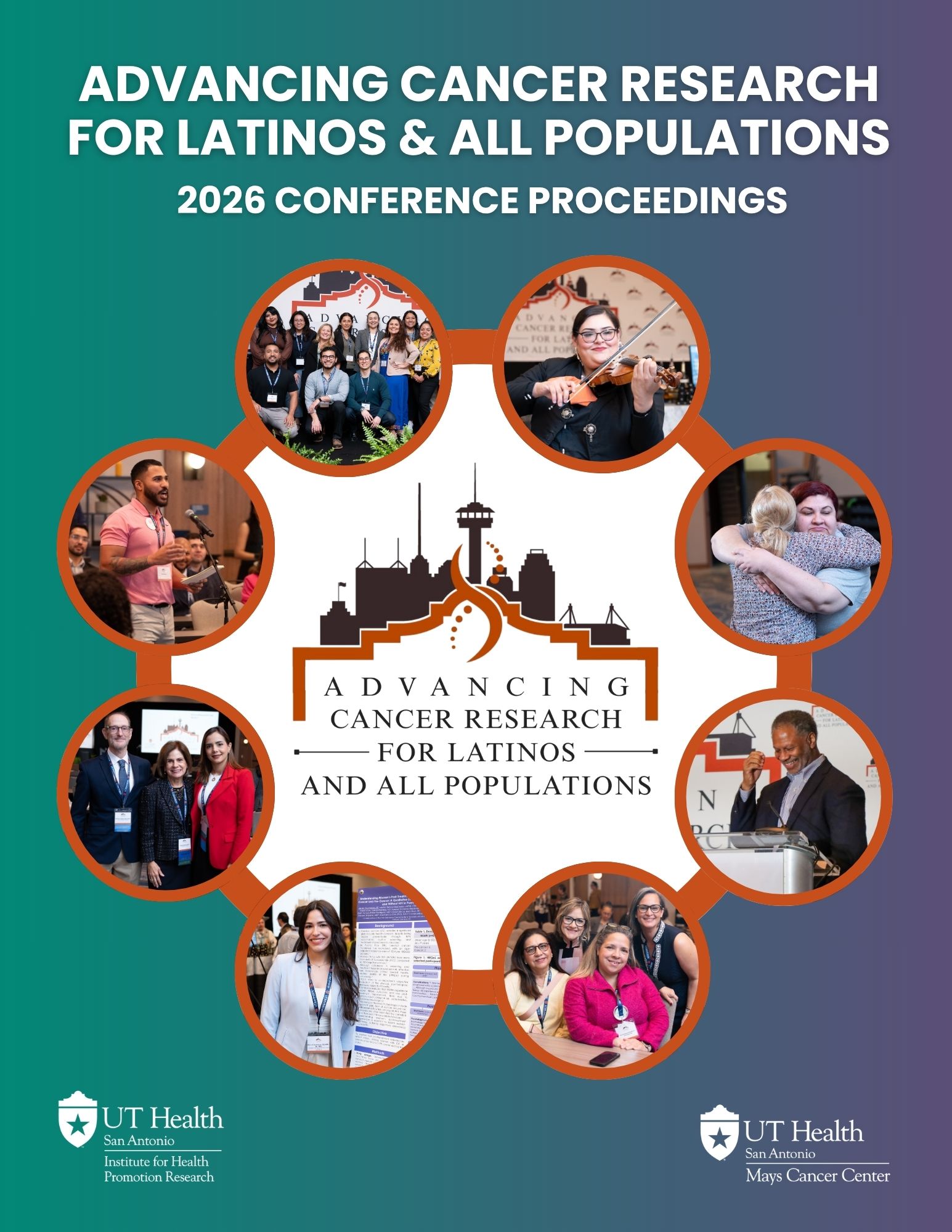
The book, “Advancing Cancer Research for Latinos and All Populations: 2026 Conference Proceedings,” highlights results of the same-named conference that brought 350 researchers, advocates, and survivors to San Antonio in February 2026.
A follow-up conference is planned for Feb. 23-25, 2028, in San Antonio.
Included in the book are promising research findings on Latino cancer and strategies for new research covering the entire cancer continuum.
This includes advances in genetics, prevention, screening, detection, treatment, survivorship, and policy, said Dr. Amelie Ramirez, co-editor of the book and leader of the Salud America! program and director of the Institute for Health Promotion Research (IHPR) at UT Health San Antonio.
“Our book, Advancing Cancer Research for Latinos and All Populations: 2026 Conference Proceedings, takes an in-depth look at the state of U.S. cancer and identifies collaborative solutions from the bench to the bedside,” said Dr. Amelie Ramirez, whose IHPR co-hosted the 2026 conference along with the Mays Cancer Center at UT Health San Antonio.
“The book and our biennial conference series make a unified call to action to address cancer issues that impact Latinos and all people.”
Cancer Remains a Top Health Concern
Latinos comprise 20% of the U.S. population.
This makes it important to address the projected 142% rise in Latino cancer cases in coming years.
Cancer is a top-two cause of death in the US Latino population and, every year, about over 140,000 Latino individuals are diagnosed with cancer, according to the new book. Latinos face a heavy cancer burden due to barriers to care, low screening rates, low participation in clinical studies, and research that fails to reflect demographics of the U.S. population.
“Our conference and book aim to share areas where different sectors of society can help address the burden of cancer among Latinos and all people,” Dr. Ramirez said.
Top Recommendations to Address Latino Cancer
The Advancing Cancer Research for Latinos and All Populations: 2026 Conference Proceedings book unpacks studies and recommendations for action.
A few top recommendations include:
Address the non-medical drivers of health. These factors (such as insurance status, transportation, finances) contribute to variable cancer outcomes.
Virtual reality simulations create an immersive and interactive artificial environment through a headset to promote physical activity. This may be helpful for individuals who report neighborhood safety concerns and transportation limitations.
Cancer prevention must be integrated with primary care. A diagnosis of cancer does not suspend other chronic health conditions, such as diabetes and hypertension, and patients who do not see a primary care physician during cancer treatment have worse outcomes than patients who do.
Digital enablement and AI offer a powerful way to cut through the complexity of matching patients with clinical trials. The time required for manual methods means missed matching due to changing eligibility windows, complex sequences, or dynamic clinical changes. AI can quickly match patients with trials.
Community outreach and engagement (COE) can disrupt clinical trial segregation by identifying patients with cancer, providing clinical trial education, and building trust. Successful COE has several key requirements: developing a workforce reflective of the identities of the individuals served; building partnerships with local organizations; identifying and responding to the needs of the population; implementing language- and culturally tailored strategies for varying locations; and making long-term investment while fostering enduring relationships.
The book also shares a variety of model programs and resources that can shape future efforts to address cancer among Latinos and all people.
How to Use These Latino Cancer Recommendations
The Advancing Cancer Research for Latinos and All Populations: 2026 Conference Proceedings book sets an agenda for future initiatives to address health for Latinos and all people on all levels.
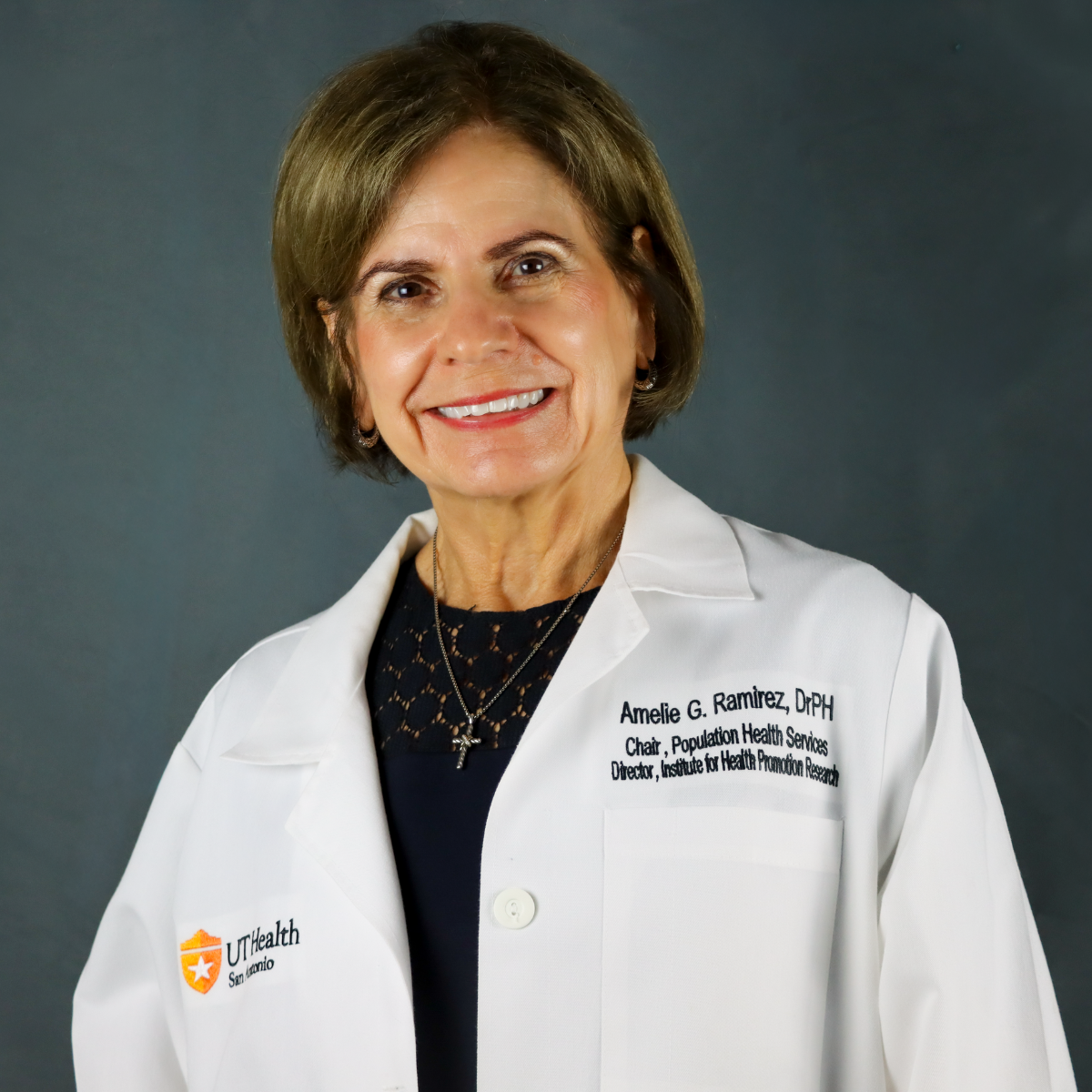
“We hope that readers will explore this important research to gain a fresh, comprehensive perspective on cancer,” Ramirez said.
Ramirez said she appreciates the opportunity to continue addressing cancer with her partners behind the Advancing Cancer Research for Latinos and All Populations biennial conference.
2026 conference sponsors included: Genentech, Bristol Myers Squibb, Gilead, Revolution Medicine, Natera, AstraZeneca (platinum); Blood Cancer United, Menarini Stemline, Eli Lilly (gold); National Hispanic Health Foundation, American Cancer Society, STEAM Network (silver); University of New Mexico, Sylvester Comprehensive Cancer Center (amigos).
2026 conference scientific planning committee members included: Chair, Amelie G. Ramirez, DrPH, UT Health San Antonio; Co-chair, Edward J. Trapido, ScD, FACE, Louisiana State University; Co-chair, Marcela Mazo Canola, MD, UT Health San Antonio; Barbara Segarra-Vázquez, DHSc, MT, University of Puerto Rico; Alejandro Recio Boiles, MD, FACP, University of Arizona; Maria Constanza Camargo, PhD, National Cancer Institute; Janeth Sanchez, PhD, National Cancer Institute; Gerardo Colon-Otero, MD, Mayo Clinic, Florida; Katherine Y. Tossas, PhD, MS, Virginia Commonwealth University; Mariana C. Stern, PhD, University of Southern California; Martin Mendoza, PhD; Matthew P. Banegas, PhD, MPH, University of California, San Diego; Patricia I. Moreno, PhD, University of Miami; Yamilé Molina, PhD, University of Illinois; Laura Fejerman, MSc, PHD, UC Davis; Mary Jimenez, Community Advisory Board, Mays Cancer Center; and Sandi Stanford, Alamo Breast Cancer Foundation.
You can cite the new book here:
Ramirez AG, Trapido EJ, Mazo Canola M, editors. Advancing Cancer Research for Latinos and All Populations: 2026 Conference Proceedings. 2026 Advancing Cancer Research for Latinos and All Populations (ACRLP), San Antonio, TX. Published online at https://salud-america.org/advancing-cancer-research-for-latinos-and-all-populations-2026-conference-proceedings.
“We anticipate this will inspire critical thinking and strategizing about how people can apply some of this research and practice into their own work at their own institution, leading to more collaboration, more research and success in improving the health and lives of Latinos and all people,” Ramirez said.
By The Numbers
142
Percent
Expected rise in Latino cancer cases in coming years