by
by 
Share On Social!
This content is from UT Health San Antonio’s book, “Advancing Cancer Research for Latinos and All Populations: 2026 Conference Proceedings,” which highlights results of the same-named conference in February 2026.
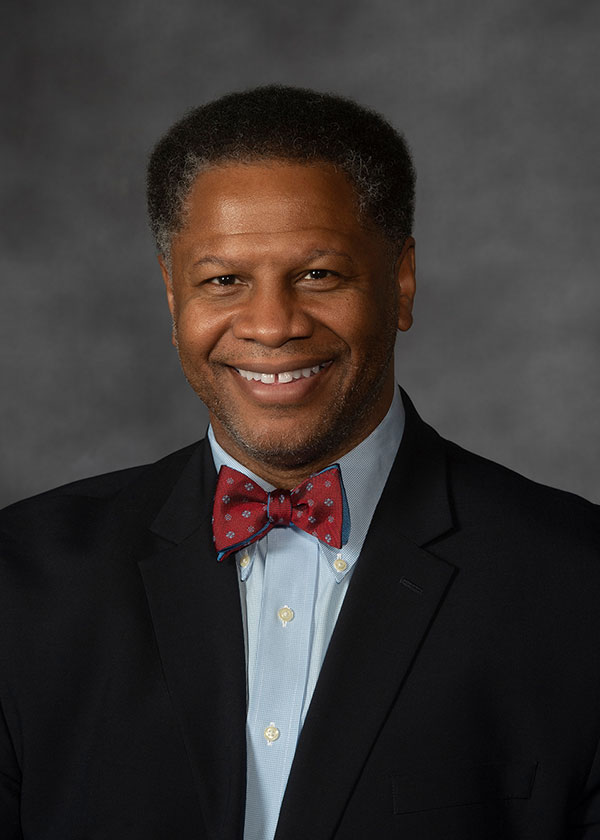
Dr. Robert A. Winn, MD, is the former Director and Lipman Chair in Oncology at VCU Massey Comprehensive Cancer Center.
Science for a purpose
Dr. Winn began by praising recent scientific and medical advances, but also by emphasizing that those advances need to make a difference for everyday people in everyday communities. About 1 in 2 men and 1 in 3 women are diagnosed with cancer in their lifetime. Much of the information about risk, and information about advances in medicine, have failed to reach more rural populations, and even some of their primary care providers. This lack of information, coupled with established non-medical drivers of health, have created different health outcomes among populations based on location.
Lessons from Chicago
Dr. Winn and colleagues have studied variations in health outcomes based on location in the Chicago area. In a certain wealthy area in central Chicago, for example, life expectancy is 85 years. However, just 4 miles west of that area, life expectancy drops to 69 years. Eight miles further away and to the South, in Englewood, life expectancy is 55 years. Factors like gun violence, which can be impacted by non-medical drivers of health, certainly play a part in this discrepancy. Other drivers include social conditions and policies, institutions like the surrounding healthcare system and community based organizations, and patterns of social organization such as neighborhood stability and social networks.
Dr. Winn and colleagues recently studied the correlation between cancer levels and stress in 50 wards in Chicago. This was done through measuring the cortisol in hair, through partnerships with Chicago-area barbershops. This cooperation was achieved as a result of the trust built through lengthy and targeted community outreach and engagement. Unsurprisingly, increased stress was associated with poorer outcomes. Furthermore, the study found that African American men that lived in wealthy wards had lower levels of stress than those living in poorer wards.
A partnership with the Chicago Police Department allowed Dr. Winn and colleagues to cross-reference stress and health data with a neighborhood violence index. Interestingly, the data revealed that high lung cancer rates were correlated with areas with high rates of homicide. In African American men, differences in gene expression were observed based on neighborhood violence scores, with higher violence correlating with higher expression of tumor growth promoting genes.
Those living in wards with higher violence, who had higher cortisol levels, also had a higher preponderance of “cold” tumors, or tumors with a low inflammatory signature and an absence of CD8+ T-cells. These low inflammatory tumors do not respond as effectively to standard cancer treatment, indicating that many cancer patients from areas of high neighborhood violence would be less responsive to standard therapies.
Cancer rates among Latino communities
These lessons may be applicable to many other areas in the United States. In Bexar County, home to San Antonio and the Advancing Cancer Research for Latinos and All Populations Conference, cancer incidence and mortality rates are higher among White and Latino individuals than the national average. Although Latino individuals have lower overall rates of cancer nationwide, rates of stomach and liver cancer are twice as high as non-Hispanic White individuals, and the rate of cervical cancer is 36% higher.
A way forward
Dr. Winn closed by commenting on the tendency for medical professionals to look primarily to genetic causes to explain differences in health outcomes. Although genetic contributions to health outcomes are important, the contribution of environment, stress, and non-medical drivers of health cannot be overstated. The combination of genetics and environment must be considered in concert with each other in order to fully understand health outcomes.
Furthermore, Dr. Winn emphasized the importance of performing science without fear. Citing examples of brave scientists throughout history, in the Jim Crow era, and today, Dr. Winn noted the effectiveness and long-term success of performing the necessary science that will do the most good, regardless of outside circumstances.
By The Numbers
142
Percent
Expected rise in Latino cancer cases in coming years