 by
by 
Share On Social!
Thyroid cancer is one of the most common cancers in the U.S. with about 45,000 new diagnoses projected for 2026, according to the American Cancer Society (ACS).
It’s also one of the more treatable cancers.
Despite that, women, especially Latinas, face a higher burden of thyroid cancer.
September is National Thyroid Cancer Awareness Month, so we are bringing attention to nine things you should know about thyroid cancer.
1. Thyroid Cancer Develops in the Thyroid Gland
Thyroid cancer forms in the thyroid gland, according to the Cleveland Clinic.
The thyroid gland, located at the base of the neck, is responsible for making hormones that regulate energy use in the body, including body temperature, blood pressure, and heart rate.
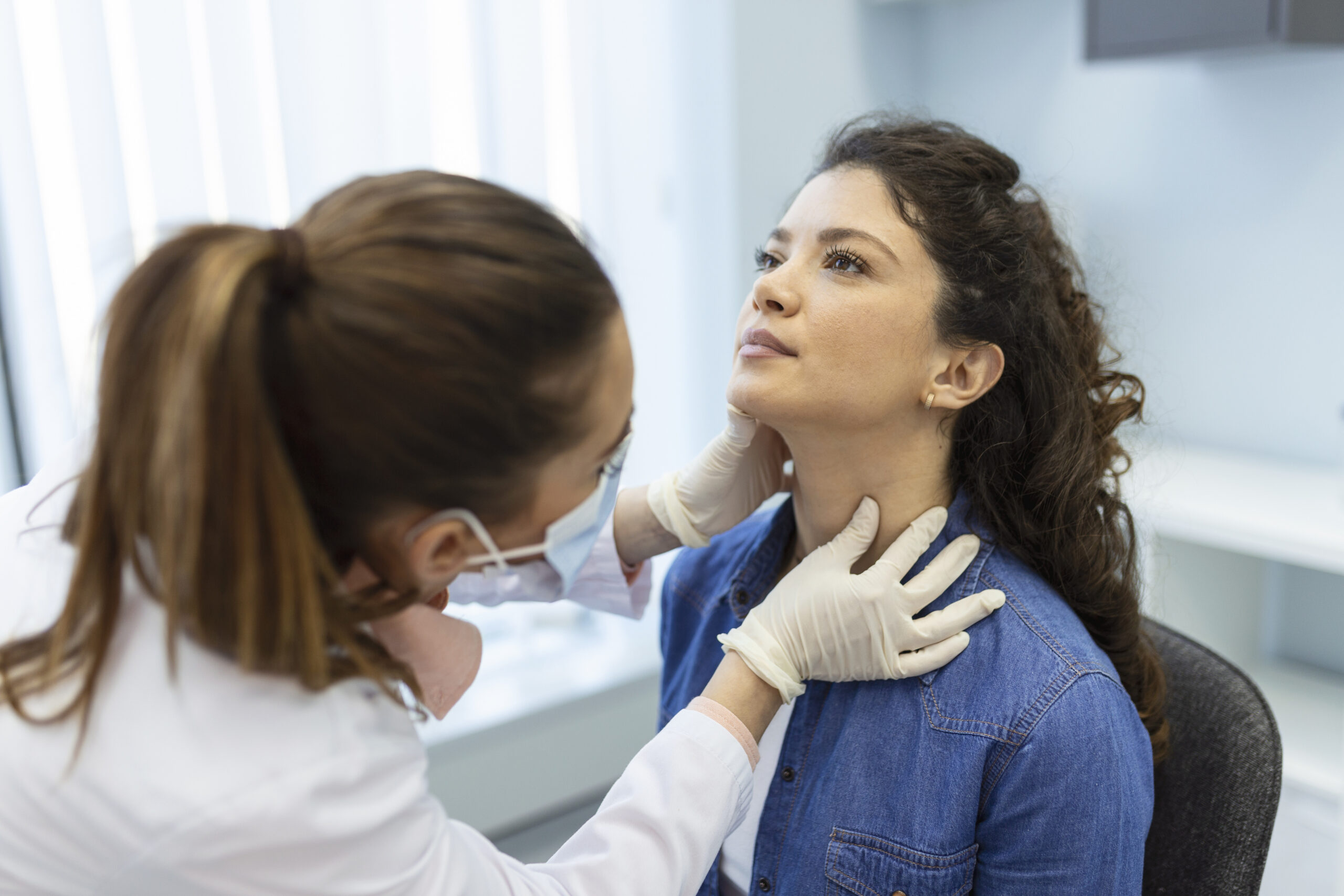
One of the early signs of thyroid cancer is a lump in the neck, called a thyroid nodule.
However, the presence of a nodule doesn’t always constitute a cancer diagnosis.
In fact, only 1 out of 10 nodules are cancerous.
Other symptoms of thyroid cancer are voice hoarseness and trouble breathing or swallowing.
2. There are Five Main Thyroid Cancer Types
There are five main types of thyroid cancer.
The most common form of thyroid cancer is papillary. This type makes up about 90% of all thyroid cancers. It is a slow-moving cancer that can often spread to the lymph nodes in the neck, according to the Cleveland Clinic.
The second-most prominent type of thyroid cancer is follicular, accounting for 15% of thyroid cancer cases.
Oncolytic is the third most common at 3% to 5%, followed by medullary at less than 5% of thyroid cancer cases.
Anaplastic is the least common thyroid cancer type, accounting for 2% of thyroid cancers. It is a rare form of thyroid cancer that is known for being fast growing and fast spreading.
3. Women are Especially Impacted by Thyroid Cancer
Among the estimated 45,240 new cases of thyroid cancer for 2026, women will account for 32,000 of cases, according to the American Cancer Society (ACS).
That’s three-times higher risk of thyroid cancer for women.
Despite the difference, the rate of death from thyroid cancer is roughly the same.
Of the 2,320 projected thyroid cancer deaths in 2026, 1,100 are men and 1,220 are women.
4. Thyroid Cancer is a Very Treatable Cancer
Depending on the type of cancer and stage, thyroid cancer has a 98% 5-year survival rate, according to the Cleveland Clinic.
This mainly has to do with how easy it is to treat.
Treatment for thyroid cancer can include radioiodine therapy, radiation therapy, hormone therapy, chemotherapy, and more.
However, less than half of people with advanced medullary thyroid cancer survive the disease, and survivors of rare anaplastic thyroid cancer have shorter life expectancy than other survivors.
Thyroid cancer prognosis is better when caught early.
The presence of thyroid cancer can be diagnosed through blood tests, biopsies, and imaging scans.
5. Thyroid Cancer is a ‘Young’ Cancer
For many years, cancer has been known as an aging disease.
However, cases of many types of cancer – including thyroid cancer – are increasing among people 60 years old and younger.
Thyroid cancer is diagnosed on average at age 51, according to ACS.
The average age of diagnosis varies between men and women.
Women are commonly diagnosed in their 40s and 50s, and men in their 60s and 70s, according to the Cleveland Clinic.
6. Know Your Thyroid Cancer Risk and Prevention
Women have a higher risk of developing thyroid cancer than men, but there are many other factors that contribute to someone’s risk for the disease.
A family history of thyroid cancer, obesity, low iodine, which is found in certain dairy and seafood products, radiation exposure, and certain inherited syndromes can increase your risk for thyroid cancer, according to the Cleveland Clinic.
You can decrease your risk for thyroid cancer by getting preventative screenings, especially if you have one of the risk factors listed above.
Taking potassium iodine after radiation exposure can prevent the thyroid gland from taking in too much radiation.
People who have iodine deficiencies can take supplements to improve their intake and reduce thyroid cancer risk.
7. Latinos Have a Large Burden of Thyroid Cancer
Thyroid cancer is a big threat to the Latino community, especially among Latina women.
The rate of thyroid cancer incidence in Latina women was 21.2 per 100,000 people each year, compared to 6.1 per 100,000 for Latino men, according to NCI SEER data.
Yearly incidence in white women is 20.8 per 100,000 and 8.6 per 100,000 in white men.
Researchers are still trying to understand the differences between men and women when it comes to thyroid cancer, but many suggest obesity could be a contributing factor.
What’s more, Latinas have a higher thyroid cancer-related mortality rate than other groups.
In fact, it’s 75% higher, according to NCI SEER data.
Factors such as lack of insurance, lack of access to quality cancer care, and late state diagnosis play a role in the higher mortality rate.
8. Share Your Thyroid Cancer Story with Avanzando Caminos
Understanding the Latino thyroid cancer survivorship experience can help future generations of survivor get the support, resources, and interventions they need to live healthier and higher quality lives.
The Avanzando Caminos Hispanic/Latino Cancer Survivorship Cohort study is trying to learn more about the Latino thyroid cancer survivorship experience by capturing the stories of survivors in South Texas.
The study team at UT Health San Antonio is is now enrolling participants who have completed their primary cancer treatments for prostate, colorectal, lung, stomach, liver, endometrial, breast, cervical, kidney, bladder, melanoma, ovarian, thyroid, and lymphoma cancers.
Through the study experience, program manager Dr. Derek Rodriguez hopes it gives cancer survivors an opportunity to process what they’ve been through.
“We want to be able to promote healing because for the first time in a long time, this may be someone’s first opportunity to give their cancer story,” Dr. Rodriguez told Salud America! “We want to be able to empower others to share their story as well. And we want to be able to better understand, detect, treat, and prevent cancer in the long run for other future survivors.”
To volunteer for Avanzando Caminos or ask questions, contact Dr. Ramirez’s team at the Institute for Health Promotion Research at UT Health San Antonio at 210-562-6514 or caminos@uthscsa.edu.
Alternatively, visit the Avanzando Caminos website in English or Spanish to fill out a quick eligibility survey and a member of the study team will be in touch!
SHARE YOUR STORY WITH AVANZANDO CAMINOS!
9. Volunteer for a Clinical Trial
Clinical trials are research studies that may help slow, manage, and treat diseases such as thyroid cancer.
“Volunteers in clinical trials are not only helping themselves, but they’re also building a future with potentially better treatments that can help their families in the future,” said Dr. Amelie Ramirez, director of Salud America! and the Institute for Health Promotion Research at UT Health San Antonio.
For thyroid cancer patients, clinical trials are working to mitigate and manage symptoms, speed up treatment and recovery time, and treat the disease.
However, the pool of participants doesn’t always reflect the entire population.
When participation doesn’t align with the U.S. population, these groups may miss out on the benefits that come from these studies and drug trials.
The reality is that too few overlooked populations, such as Latinos, volunteer for clinical trials or research studies.
Visit our clinical trials page to find a clinical trial, read about hero volunteers, and more!
Those looking for opportunities based in San Antonio can search the Mays Cancer Center at UT Health San Antonio’s Find a Clinical Trial database to learn more about available clinical trials and eligibility requirements.
On a national level, visit clinicaltrials.gov to find a clinical trial near you.
LEARN MORE ABOUT CLINICAL TRIALS!
Explore More:
CancerBy The Numbers
142
Percent
Expected rise in Latino cancer cases in coming years