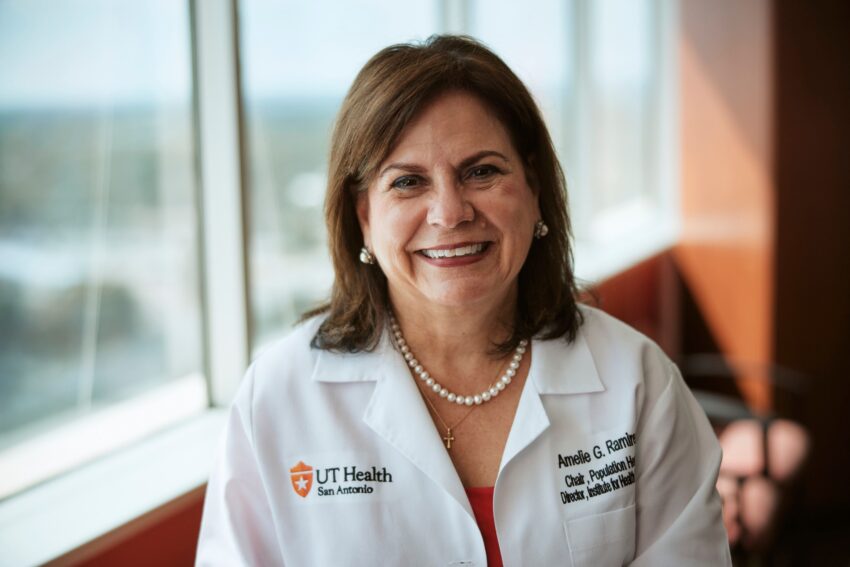
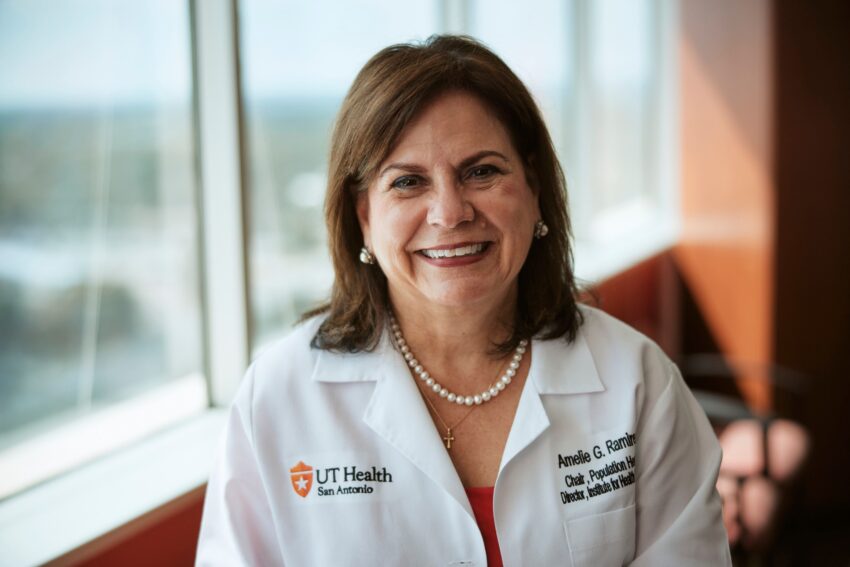
Dr. Amelie G. Ramirez, leader of Salud America!, joined a KSAT News town hall on Oct. 8, 2024, to share insights on a growing effort to address cancer in majority-Latino South Texas. The event, “Revolutionizing Cancer Care for South Texans: A New Era of Treatment,” was hosted by KSAT anchor Stephania Jimenez. It featured Ramirez, Dr. Mark Bonnen, chief medical officer at the Mays Cancer Center at UT Health San Antonio, and Jeff Flowers, chief executive officer at the UT Health San Antonio Multispecialty & Research Hospital. Ramirez shared about the state of cancer and the need to address the non-medical drivers of health in South Texas. She also urged cancer survivors to join the Avanzando Caminos study. The study aims to enroll 1,500 Latino cancer survivors in South ...
This article originally appeared on preventcancer.org. During Hispanic Heritage Month, we reflect on the love and pride we have for our cultura. As we enjoy this month of history, celebration, and unity with our friends and familia, it’s also a great time to raise awareness on important health topics like cancer prevention. It’s no secret that cancer is major concern for the Latino community. Cancer is the leading cause of death in Latinos. Additionally, about 1 in 3 Latino men and women will be diagnosed with cancer in their lifetime. Latino families must prioritize early detection and getting routine cancer screenings. According to the Prevent Cancer Foundation’s 2024 Early Detection Survey, “When cancer is detected early, it can lead to less extensive ...
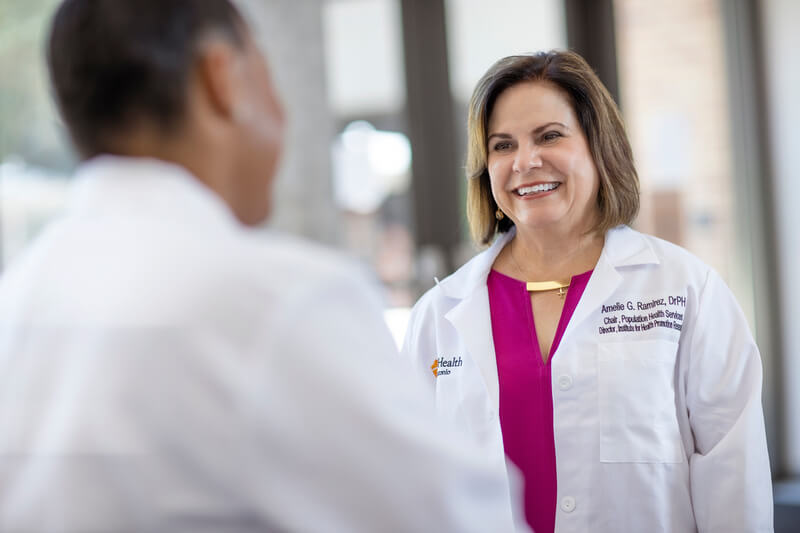
Dr. Amelie G. Ramirez, leader of Salud America! at UT Health San Antonio, shared insight on cancer on a webinar from the National Cancer Institute. The webinar was set for Oct. 2, 2024. Ramirez's presentation focused on reducing US cancer for all people, including Latinos, through research, outreach, and training.
Dr. Ramirez & Her Health Promotion Research
Ramirez is an internationally recognized health researcher at UT Health San Antonio. Here, she is professor and chair of the Department of Population Health Sciences and director of the Institute for Health Promotion Research at UT Health San Antonio. She also is associate director of cancer outreach and engagement at the Mays Cancer Center. She directs the Salud America! national multimedia health program. The ...
As a child in Arecibo, Puerto Rico, Dr. Eneida Nemecek learned the effort it takes to earn an education by literally going to college with her parents as they sought their degrees. “My parents are very young. I kind of went to college with both of them in the back of the classroom,” Nemecek said. “My dad ended up going to graduate school, also when I was still a little kid. We went to law school with him, too.” Nemecek followed her parents’ footsteps and eventually got her doctoral degree. Today she’s helping improve Latino health through clinical trial participation as associate director for clinical research at the Oregon Health & Science University (OHSU) Knight Cancer Institute and professor of pediatrics and medical oncology at OHSU.
Developing a Passion for ...
Ahead of the 2024 Advancing the Science of Cancer in Latinos Conference, 15 Latina women from across the country came together, unified by a common thread — to become a research patient leader.
This gathering, on Feb. 20, 2024, marked the first in-person meeting of the Latino Cancer Patient Advocate Training Program, a new initiative to teach cancer survivors to become research patient health leaders, who help others navigate the healthcare system and raise the Latino voice in research.
Patient health leaders are critical to the goal of reducing Latino cancer disparities, said Dr. Barbara Segarra-Vázquez of the University of Puerto Rico, co-leader of the new program.
“You really have to have passion to become a patient advocate,” said Segarra-Vazquez. “It’s that desire to ...
Our collaborative bilingual video that focuses on Latino participation in clinical trials was a "Silver Winner" at both the 2024 W³ Awards and the 45th Annual Telly Awards! The video, created by Genentech with help from the Institute for Health Promotion Research at UT Health San Antonio, the team behind Salud America!, shows why Latino participation in clinical trials is important for the future of clinical research. Clinical trials are studies with volunteers that can help researchers learn how to slow, manage, and treat different cancer and disease. “The lack of Latinos in clinical trials makes it hard for researchers to develop new treatments for this group, which suffers a heavy burden of cancer,” said Dr. Amelie Ramirez, director of Salud America! and the Institute ...
¿Sabía que 90,000 personas son diagnosticadas cada año con un tumor cerebral de origen primario? Similarmente, más de 1.3 millones de personas en los Estados Unidos de América viven con un tumor cerebral primario o secundario/metastásico. Para nosotros mismos, nuestra familia, y nuestra comunidad, debemos saber ciertos datos importantes acerca de los tumores cerebrales para que podamos apoyar a la gente afectada por un diagnóstico de un tumor cerebral. Afortunadamente, la Asociación Estadounidense de los Tumores Cerebrales (American Brain Tumor Association o ABTA) tiene recursos extraordinarios para ayudar a la población. ¡Exploremos y aprendamos!
1. Conozca los Tipos de Tumores Cerebrales
Un tumor cerebral es un crecimiento anormal de células que se ha formado ...
Dr. Amelie G. Ramirez, leader of Salud America! at UT Health San Antonio, shares insights on health on a new episode of the CDC's Listen Up! podcast series for health communicators, by health communicators. Her episode is "Not a Monolith: Empowering Latino Health." She also shares the importance of Salud America! Salud Heroes, how to take action to improve the non-medical drivers of health, and how to build trust and wellbeing within communities. Listen to Ramirez's episode. See the full Listen Up! podcast series, hosted by Dr. Betsy Mitchell in CDC’s Office of Communications. "It's family, faith, and language that are key, important ... issues to keep in mind [when sharing health messages to empower people]," Ramirez said on her episode.
Dr. Ramirez & Her Health ...
As a doctor’s son, Daniel Ruben Flores grew up in his family’s pediatric clinic. He and his siblings hammered away at their math and reading homework after school at the clinic, while their parents helped the sick. Flores often paused to admire the handwritten letters – and drawings of his father with a stethoscope – on the wall from patients thanking the pediatrician for caring for them. “Wow, all these other kids really appreciate my dad and all the work he’s doing,” Flores recalled fondly. “I feel like that just kind of motivates you ... to go into the field.” Witnessing his father’s work and the impact he had on his patients helped spark a fire in Flores to pursue medicine and help people, too. He’s taking big steps now – like ...