Researchers in the Department of Public Health at Grand Valley State University in Grand Rapids, Mich. reveal that limited access to healthy food stores, walkable neighborhoods, and healthy social environments may set the stage for heart disease. In the study, researchers studied over 5,000 adults over a twelve year period, checking coronary artery calcium and amounts of atherosclerosis in their arteries, a disease that can harden arteries and increase the risk of heart disease. The common thread among the 86 percent of adults with coronary artery calcium, was the decreased access to heart-healthy food. Co-lead author Ella August, Ph.D., explained in a recent article that the only significant factor that deters or increases the risk of calcium build-up in the arteries were if ...
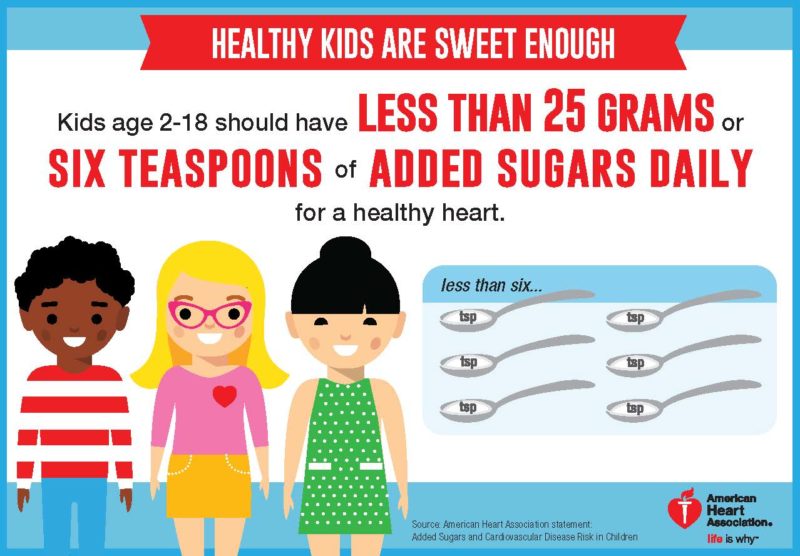
Sugar consumption is a huge factor in the nation's struggle with obesity, as many kids eat soda, snack foods and other foods with hidden added sugars on a daily basis. In fact, 74 % of Latinos have had a sugary drink by age 2 and about 22% of Latino high-school students have 3 or more sugary drinks a day. An average 20 oz soda contains around 16 teaspoons of sugar, that's almost triple the amount of sugar that is recommended! The American Heart Association (AHA) has now released new guidelines based on a scientific statement giving specific recommendations concerning children's intake of added sugars. The new guidelines offer helpful tips in understanding how much is too much when it comes to added sugars in foods and beverages. The AHA recommends: Children 2-18 consume ...
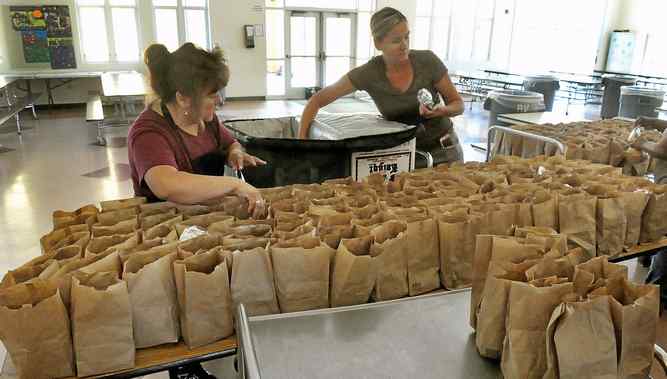
A new multi-phase school meal assessment process will help implement healthier scratch made meals for the next two years for students in Colorado's Fort Morgan school district (60.8 % Latino). Like various other districts across the state, Fort Morgan's School District plans to partner with LiveWell Colorado' LiveWell@School Food Initiative, a nonprofit movement funded in part by the Colorado Health Foundation, that helps offer schools a way to serve fresh foods made from scratch. The main goal of the initiative is to make sure kids have healthier school meals by 2022. The partnership with schools allows the initiative to go into cafeterias and teach culinary training for staff, provide new equipment, and offer tips on healthy recipe planning. The initiative has already helped ...
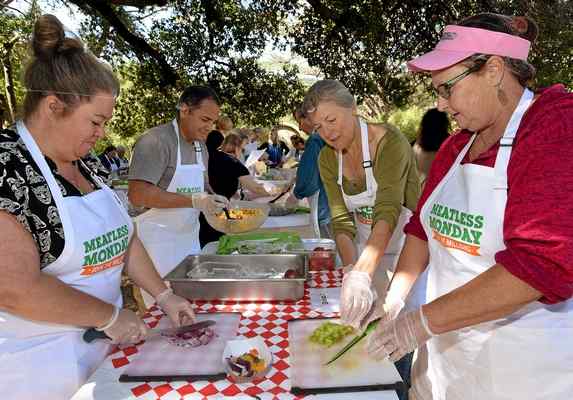
Since 2008, Novato school district stopped serving red meat for Humane Society's Meatless Monday initiative. Miguel Villarreal, director of the district's food and nutritional services told local news the initiative helps them save water. "When you do that math for 2,500 gallons of water per one pound of beef for 1,000 pounds of beef,...over the last eight years we have conserved like 3 billion gallons of water," Villarreal said. With over 4,000 students in the district receiving breakfast and lunch, keeping kids satisfied, and providing nutritious easy-to-make foods are important for the district. The district is now working on gearing up for the new school year with fresh new ingredients and recipes. Sofia Garcia, who works in one of the High School's cafeteria explained to ...
In Oneida County (5.5% Latino), schools and lawmakers are working to get healthier school lunches for students, putting a petition in for better reimbursements so fresh and local produce can be purchased for the state's schools to provide locally sourced school lunches. The county is looking to offer healthier meals, with more locally grown produce options but needs an increase in cash subsidies for school food reimbursements, County Legislator Colin Idzi explained to local news, stating that forty years have gone by since the last state increase of the current six cents reimbursement rate. A state-level legislation that could increase the reimbursement rate up to 31 cents per meal is being sponsored by State Assemblywoman Addie Russell and co-sponsored by Assemblyman ...
Lack of diversity in USA Swimming's infrastructure became a hot topic in 2006, after Cullen Jones became the first African-American to hold a world record (4×100-meter freestyle relay) in swimming. Lack of diversity resurfaced this year at the Rio 2016 Olympics after Simone Manuel became the first ever African-American woman to win an individual Olympic Gold medal in swimming. A lack of minorities in competitive swimming is attached to deeper historical and generational roots - historically, segregation; generationally; fear, according to one source. Lack of pools in low-income, minority communities is part of the problem. For example, Minneapolis has one pool per 138,000 people compared to its wealthier twin city, St. Paul, which has one pool per 28,000 ...
Pete Garcia spent several years as a personal trainer in San Antonio, learning first-hand that many residents in at-risk parts of the city struggled with obesity and related health problems. So when Garcia became the city’s supervisor of athletics and programs, he wanted to develop and implement programs that would increase access to physical activity opportunities for at-risk residents across the city. With grant funding and the city’s formation of the Mayor’s Fitness Council a few years ago, Garcia was able to capitalize on partnerships and collaboration to develop the “Fitness in the Park” program to provide free fitness classes in parks in each of the city’s 10 council districts.
San Antonio Inactive and Unhealthy
Pete Garcia worked for many years as a personal ...
Back in 2011, Stephen Lucke was a student at University of Incarnate Word (UIW) when his idea of Gardopia started to grow.
"I was studying biochemistry and I took a nutrition class, and I just really became educated about the obesity epidemic in the United States, " said Lucke, "You know San Antonio was the most obese city in 2007."
While at UIW, Lucke decided he could do his part to help bring access to healthier foods and urban agriculture education to his community.
After fundraising in 2013 to start gardens at UIW and then helping to build gardens at the Ella Austin Community Center, Lucke soon realized that he needed to also start gardens in places that need healthier food access, most of them being places of lower socioeconomic status with high minority populations.
Where ...
The 87 Marin schools in Marin County, CA ( 16.0% Latino) are increasing school gardens, farm-to-school education, and local produce to provide kids a healthier school food environment. Kids have various salad options that include fresh vegetables like cabbage, kale, bok choy, cilantro, carrots, spinach, lettuce, cucumbers, and strawberries at Lynwood Elementary. Also, local organic milk is offered in Laurel Dell Elementary School. The healthy fresh food options vary from district to district but offer various fruits and vegetables into school lunches and snacks. Miguel Villarreal, the director of food and nutritional services for Novato Unified School District, is also working on helping their schools offer healthy options by working with different local farmers, providing ...