How many people do you think are killed or severely injured in traffic crashes each year? What do you think is a good goal for your state? What should the goal be for your family? Should that be the goal for everyone? Oregon's regional Metropolitan Planning Organization, Metro, asked residents these questions at the KidFest! Family Expo in February 2017. See video. The goals was to frame traffic fatalities as preventable and raise awareness about Vision Zero. Vision Zero is an innovative road safety policy to make streets safer and eliminate traffic fatalities Skeptics claim that car crashes are an inevitable outcome in our vehicle-dominated society. Vision Zero draws a hard line between crashes and fatalities. Fatalities and serious injuries are not inevitable and ...
A healthy movement is growing in Los Angeles (48.5% Latino) where schools are saying no to the unhealthy marketing of McTeachers nights. This week of May 12, 2015, schools are being asked to vote on nutrition and fundraising policies, including voting on policies around food marketing for local wellness school policies. The United States Department of Agriculture (USDA) has outlined updates for school districts on local wellness policies (LWP) to include a policy around food marketing in schools by June 30, 2016. School marketing includes any advertising, promotion of oral written, or graphic statements made for the purpose of promoting the sale of food or beverages, explains a resource from Voices for Healthy kids and the Center for Science in the Public Interest ...
Good oral health is essential for kids and their overall health. For Latino kids though, it’s not always so simple. Most kids have their first dental visit by age 7. For Latinos, their first visit is closer to age 16! While lack of dental insurance is most often the reason for such a late start, there is another culprit. Sugar. The average child in the United States now consumes over half of her body weight in sugar every year. Much of this sugar comes from sugary drinks. Too Much Sugar is Bad! Too much sugar can lead to serious health issues, like obesity, diabetes, and poor oral health. Some populations, such as Latinos experience much higher oral disease rates than the general population. About half of all U.S. Latino children have experienced cavities and, in ...
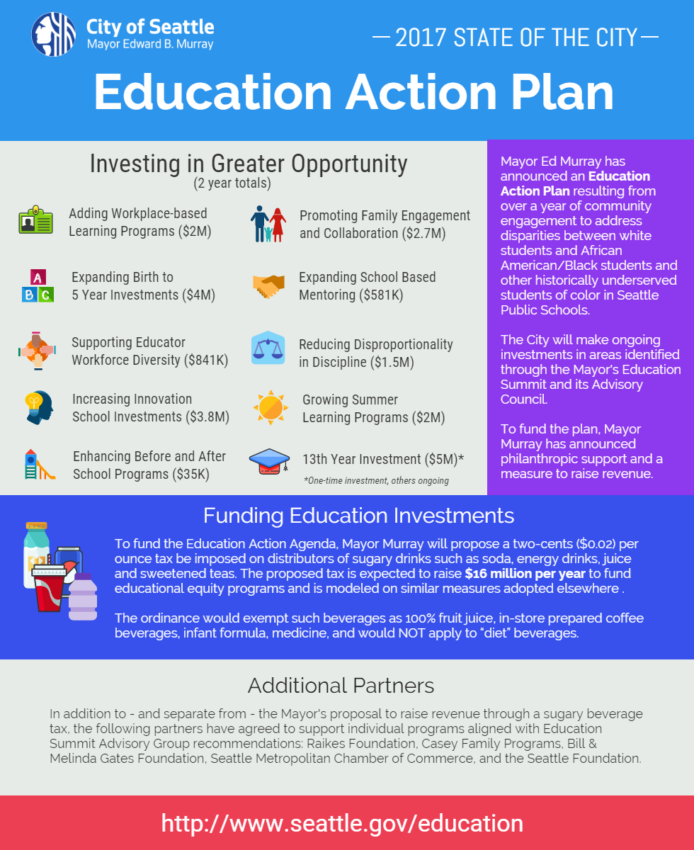
May 17th this year (2017) is the when Seattle will propose an ordinance to tax sugary drinks like soda, energy drinks, juice, and sweetened teas at two cents per ounce for distributors. Like many of the cities working to decrease health risks associated with consumption of sugary drinks, Seattle hopes to deter sugary drink consumption, increase health and fund educational disparities. Berkeley, in California, has successfully decreased the consumption of sugary drinks by 20 percent. Also, Mexico is continuing to see a decrease in consumption of sugary drinks in the country with the added sugary beverage tax. The tax in Seattle is being proposed by Mayor Ed Murray who is expecting to raise over 15 million dollars to help fund educational programs that would be recommended by the ...
Momsrising.org is asking mom's to become school wellness heroes to help make sure physical education and healthy foods are a part of school wellness policies. Kids spend most of their day at school, eating most of their calories and expending most of their energy at school, so it is vital for the school environment to be healthy. Currently, over 99% of schools are meeting new healthy snack standards, but with the new healthy school meal standards being rolled back around sodium, non-fat and flavored milk and whole grains, there is still so much work to do to make sure kids are in a safe and healthy school environment all day. You can help support health and wellness in schools before the end of June while school districts update their wellness policies. Get involved by dropping off ...
Lack of affordable housing has strong implications for many Latinos and greatly impacts their quality of life. Many Latinos live in racially segregated, low-income, high-poverty areas with limited access to fresh, healthy foods, quality healthcare, and physical activity spaces. Also, many areas restrict Latinos access to opportunities impacting their choice of school or their children and limits their chance to obtain higher paying jobs. For those living in rural areas, the access to affordable housing is often even more limited. According to the non-profit group, Smart Growth America, the cost of living in rural areas is generally lower than in metro areas, yet many residents of rural cities and towns nevertheless struggle to afford the homes and apartments available in those ...
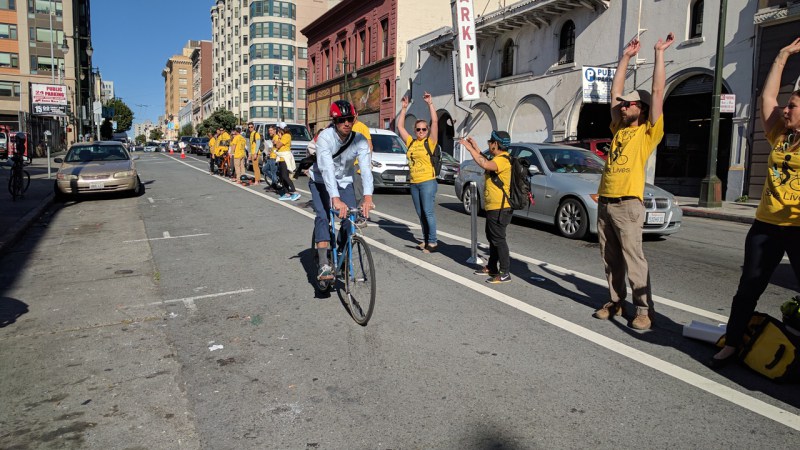
On a early May morning in San Francisco, Calif. (15.1% Latino), people gathered on a dangerous street to stand arm to arm as a buffer between moving cars and the bike lane. The current bike lane is located between street parking and moving traffic. This is known as a door zone lane because people continuously fling open their car doors in this space and drive into and out of this space to park their cars. As we all know, paint does little to stop a person from driving their vehicle over or parking in the "protected" space. The San Francisco Municipal Transportation Agency's (SFMTA) saw the bike lanes fill up with auto traffic and double parking and proposed protected bike lanes for an upcoming project on the neighboring one-way street, according to Streets Blog San Francisco. ...
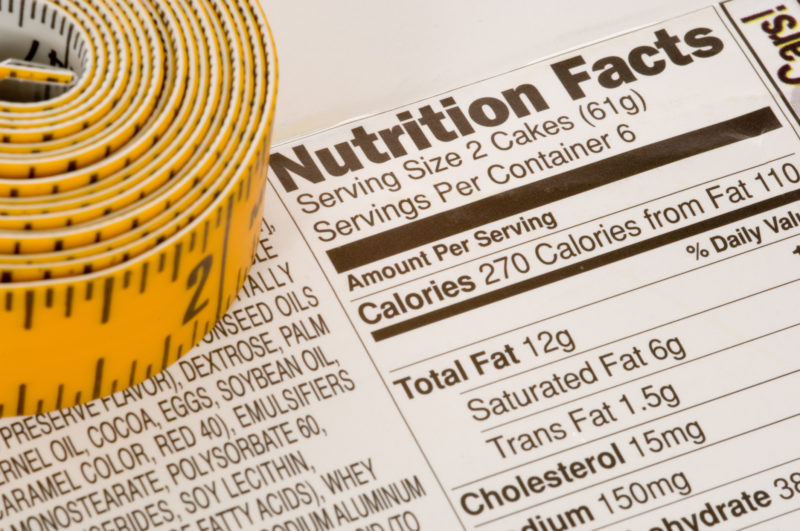
Although the recent menu labeling bill was pushed back for implementation until 2018 across restaurants, recent research reveals that removing and labeling unhealthy ingredients like trans fats can make a healthy difference for consumers. A study from JAMA Cardiology studied urban counties in New York State that restricted the use of trans fats in public eateries like restaurants, bakeries, cafeterias, park concessions and senior meal programs. The study concluded, after three years that there were there fewer hospital admissions for cardiovascular events in counties with a ban on trans fats. Since July 2003, the FDA approved labeling trans fats for consumers awareness on the dangerous ingredient that is often found in fast foods, baked goods, chips and can lead to higher ...
Swimming may be the perfect physical activity to help Latino kids achieve good health. But city governments often make the "painful choice to shut their pools to save the budget," according to a New York Times story a few years ago. Pool closures can especially hurt low-income and Latino and racial/ethnic communities where the local pool may be the only luxury. What can community residents do to save pools? We at Salud America! are happy to spotlight two communities who stepped up in unique ways when their local pools faced being cemented in!
Hannah Lieder: Saving a Public Pool in the Heart of Minneapolis Phillips Pool had been open for 22 years in the heart of urban Minneapolis, Minn., when it shut down for renovations in 2009. Renovation plans turned into ...