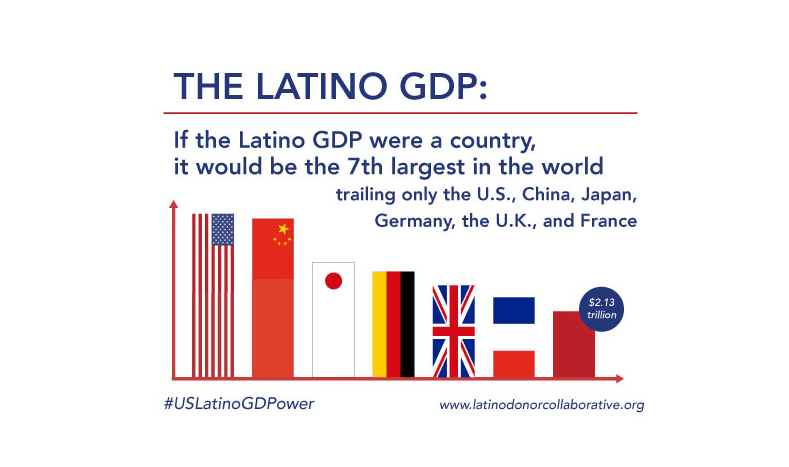
Don't think Latinos add much to the U.S. economy? Think again. If U.S. Latinos were their own nation, they would have the world's seventh-largest gross domestic product (GDP), at $2.13 trillion, according to a report by the Latino Donor Collaborative. That is a higher GDP than India, Brazil, and Italy. This means American Latinos are driving growth of the U.S. workforce and economy. This is contrary to political and popular rhetoric about Latinos, which hurts Latinos. The Latino GDP is growing 70% faster than the U.S. GDP. "If these rates are sustained, Latinos will contribute nearly one quarter of all U.S. GDP growth between 2019 and 2020," according to NGL Collective on the Latino Donor Collaborative report.
How Latinos Impact the Economy
By 2020, U.S. Latino purchasing ...
If you are between ages 25 and 49, your risk of getting obesity-related cancer is rising, according to new research by the American Cancer Society. The cancer-obesity threat isn't going away any time soon, either. "The fact that increases were mostly in obesity-related cancers is due to the obesity epidemic, and we would expect that the incidence would increases as this younger population ages," lead researcher Dr. Ahmedin Jemal told U.S. & World News. These findings have big implications for Latinos, who often struggle with weight and cancer already.
Study Findings
In the United States, the rate of obesity more than doubled between 1984 and 2014. To study the link between obesity and cancer among young adults, the American Cancer Society scientists examined data from 25 ...
By Maria Teresa Guzman
San Antonio Cancer Survivor Sometimes it seems like it was yesterday that I first heard the word "Breast Cancer." But the reality is it has already been 3 years since I was all alone spending a Valentine’s Day in the midst of needles and nurses. You see, at 38 years old I started with a sudden stabbing pain in my breast that would not go away. I had it for a month, not really wanting to pay attention to the signals my body was giving me until I felt a lump. It would have been easy to let fear win, but I took the hardest road and picked up the phone to call my doctor. Within two days I had an exam, and a biopsy it was at that moment that the doctor said, “It is Valentine’s Day and I’m sorry you have to spend your day here in pain but I ...
Suicide is one of the leading causes of death in the United States, and rates have drastically increased across the country in the last 20 years. Rates are even worse for Latino and all rural residents. From 2001-2015, rural areas have consistently had higher rates of suicide than metropolitan areas. “While we’ve seen many causes of death come down in recent years, suicide rates have increased more than 20 percent from 2001 to 2015. And this is especially concerning in rural areas,” said CDC Director Brenda Fitzgerald, M.D. “We need proven prevention efforts to help stop these deaths and the terrible pain and loss they cause.” Students at West Virginia University and the University of South Dakota recognized the problem and wanted to be proactive.
Students Making ...
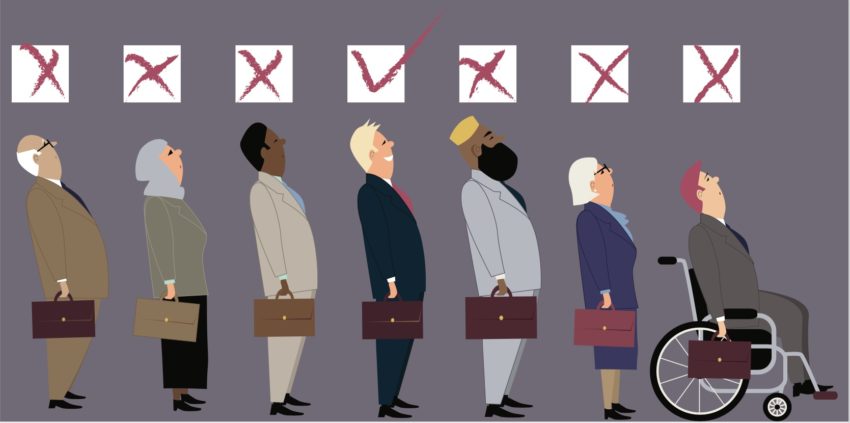
The appalling bias against Latinos and Blacks hasn’t changed much in the last 25 years, according to a recent study by researchers at Northwestern University, Harvard University, and the Institute of Social Research in Norway. This study is evidence for one of the many reasons Latinos and Blacks suffer a wealth divide. Additionally, hiring bias also contributes to the enormous Latina pay gap, in which Latinas who have bachelor’s degrees earn 35% less compared to white men with the same degree. "The truth, based on lots of data over years, is that if you're Black or Latino in the U.S., you get far from an equal shake. Your efforts have to be longer, stronger, and chances are you still will be treated worse. The deck gets stacked against you even as you try mightily and then ...
This week, the Center For Disease Control and Prevention launched their social media campaign for healthy schools, #CDCHealthySchools. The CDC’s Healthy Schools social media campaign aims "to increase awareness of the impact school health programs have in schools and school districts across the United States," said Holly Hunt, Chief of School Health at the CDC, in a letter sent to Salud America!.
Healthy Schools Social Media Campaign
The campaign encourages participants to answer the question, “What does a healthy school look like to you?” and use the hashtag #CDCHealthySchools to answer the question on any or all of your social media channels. Try posting a video, photo, graphic, or text. The campaign runs through Feb. 28, 2019. As part of the campaign, the CDC also ...
Schools should reshape their environment to promote students’ social, emotional, and academic learning, according to a new report from the Aspen Institute. In schools with little focus on social and emotional learning, students of color or those who have experienced poverty and other childhood trauma may fall behind in typical measures like grades, attendance, and graduation. They aren’t prepared for success in adulthood. The new report explores the science of learning and makes the case for integrating—rather than separating—students’ social, emotional, and academic development. This would benefit all kids, especially Latinos and others at-risk, for the future of our nation. “Educating the whole student requires rethinking teaching and learning so that academics ...
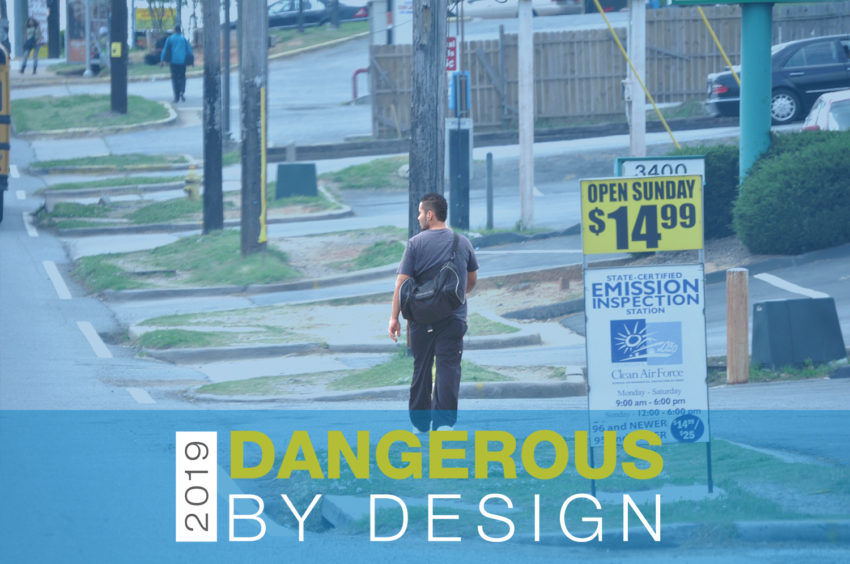
The number of U.S. pedestrians struck and killed by drivers rose 35% in the past decade, with higher rates in lower-income than high-income neighborhoods, according to the new Dangerous by Design report from Smart Growth America and the National Complete Streets Coalition. More people walking were killed in 2017 than any year on record since 1990. Why? Our streets aren’t getting safer. We continue to design streets that are dangerous for pedestrians, particularly for older adults, Latinos and other people of color, and those in low-income communities. “To reverse this trend and save lives, we need to protect all users of the transportation system through our policies, programs, and funding,” according to the Dangerous by Design report.
The Most Dangerous Places to ...
Access to walking, bicycling, and other forms of active transportation can benefit Latino and all people’s health, safety, social connectivity, and quality of life. But many communities struggle to pay for sidewalks, bike lanes, and trails. Fortunately, a new report from Safe Routes to School National Partnership explains “active transportation financing” and how it can set the stage for strong health partnerships that can generate healthy, active, equitable communities
Active Transportation Matters
There is a connection between public health and transportation. People are healthier when they have safe places to walk and bike. However, disparities exist. Low-income populations and Latino and other communities of color have fewer safe places to walk and higher ...