In today’s world, fast and dependable Internet is essential to thrive. Want to apply for a job? Application is online only!
Want to read the latest health news? Online!
Need to do homework or get a tutor? Online! Yet, many in rural areas do not have access to high quality broadband services. 24% of rural adults said that access to high-quality Internet service is problematic in their community, according to an alarming new report from Pew Research Center. Another 34% of rural adults say that internet access is a minor problem. Together, 6 in 10 rural Americans see quality internet access as problem. Furthermore, 39% of rural Americans, or 23 million people, lack proper broadband access, according to a 2016 report by the Federal Communications Commission ...
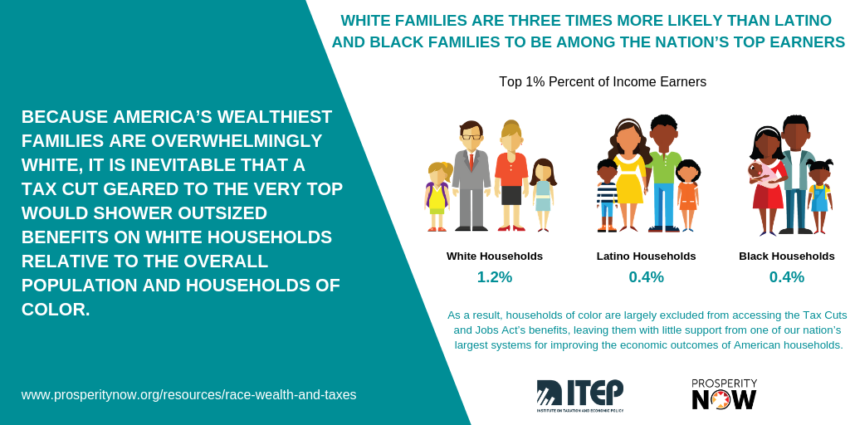
The Tax Cuts and Jobs Act aims to give an economic boost to hardworking Americans. But it's not working that way, some experts say. The Tax Cuts and Jobs Act actually rewards top-income earners, and expands the ever-growing wealth divide between whites and Latinos and others, according an Institute on Taxation and Economic Policy (ITEP) report. "These tax cuts reward existing White wealth at the expense of the economic security of households of [people of different backgrounds], poor households, and a stalling middle class," according to the ITEP report. For Latino and Black families, the economic outlook is bleak.
Wealth and Communities of Color
Income is already a rising issue. Latino families have a median net worth of $21,000, respectively. Black families have a ...
Latino men who are born or live in the United States for more than five years are twice as likely to be obese than those born outside the U.S., according to a new study from Florida State University study in the American Journal of Men's Health. This could become a problem for the U.S. workforce. "[Latinos] are also gradually becoming the majority of blue-collar workers. It is important to know about the health conditions of our labor force. If we do not, those conditions could become a public health burden in the future," said Amy Ai of Florida State, who led the study, in a press release.
Why More Obesity in U.S.-Born Latinos?
Ai and her team found that those who lived in the U.S. for more than 21 years were 1.5 times more likely to become obese than other foreign-born men. ...
In Latino culture, family is at the heart and center of life. As parents begin to age, children are often expected to become their caregivers. 1 in every 3 U.S. Latino households has at least one family caregiver. These Latino caregivers—mainly women in their 40s—often juggle multiple jobs or leave the workforce entirely to enter, the respectable but high-stress, role of taking care of aging family members.
How Do Neighborhood Characteristics Affect Caregivers?
Latino caregivers who provide support to older family members and report high levels of neighborhood cohesion, have fewer depressive symptoms than those caregivers living in less cohesive neighborhoods, according to one recent study. The study goes on to highlight the protective role that neighborhood characteristics ...
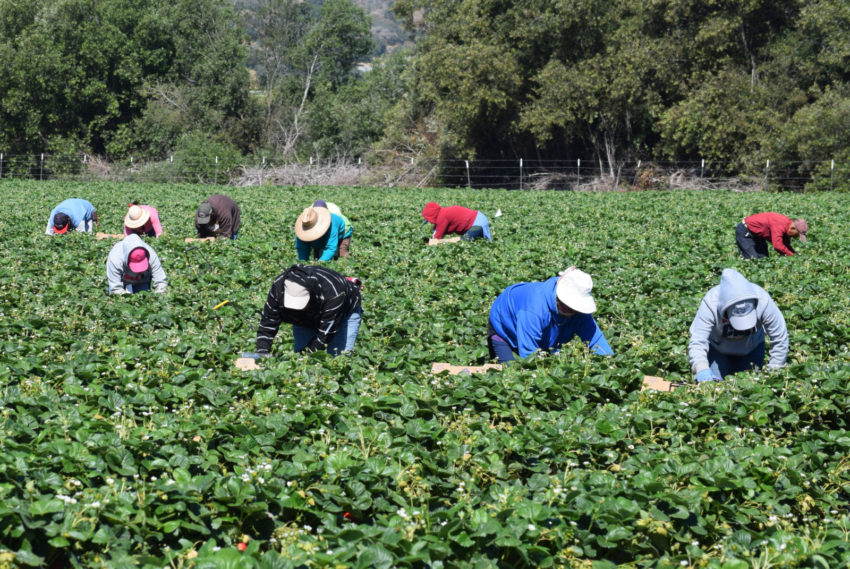
Foreign-born immigrants in U.S. rural borderlands are plagued by poverty, stress, discrimination and lack of access to adequate healthcare, according to a new study by the University of California Riverside. These inequities jeopardize their mental and physical health. “While the research focused on Latino immigrants in Southern California, our findings tell us a lot about structural level factors and daily life events and chronic strain that create stress for minorities and immigrants in rural communities,” Ann Cheney, lead researcher and an assistant professor in the Center for Healthy Communities at UC Riverside, said in a press release.
Rural Health as a Health Disparity
The South Eastern Coachella Valley is home to predominantly low-income Mexican farmworking ...
The Trump administration recently announced draft regulation that would penalize legal immigrants applying for green cards if they use public benefits, such as food assistance, according to the Department of Homeland Security. This is called "Public Charge."
What Does Public Charge Mean for Immigrants?
Part of federal immigration law for over 100 years, the Public Charge test is designed to protect American taxpayers by identifying people who may depend on the government as their main source of support. For a Public Charge test, immigration officials look at all a person's circumstances in determining whether they are likely to become a public charge in the future, both positive and negative. This includes age, health, income, assets, resources, education/skills, family they must ...
Even if you're thin, you might be genetically at risk for diabetes. A new study, led by the University of North Carolina at Chapel Hill’s Gillings School of Global Public Health, examined data from 9,000 Latino adults ages 21-76 and found that a well-known gene variant linked to Type 2 diabetes—transcription Factor 7-like 2 (TCF7L2) gene—also may predispose a person to being leaner. Individuals with the TCF7L2 gene variant may be at risk for Type 2 diabetes even while maintaining a low body weight. The findings is novel, given many individuals with diabetes are obese. "The counterintuitive discovery that some people are predisposed both to being thin and developing Type 2 diabetes refocuses our attention on the need to collect data in diverse populations and across ...
Public health advocates talk about health in an “upstream-downstream” fashion. They want to highlight the importance of health promotion and the influence of social, economic, environmental and cultural factors on health equity for Latino and other people of color. It is a parable: A man and a woman were fishing on the river bank when they saw a woman struggling in the current. They rescued her. Soon, they saw a man struggling. They rescued him, too. This continued all afternoon. Finally, the exhausted pair decided to go upstream to find out where and why so many people were falling in. They discovered a beautiful overlook along the river’s edge without any warning signs or protective barriers. The couple went to community leaders to report the number of victims they had ...
Grant County, New Mexico (50% Latino). Luna County, New Mexico (65% Latino). Two counties. Both rural, largely Latino, with high poverty. Only 68 miles apart. Yet health is failing in one county, and prospering in the other. Why is this? What can we do?
Health Ratings: Luna vs. Grant
U.S News & World Report's new Healthiest Communities rankings use a 100-point scale to assess well-being in 3,000 U.S. counties. Metrics include economic, educational, and health outcome Grant County scored 62 of 100. Luna County scored 31 of 100. Grant ranks in the top-third of counties. They rank 20th among other rural communities with up-and-coming economies. Luna ranks in the bottom-third of counties. In health outcomes, Grant is doing better than Luna in many aspects: ...