We know that health is influenced by our families, environments, communities, and much more. Health inequities occur when barriers prevent some groups from receiving access to healthcare and other resources that positively impact health. Community power is an emerging method for marginalized communities to enact systemic changes that address social and health inequities.
What is Community Power?
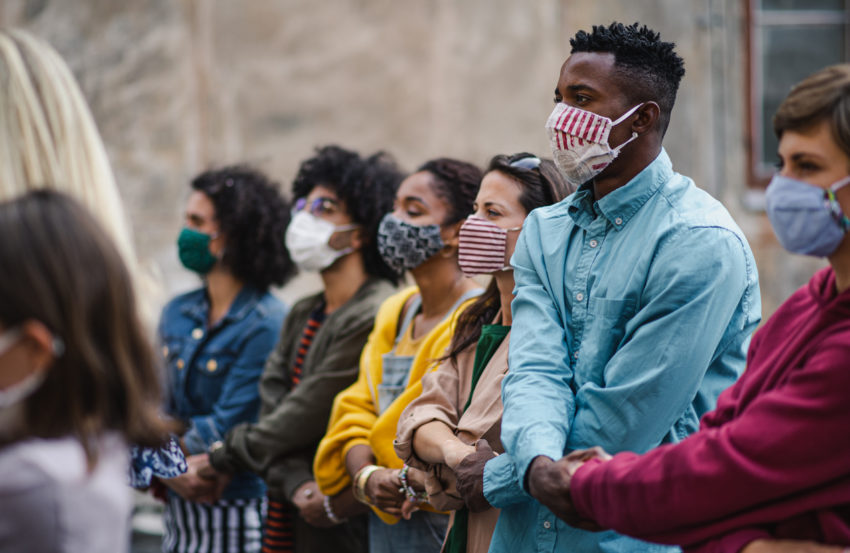
Community power is people’s ability to create systemic change through a mutual agenda to achieve a larger goal. “Building power is particularly critical for communities working hard to thrive despite generations of systemic challenges, including low-income and communities of color being excluded from decision-making on the policies and practices that impact their health and ...
By Maegan Molnar
Breast Cancer Survivor in San Antonio I was only 26 years old when I was diagnosed with stage 2 triple negative breast cancer. My world flipped upside down when I came across a lump during my very first breast exam just three weeks before my wedding. I had nine rounds of IV chemo before we realized it wasn’t working. I then had to stop treatment, have a lumpectomy, and then completely restart a different IV chemo regimen. I then had a double mastectomy with DIEP reconstruction followed up 9 rounds of an oral chemo therapy. To say I was exhausted when it was over would be a complete understatement. To say I was naive when I thought it was over would be completely accurate. This May will be 5 years since my diagnosis. I cannot imagine trying to add up the ...
Cultural competence is the ability to understand, appreciate, and interact with people from cultures or belief systems different from one's own. This is often lacking in health care. Latinos, for example, experience discrimination and implicit bias in the doctor’s office, and face a systemic lack access of social support. That's why we are excited to share new bilingual materials from various agencies the U.S. Department of Health and Humans Services (HHS) aiming to improve cultural competence and equitable access to care. "Providing culturally and linguistically appropriate services (CLAS) in health and healthcare is one way to improve the quality of services provided to all individuals, which will ultimately help reduce health disparities and achieve health equity," ...
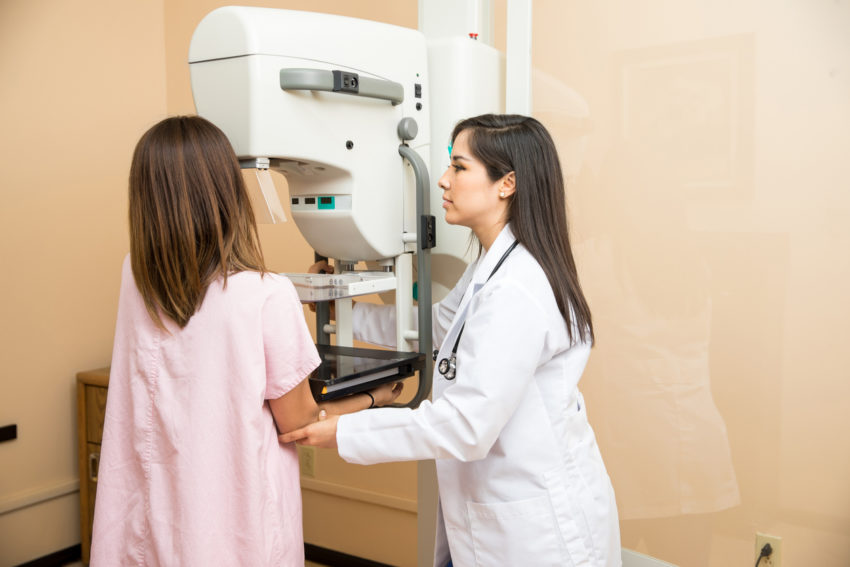
Latinos face some serious cancer health disparities. They are so serious that many health experts recommend cancer screening, a type of test that looks for signs of different cancers early, before the illness can cause serious harm. “Screening tests can help find cancer at an early stage, before symptoms appear,” experts at the National Cancer Institute (NCI). “Early detection is important because when abnormal tissue or cancer is found early, it may be easier to treat. By the time symptoms appear, cancer may have begun to spread and be harder to treat.”
What is Cancer Screening?
Cancer screening is a series of exams, most of the time recommended by a physician or begun at a certain age, to explore the body for any signs of cancer. According to NCI, types of screening ...
Financial literacy can help us understand wealth and the economic opportunities available to us. Latinos face many barriers to economic opportunity, like systemic and historic discrimination, generations of inequity and wealth gaps, and a lack of access to resources on financial literacy. One business is stepping up to help teach younger Latinos about financial literacy. SUMA Wealth, a financial services company focused on Latinos, announced a multi-platform financial education initiative called SUMA Academy to empower Latino youth to break generations of wealth inequity. “Empowering young Latinos with financial knowledge is the key to reducing the wealth gap,” said Beatríz Acevedo, CEO and co-founder of SUMA Wealth, according to a press release. “They share their learning with ...
About 19 million Americans lack access to broadband services, according to the Federal Communications Commission (FCC). Of those 19 million, the majority are in low-income and rural communities and communities of color. This “digital divide” is problematic, especially as students and families have needed to rely on the internet for online learning and telehealth during the COVID-19 pandemic. Thankfully, businesses and the federal government are stepping up to help these areas by expanding broadband access. In his $2.3 trillion infrastructure plan, President Joe Biden proposed expanding broadband services to low income, rural areas. Comcast also recently announced their decision to invest in low-income areas to close the digital divide. Together, initiatives like ...
Many people know secondhand smoke is a danger to health. However, most people, including many health professionals, don't realize just how dangerous it is, especially inside multifamily housing like apartment buildings.
Why is Secondhand Smoke a Big Threat to Health?
According to the American Lung Association: Secondhand smoke causes approximately 7,330 deaths from lung cancer and 33,950 deaths from heart disease each year.
Between 1964 and 2014, 2.5 million people died from exposure to secondhand smoke, according to the 2014 report from the U.S. Surgeon General. The report also concluded that secondhand smoke is a definitive cause of stroke.
There is no risk-free level of exposure to secondhand smoke.
Secondhand smoke contains hundreds of chemicals known to be toxic or ...
The number of Latino or Hispanic-serving colleges and universities has risen 94% in the past 10 years, from 293 in 2010 to 569 in 2020, according to a new data report by Excelencia in Education. A “Hispanic-Serving Institution” (HSI) has 25% or more undergraduate full-time equivalent Latino enrollment. HSIs now constitute 18% of all colleges and universities. This is up from 17% in 2018. On top of that, Latino enrollment in higher education is expected to exceed 4.4 million students by 2025, far surpassing the growth rate of any other racial-ethnic group, according to the Hispanic Association of Colleges and Universities. "Educating Latino students is now a necessity. More has to be done to achieve the institutional transformation that intentionally serves Latinos, who are ...
One of the most dangerous forms of cancer is bladder cancer. This is especially true for Latinos, who experience lower rates of bladder cancer, but worse survival rates due to many factors, according to a new study led by UT Health San Antonio. “Latinos are vulnerable to poverty-related health conditions and may lack health insurance or financial means to pay for quality health care and use fewer preventive care services than other ethnic groups, which may be related to worse [bladder cancer] survival rates in Latinos,” according to Dr. Shenghui Wu of the Department of Population Health Sciences, who led the study along with Salud America! Director Dr. Amelie G. Ramirez and other researchers in the Department of Urology, the Mays Cancer Center, and the Institute for Health ...