Police are more likely to stop and search Latinos than white people, even though white people are more likely to possess illegal material, according to data from Texas and California, two states with large Latino populations. “That discrepancy could mean that a lot more innocent Latino people are being subjected to searches than white people are, an invasive and often demeaning process, which can damage trust in police,” according to Houston Public Media. The data comes out a year after the police killing of George Floyd, which reinvigorated Black Lives Matter protests against police brutality and a wave of police reform efforts, like implicit bias trainings. Now reform activists and city officials hope the data can spark more change. “I look forward to our Police ...
By Liz Sanchez
Breast Cancer Survivor in San Antonio My name Liz Sanchez and I am a cancer survivor — twice, since 2010. I was first diagnosed with breast cancer on December 16, 2010, at the age of 39. It was approximately one week before Christmas. So as you can imagine, my holidays were ruined for me. My OB/GYN sent me for my first mammogram and this is how it was discovered. My doctor moved quickly by setting me up with an oncologist and surgeon. I was diagnosed at stage 2. My BRCA test was negative and my family did not have a history of breast cancer. My grandfather’s sister passed of stage 4 breast cancer, but it skipped a generation. I had my tumor removed surgically on Jan. 11, 2011. I then underwent radiation therapy only. I refused to have chemo. Being ...
We already know secondhand smoke is bad for you. But several recent studies further blame secondhand smoke for its harmful impact on the brain and body. Long-term exposure to second-hand smoke results in lower body weight and cognitive impairments, according to new research in mice led by Oregon Health & Science University. Researchers exposed mice to 168 minutes of secondhand smoke a day for 10 months. They found that secondhand smoke harms even "healthy" mice, altered the hippocampus region of the brain, and impacted cognition, especially among males. "Many people still smoke, and these findings suggest that the long-term health effects can be quite serious for people who are chronically exposed to second-hand smoke," said lead author Dr. Jacob Raber.
Why is this ...
Sugary drinks can contribute to obesity and disease, especially for children of color. A rising number of U.S. states and cities are hoping to curb consumption of soda, juice, and other beverages through a number of regulations, including implementing a sugary drink tax. Sugary drink taxes are shown to reduce the number of sugary drink purchases. They also raise money for local health programs. In Rhode Island, legislators hope to pass a sugary drink tax to help provide food to the hungry amid the COVID-19 pandemic, according to State Sen. Valerie Lawson. “The pandemic has shined a glaring light on food insecurity in our state,” Lawson said, according to UPRISE RI. “Recently, Rhode Island Kids Count released their annual Fact Book showing that the pandemic had a ...
Throughout the COVID-19 pandemic, states have struggled with what to do when it comes to schools and online learning. In the beginning of the pandemic when not as much was known about the virus, schools were shut down and students were sent home to do virtual learning. But this brought up issues of internet accessibility for rural, low-income families, along with difficulties for parents who suddenly needed to work and provide childcare during the day. As COVID-19 vaccinations have grown and cases are slowly decreasing, many administrators are figuring out what school will look like this fall. “We have to be able to pivot,” said Kaweeda Adams, a superintendent in Albany, NY, according to the Washington Post. Let’s take a look at how safe schools are, what Latino ...
A new interactive mapping tool from diversitydatakids.org allows you to see what opportunities are available to children based on different neighborhoods. “The Child Opportunity Index measures and maps the conditions children need: safe housing, good schools, access to healthy food, green spaces and clean air, among others,” according to diversitydatakids.org. The mapping tool highlights the social and health inequities for Latino children and other children of color. “These conditions are not equitably available to all children in the U.S. Black, Hispanic and Indigenous children disproportionately live in neighborhoods that do not provide all the conditions children need to be healthy and grow into their full potential,” according to diversitydatakids.org. By ...
Women who give birth face numerous risks leading up to, during, and after delivery. Pregnancy complications can bring about physical and mental effects, including post-partum depression, infections, preterm labor, and other significant risks. Without proper medical care, these risks can increase — especially for women of color and those living in rural communities. That’s why the Rural Health Information Hub released its Rural Maternal Health Toolkit to promote creation of and support for maternal health programs for pregnant women and new mothers in rural communities. “Rural women experience poorer maternal health outcomes compared to their urban counterparts, including higher pregnancy-related mortality,” Lexie Schmidt, an outreach specialist the Rural Health ...
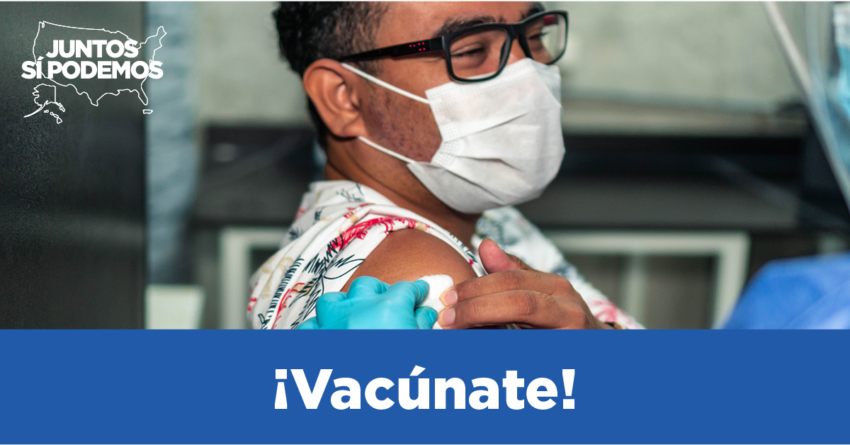
You've probably seen or heard this phrase a lot recently: "We can do this." That's the slogan for the U.S. Department of Health & Human Services' "We Can Do This" / "Juntos Sí Podemos" COVID-19 Public Education Campaign. This national initiative aims to increase public confidence in uptake of COVID-19 vaccines and other basic prevention measures, such as mask wearing and social distancing. The "We Can Do This" campaign materials are in English, Spanish, and more. The campaign also has a "live" event series that pairs medical experts with prominent influencers to share information to help people feel confident about getting the vaccine. The events occur in the places where people already consume content, including social media, podcasts, and YouTube. The effort is ...
Sugary drinks contribute to obesity, diabetes, and other health issues. This is why many U.S. cities are trying to reduce the consumption of sodas, juices, sports drinks, and other high-sugar beverages by raising their price through sugary drink taxes. They then use the tax revenue to pay for local health programs. Washington, D.C. (11.3% Latino), which already has a type of sugary drink tax, could transition to an even stronger sugary drink tax with its Nutrition Equity Act. “Our lowest-income neighborhoods have the most limited access to healthy drinks and full-service grocery options,” said Dr. Federico Asch, a cardiologist and president of the American Heart Association Greater Washington Region Board of Directors. “We have a huge problem where, for example, many kids ...