Gun violence claims many lives every year. 69,519 U.S. Latinos were killed with guns from 1999 through 2019, according to a new report from Violence Policy Center (VPC). The report, which also analyzed lethal gunfire data from 2019 by race/ethnicity, found Latinos have a nearly twice-as-high homicide victimization rate (5.15 per 100,000) than whites (2.62). Most homicides involved firearms, and Latino victims were often youths or young adults. This issue warrants legislative attention, as too many people still suffer at the hands of guns, according to Josh Sugarman, executive director at VPC. “A lot of states have not adjusted the way that they approach violence prevention and issues associated with their increasing Latino population,” Sugarman said. “The reason we do ...
Poverty rates among Latino families have grown immensely during the pandemic. The rates are worst for the children of Latino immigrants, according to new data from the National Research Center on Hispanic Children & Families (Center). The disparity is mainly due to the heavy economic impact that the pandemic has had on immigrant families. “The increase in poverty rates among Latino children in immigrant families during the pandemic reflects, in part, a confluence of factors in the labor market,” according to the Center. There may also be a stigma against seeking federal assistance as well as a fear of the expired public charge rule. With equitable policies that target economic recovery for immigrants and education about the end of public charge, we can address these ...
During COVID-19, many people were laid off or faced reduced work. Latinas suffered the biggest drop in workforce size of any demographic group, according to UCLA Latino Police and Politics Initiative (UCLA LPPI), a Latino-focused think tank. This could have a long-lasting impact on Latina wellbeing, labor shortages, and economic recovery overall, said Sonja Diaz, the founding director of UCLA LPPI. “Unfortunately, the COVID-19 pandemic really created a ripple effect of economic disruption in particular on communities by race, and then again, by gender,” Diaz told ABC News. “The real story here is the fact that Latinas have left the labor market, which is akin to dropping out of college. It’s really hard to get those individuals back in, and [have] a pathway towards ...
Obesity is linked to serious health consequences. The 47% of U.S. Latinos who have obesity are at higher risk for high blood pressure, type 2 diabetes, stroke, and certain cancers. Now we're learning that obesity and heart factors combine to cause cognitive decline in Latinos, according to a recent study in the Journal of Alzheimer's Disease from the University of California San Diego School of Medicine. Researchers studied cognitive exams at two time points — seven years apart —from over 6,000 participants in the Study of Latinos-Investigation of Neurocognitive Aging (SOL-INCA). They also tested participants for obesity cardiometabolic abnormality, which is two or more of high blood pressure, high blood sugar, high triglycerides, and low “good” cholesterol. They found ...
Many Latino families don’t have access to healthy, nutritious foods. To put food on the table, they rely on government food aid programs, such as the Supplemental Nutrition Assistance Program (SNAP) and Special Supplemental Nutrition Program for Women, Infants and Children (WIC). SNAP and WIC can improve diets and help raise people out of poverty. But many people of color don’t participate, even if eligible. Now two congresswomen of color — Reps. Jahana Hayes and Jenniffer González-Colón — introduced the WIC for Kids Act to eliminate barriers to enrollment for millions of pregnant women, mothers, and children, improve child and maternal health, and increase food access. “I introduced the WIC for Kids Act of 2021 to make it less burdensome on families to enroll ...
After a federal moratorium on evictions put in place by the CDC last fall expired on July 31, 2021, the CDC has issued a new two-month moratorium through Oct. 3, 2021. This new moratorium will extend protections for the millions of families behind on rent due to the economic fallout of the pandemic, particularly Latino and Black families, who have been hit the hardest. Update 11/15/21: The Supreme Court ruled on August 26 to end the temporary stay on a lower court ruling seeking to overturn the CDC's federal eviction moratorium. "In doing so, the Supreme Court’s ruling invalidates the federal eviction moratorium, eliminating vital eviction protections that have kept millions of households – predominantly people of color – stably housed," according to the National Low Income ...
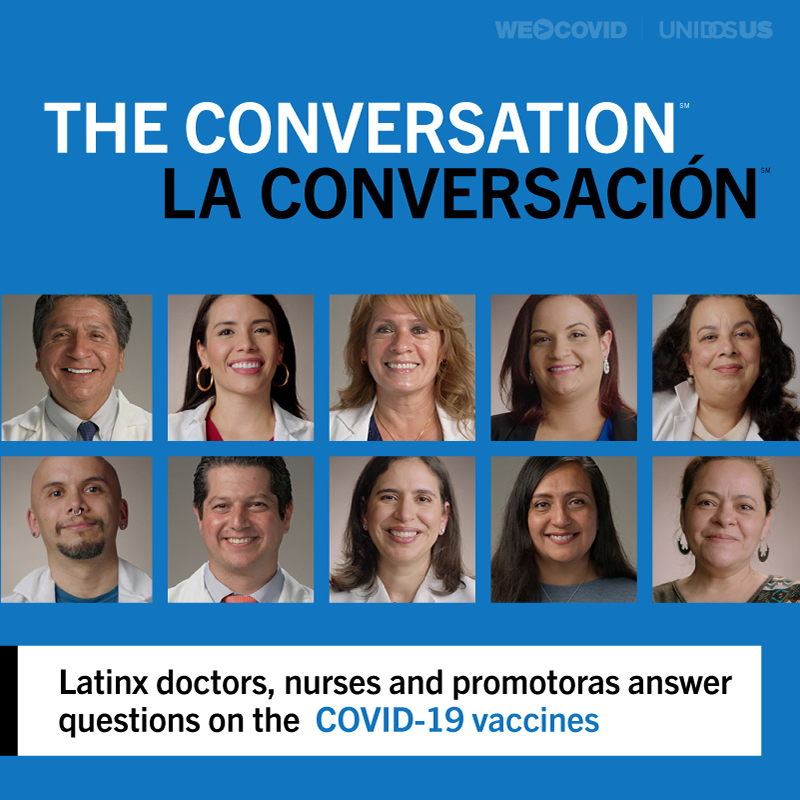
Latinos are getting vaccinated for the COVID-19 vaccine at much lower rates than other groups. This mainly due to a lack of vaccine confidence and abundance of misinformation that is targeting Latinos, who have been disproportionately affected by COVID-19. That’s why Greater than COVID partnered with UnidosUS to launch a new bilingual video series, THE CONVERSATION / LA CONVERSACIÓN, to combat vaccine misinformation. By interviewing Latino healthcare workers who answer big questions, the series aims to promote vaccine confidence and urge Latinos to get vaccinated. “This is our chance to protect ourselves, those we love and our communities so we can start to heal,” said Dr. Ana G. Cepin, a doctor in the video series.
About the Video Series
THE CONVERSATION / LA ...
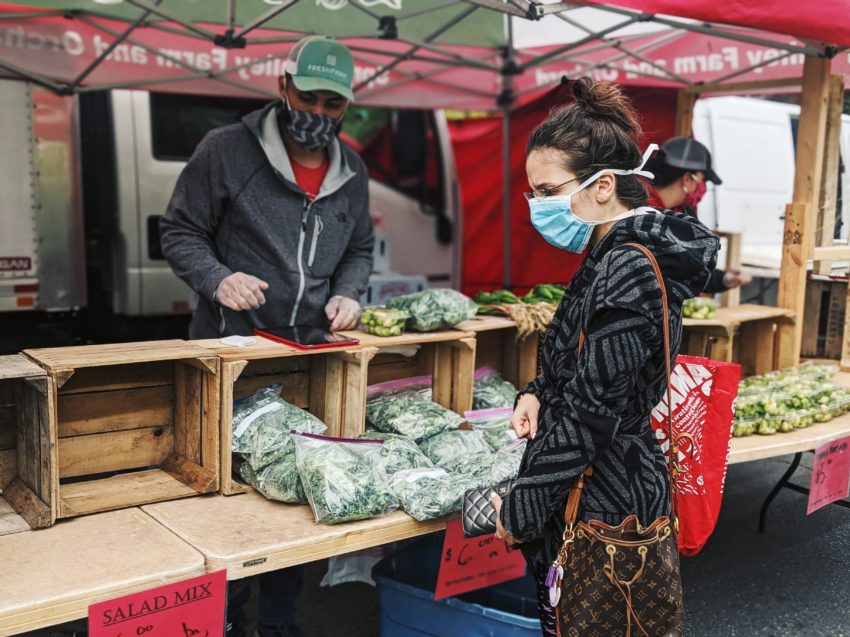
Does your town have a farmers market? Farmers markets are a path to healthy food access. They are especially important now as the pandemic worsens food insecurity. Fortunately, the Farmers Market Coalition is stepping up to support farmers markets. They’re pushing for federal aid for markets, creating resources and anti-racist toolkits, and sharing how markets increase access to healthy, fresh produce and social connections, and engage farmers in the local economy. "Amidst a global pandemic and nationwide change, it is now more important than ever for [farmers] markets to bring people together," according to the coalition. "As hubs for connection and community resilience, farmers markets have particularly risen to the occasion this year by providing a necessary sense of unity ...
Latinos are suffering high rates of COVID-19 cases and deaths, with low vaccine rates. But in addition to the health impact, the pandemic is worsening underlying health inequities for this population in areas like access to housing, federal aid, and healthy food. Now, new research shows that the pandemic is even reducing the number of Latino students enrolling in college. The economic crisis brought on by the spread of the coronavirus, which hit the Latino community hard, made it hard for many Latino students to enroll. “Because our adults tend to be blue-collar workers who have lost out in this economy, having additional hands, all able-bodied folks working, has become essential,” Deborah A. Santiago, chief executive of the nonprofit advocacy group Excelencia in Education, ...