Hispanic? Latino? Latinx? People often debate the best term to use when describing the ethnicity of those who trace their heritage from Latin America and Spain, who comprise 18.5% of the U.S. population. “There’s no correct term to use, and appropriateness varies when using Latino, Hispanic, Latinx, or country of origin,” said Dr. Amelie G. Ramirez, director of Salud America! at UT Health San Antonio. Let’s talk about the origins of these terms, who uses them, and what the data says about this population’s own preferences.
The Origin of “Latino”
The term we use at Salud America! to describe this group is “Latino.” “Latino,” or the feminine “Latina,” is used to describe people with ancestry from Latin American countries. Unlike “Hispanic,” the ...
Pedestrian fatalities have increased 50% since 2009. Autonomous vehicles—those driven by automated driving systems rather than a human—are often suggested as a solution by politicians, planners, even some safety advocates. But with our nation’s struggle to regulate the automobile industry and failure to protect people walking, many worry about the decades-long shift to autonomous vehicles because cars will still dominate roads and road design. Moreover, many worry that electric driverless vehicles district from the social, economic, and health issues cities are facing today. “Public health will benefit if proper policies and regulatory frameworks are implemented before the complete introduction of [autonomous vehicles] into the market,” according to David Rojas-Rueda ...
Pregnant Latinas have some of the lowest vaccination rates against COVID-19 compared to other ethnic/racial groups, according to a report from the CDC. The disparity is likely due to less culturally competent and accessible healthcare in communities of color, as well as vaccine misinformation about fertility and pregnancy. The CDC encourages all people who are eligible to get vaccinated against COVID-19 and that pregnancy should not be a barrier. “COVID-19 vaccination is recommended for all people 12 years and older, including people who are pregnant, breastfeeding, trying to get pregnant now, or might become pregnant in the future,” according to the CDC’s website. With more culturally relevant resources regarding vaccine safety for fertility and pregnancy, vaccine ...
Combat COVID is a federal education initiative to share bilingual information and tips about vaccines, potential treatments, and clinical trials for COVID-19. A clinical trial is a research study to find a new treatment or achieve a better understand a disease. In the case of COVID-19, which has overly burdened Latinos and Blacks, clinical trials need more participants of color to ensure that COVID-19 treatments are effective for everyone. "Clinical trials are at the heart of many medical discoveries," according to the team at Combat COVID, run by the U.S. Department of Health and Human Services. "[Trials] are the key to protecting our communities now and in the future." Let's take a look at the work Combat COVID is doing.
Promoting Clinical Trails for COVID-19
Combat COVID ...
Family is a critical aspect in the lives of many Latinos. Moreover, research has shown that members of Latino families can heavily influence each other when it comes to physical, mental health and a wide range of political views. This includes the way this population views climate change, according to a recent report from Cornell University. “Feeling a sense of connection and commitment to your family, and believing that family considerations should guide our everyday decisions, may shape consensus views within a family, including for a societal problem like climate change,” Adam Pearson, an associate professor of psychological science at Pomona College, told the Cornell Chronicle. “And this may have implications for the sharing of climate beliefs and concerns within Latino ...
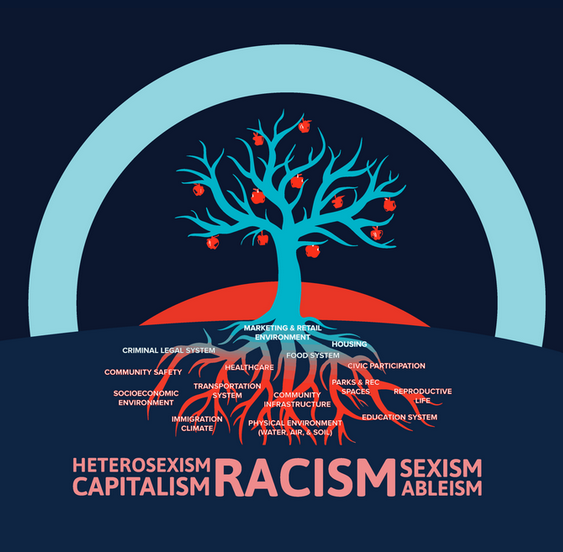
Where we live and the conditions that we live in impact our health and life outcomes. This concept is widely called the Social Determinants of Health (SDOH). Unfortunately, when people live in and experience negative conditions, it can lead to poor health outcomes and disparities, particularly among Latinos and other marginalized communities. In their new SDOH framework, the Praxis Project highlights the root systems of oppression that have led to health disparities for communities of color. “Many traditional SDOH frameworks lack the explicit naming of systems of oppression that cause disparities in health determinants. In an effort to incorporate these systems of oppression and to highlight the root causes of these determinants from a justice and community power ...
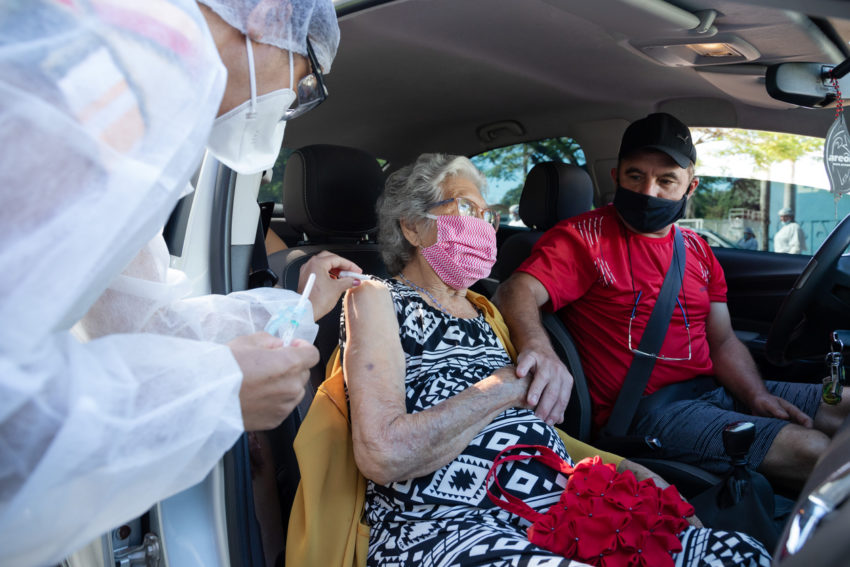
The COVID-19 vaccination gap continues among Latinos. In fact, most people who have received at least one dose of the vaccine were White (58%), while only 17% were Latino. State-level data show that Latinos are vaccinated at a much lower rate, even as they face heavier case and death burdens from the disease. This makes it critical to find innovative ways to reach Latinos to get vaccinated. “One of the main reasons for inequities in vaccination rates by race and ethnicity is the significant misinformation about vaccines and lack of health education,” writes Dr. Jay Bhatt, an internal medicine physician and an instructor at the University of Illinois School of Public Health, in a recent op-ed. “Through targeted outreach, one-on-one conversations and concerted efforts ...
Latinos and other people of color are increasingly the targets of criminals who use the internet, phone, and text scams to steal money and damage wellbeing. In fact, 40% of Black and Latino adults have been targeted by online scams and fraud, according to a new survey by the American Association of Retired Persons (AARP). “Latino adults are most targeted by government impostor scams, utility scams and grandparent scams. For both utility and grandparent scams, Latino adults far outrank other racial groups,” according to Matthew Petrie of the independent market research group BVA BDRC of AARP.
Latinos and A Struggle with Scammers
Sadly, scammers are common in the United States. The rise of financial fraud in the form of scams is “undeniable,” writes Petrie of ...
Breast cancer is the leading cause of death in Latinas. Systemic health inequities contribute to lower rates of breast cancer screening among Latinos, which leads to cancer diagnoses at later disease stages. This is why we're sharing Susan G. Komen’s 2021 ongoing webinar series on metastatic breast cancer (MBC)! The next two webinars, "MBC in the Hispanic/Latino Community," are set for 6 p.m. CT Sept. 23, 2021, in English and 6 p.m. CT Sept. 30, 2021, in Spanish. Panelists are: Dr. Filipa Lynce, Dana-Farber Cancer Institute, Director, Inflammatory Breast Center, Harvard Medical School.
Dr. Jose Pablo Leone, Dana-Farber Cancer Institute, Director, Program for Breast Cancer in Men, Harvard Medical School Panelists will foster a safe, collaborative space to discuss ...