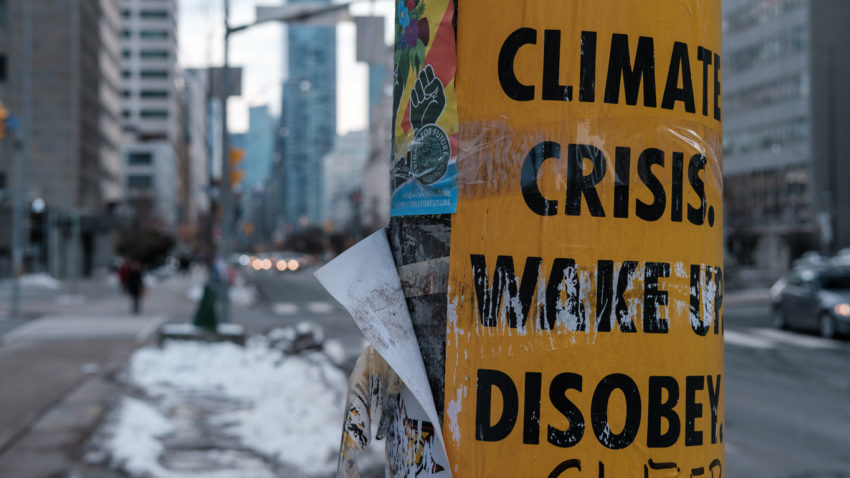
Climate change is an ongoing environmental dilemma that threatens the health of all people. Yet, research has shown that certain groups, such as Latinos and other people of color, immigrants, those with a lower socio-economic status, and vulnerable occupational groups are most likely to suffer longer and more severely from climate change. “The effects of climate change add to other longstanding differences among people that result in different health outcomes for communities in the United States,” reported the U.S. Department of Health & Human Services.
What Is Climate Change?
Climate change is defined as a long-term shift in global or regional climate patterns. Long-term alterations in temperature or the typical weather patterns of a certain location can lead to ...
One in six U.S. youth have obesity, but the issue is worse among Latinos and other youth of color, according to a new report from the Robert Wood Johnson Foundation (RWJF). More than one in five Latino (21.4%), Black (23.8%), and American Indian/Alaska Native (28.7%) children ages 10-17 have obesity. The reasons? Structural racism and systemic health inequities. Racist policies and discriminatory practices affect our food system, access to healthcare, affordable housing, and critical family supports like childcare, the RWJF report says. Together, the effects of these policies and practices force families into hard choices on how to spend limited resources, especially during COVID-19. “The state of childhood obesity in America is an urgent call to action for leaders at all ...
Simple logistics—availability, childcare, and time—stop some Latinas and other women of color from volunteering for breast cancer clinical trials, according to a new survey. The survey, led by For The Breast of Us, an online breast cancer survivor community, and Sommer Consulting, found that the anticipated time demands of a clinical trial may appear "too intimidating." Most women of color struggle with multiple demands in their lives. The perceived or real logistics of participating in a clinical trial could make it harder. One respondent said: “You still have to worry about how am I going to run my household, especially as a woman of color, who typically a lot of times are single-family or single-parent households." "The results of this survey demonstrate how ...
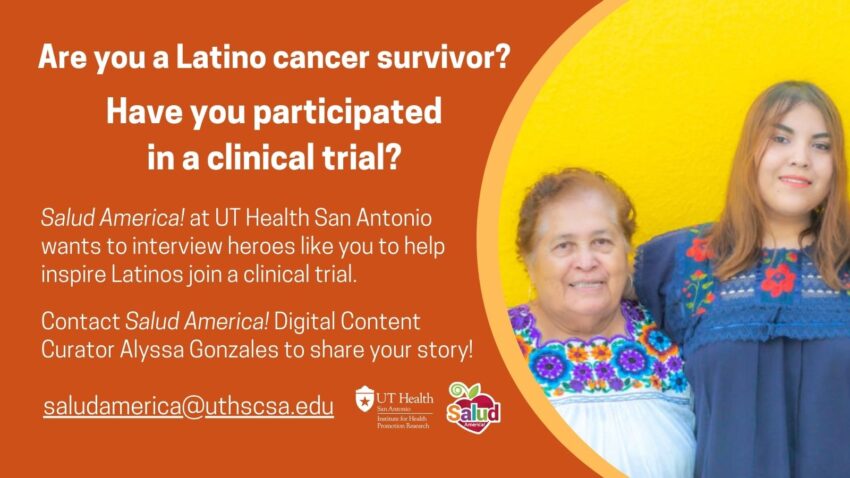
Are you Latino? Have you participated in a clinical trial related to cancer, Alzheimer’s, or another condition? If so, we want to talk with you and share your story! Salud America! is looking to interview and write stories about heroes like you — Latinos who have participated in a clinical trial — to showcase the benefits of volunteering to inspire other Latinos to volunteer, too. Dr. Amelie G. Ramirez’s Salud America! program at UT Health San Antonio is sharing the stories of clinical trial heroes with the support of Genentech, a member of the Roche Group. “Clinical trials are studies that help researchers learn more and more to help slow, manage, and treat Alzheimer's and cancer,” Ramirez said. “Clinical trials help us fight for our familia.” To share ...
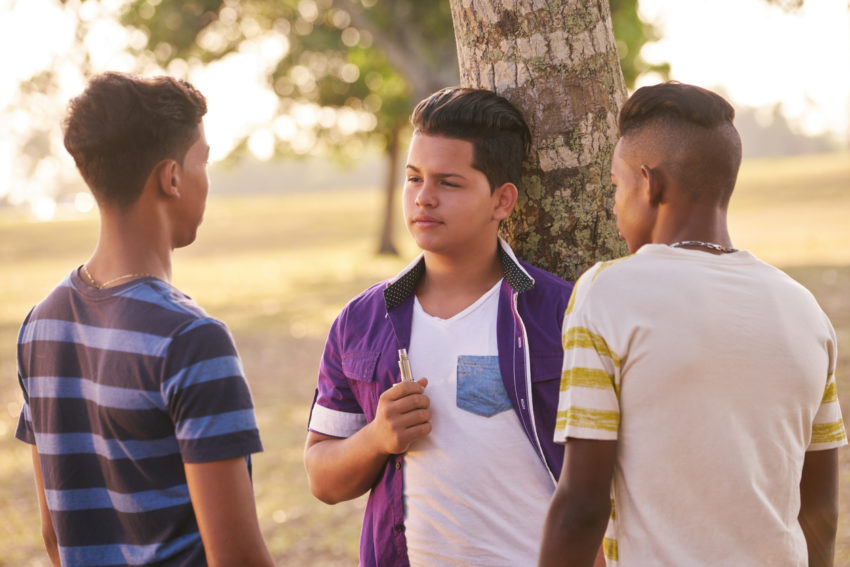
Over 2 million U.S. teens say they use e-cigarettes, according to a new survey released by FDA and CDC. The study, which found that a quarter of these teens reported they vape daily, was based on data from the 2021 National Youth Tobacco Survey, a cross-sectional, self-administered survey of U.S. middle- and high-school students. "The use of tobacco products by youths in any form, including e-cigarettes, is unsafe. Most e-cigarettes contain nicotine, and nicotine exposure during adolescence can harm the developing brain," according to the FDA and CDC survey report, published in the Morbidity and Mortality Weekly Report.
Key Report Findings on Youth E-cigarette Use
In 2021, 11.3% of high-school (1.72 million) and 2.8% (320,000) of middle-school students reported current e-cigarette ...
Latinos have played a major role in the development of the United States. This diverse demographic, today the nation’s largest racial/ethnic minority, has helped make the country the great melting pot it is. And despite an ongoing battle against discrimination and health disparities, Latino leaders continue to push their community to keep up hope and fight for what Cesar Chavez called La Causa, a term used to describe the struggle for equity. “In the end, the American dream is not a sprint, or even a marathon, but a relay,” said Julian Castro, former Secretary of Housing and Urban Development. “Our families don’t always cross the finish line in the span of one generation. But each generation passes on to the next the fruits of their labor.” For Hispanic Heritage ...
Workforce inequities are nothing new for people of color, specifically Latinos. Long before COVID-19, many Latinos had unstable jobs with little-to-no benefits and lower wages than their white non-Latino coworkers. The pandemic made things worse. But one thing saved many Latino jobs—a labor union contract, according to a comparison of unionized and non-unionized Latino workers by UCLA Latino Policy & Politics Initiative. Labor unions are organizations of workers that come together to negotiate better working conditions or other benefits as a collective bargaining. “Our analysis suggests that unionization—even within the same industry and occupation—preserved employment and wages for workers during the COVID-19 pandemic, accounting for variations in ...
Many Latino youth face declining mental health amid the deadly COVID-19 pandemic, a racial/ethnic social justice movement, and economic hardships. Sadly, many aren’t getting the help they need, either. About 65% of Latino college students have mental health issues that go untreated, as they are less likely than their white peers to engage with campus mental health services, according to a new study from researchers at University of California, Riverside. “This means counselors can identify a culturally sensitive, value-driven approach to encouraging greater participation in campus mental health services, instead of focusing only on students’ ethnicity in their outreach efforts” said study senior author Kalina Michalska. “Given the increasing diversity among U.S. ...
Hispanic Heritage Month, which runs from Sept. 15 to Oct. 15, is a time to celebrate and remember Latin American history. For teachers, it’s an excellent opportunity to bring fun activities into the classroom. Here are some suggestions to incorporate history, art, literature, and more on Hispanic Heritage Month for your classroom.
Start by Recruiting Latino Parents & Students to Help for Hispanic Heritage Month
If you have Latino students in your classroom, they may be interested in sharing their culture with the class. Having parents or students come in and share their personal stories and cultural traditions can be an enriching way for your class to learn. You can email students and parents asking if anyone is interested in collaborating on the Hispanic Heritage Month ...