As a result of COVID-19 and systemic injustice, Latinos are not faring well in the job market. Worse, Latinos are experiencing the widest gap in one of the nation’s fastest-growing fields — a career in science, technology, engineering, and math (STEM). The depth of the gap could consign Latinos to lower-paying jobs, according to a recent report from the Pew Research Center. “Black and Latino workers remain underrepresented in the STEM workforce compared with their share of all workers, including in computing jobs, which have seen considerable growth in recent years,” the Pew researchers state.
What Is the Latino Gap in STEM Jobs?
Latinos make up 17% of the overall workforce in the U.S. However, they only make up 8% of those employed in STEM fields. STEM jobs are ...
Older Latinos who live in neighborhoods where little English is spoken are at a higher risk of poor health and early death, according to a new study from the University of Georgia. “If you are linguistically isolated, you’re very likely to be isolated socially, and we know social isolation contributes to mortality,” said Kerstin Emerson, a co-author of the study. The study has implications for how language barriers and social cohesion in a community can affect health, particularly among elderly Latinos.
What Does the Study Say about Language Isolation?
Researchers at the University of Georgia’s College of Public Health conducted the study to determine if neighborhoods that are linguistically isolated impact health. The study analyzed data from a survey of over 1,100 ...
Lack of nutritious food can result in countless physical, social, and mental health complications. For many Latino families, governmental assistance programs, such as the Supplemental Nutrition Assistance Program (SNAP), put food on the table and uplift out of poverty. But health experts say federal food aid needs expansion to help families in need. Fortunately, the Biden administration recently announced the modernization of the Thrifty Food Plan—used to calculate SNAP benefits—and a 25% rise the average SNAP benefit, the largest single increase in the program’s history. “The background formula was based on food preparation costs and nutrition standards that were developed in 1975,” Emily Weikert Bryant, executive director of Feeding Indiana’s Hungry told the Indy ...
By Reena Singh
Guest Blogger, Voices for Healthy Kids Voices for Healthy Kids recently completed research to get the Latino community’s take on sugary drinks and sugary drink taxes. The research identified several messaging findings and strategies to help engage the Latino community in efforts to reduce the consumption of sugary drinks. Specifically, the research found after receiving more information, support for sugary drink taxes jumped 28%. So, what did we learn about building relationships and engagement with Latino communities on efforts to increase access to healthy beverages and reduce the consumption of sugary drinks?
1. Materials and Messages Need to Be in Spanish and English
45% of Latinos in the survey reported they speak Spanish daily. The majority (62%) of ...
Latinos are 1.5 times more likely to develop Alzheimer’s than their white peers. Its why diversity in clinical trials is absolutely critical. Fortunately, those studies can help us fight back against Alzheimer’s. If you are age 55 to 80, you can volunteer for the AHEAD Clinical Trial that aims to protect against the onset of Alzheimer's disease, led by the experts at the Glenn Biggs Institute for Alzheimer’s and Neurodegenerative Diseases at UT Health San Antonio. “I got involved with the AHEAD clinical trial because both of my parents had Alzheimer’s,” Dave Ralberer, an AHEAD study participant and study partner, said. “My mother was 72 when she passed away. My dad has been struggling with the disease for 13 years. I have the unusual opportunity to be working with ...
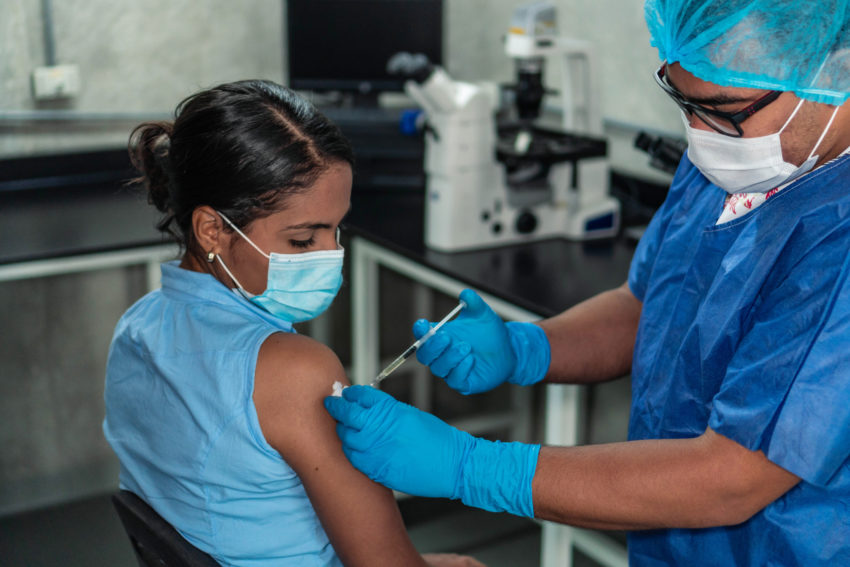
As the American people still grapple with the COVID-19 pandemic, medical experts are now in the process of distributing a booster shot, which many say can help. The booster shot is critical in making headway with bringing the pandemic to an end, according to Dr. Anthony Faucci, the Director of the National Institute of Allergy and Infectious Diseases and the Chief Medical Advisor to the President. "I’ve made it clear that my opinion has always been that I believe that a third-shot booster for a two-dose mRNA [vaccine] should ultimately and will ultimately be the proper, complete regimen," he said in a recent interview with The Atlantic. "The vaccine is very successful. The durability of it is something that’s a subject of considerable discussion and sometimes debate." As the ...
We have updated our Health Equity Report Card to include place-based information on your county’s Social Vulnerability Index Score and COVID-19 cases, deaths, and hospitalizations. The Salud America! Health Equity Report Card, first launched in 2017, auto-generates Latino-focused and local data with interactive maps and comparative gauges, which can help you visualize and explore inequities in housing, transit, poverty, health care, food, and education. You will see how your county stacks up in these health equity issues — now including social vulnerability and COVID-19 — compared to your state and the nation. Then you can share the Report Card with your local leaders to advocate for healthy change! Get your Health Equity Report Card!
Why We Need to Consider ...
Healthcare spending is disproportionately skewed toward white people, with less money spent on Latino patients, according to new research from the University of Washington’s Institute for Health Metrics and Evaluation and others. “This study found statistically significant differences in estimated healthcare spending across six race/ethnicity groups, with differences present for total spending, age-standardized spending, spending by type of care, and health-condition-specific spending per notified case,” according to the study. The disparity has significant implications for policies needed for equity in healthcare spending. “Despite making up 18.5% of the U.S. population, only 11% of healthcare spending goes toward Latinos. We can address this disparity by examining the ...
By Andrea Reichl
Breast Cancer Survivor in San Antonio On June 8, 2015 I got the dreaded call that would change my my world as I knew it. I had only been 38 for one month and cancer never even crossed my mind as a possibility. I previously have had a mammogram and ultrasound annually due to a lump that was being monitored since my early 20s. Six months after my last mammogram my nipple became red and itchy. My gynecologist sent me to a breast specialist, who rudely told me it was because I didn’t have babies. It was devastating to hear that because she was unaware that for over 10 years my husband and I tried to have kids, unsuccessfully. She prescribed me a cream that didn’t work. I decided to go back to my gynecologist as things just didn’t feel right, and I ...